How to Build a Capsule Wardrobe: The Complete Beginner’s Guide (2026)
Introduction
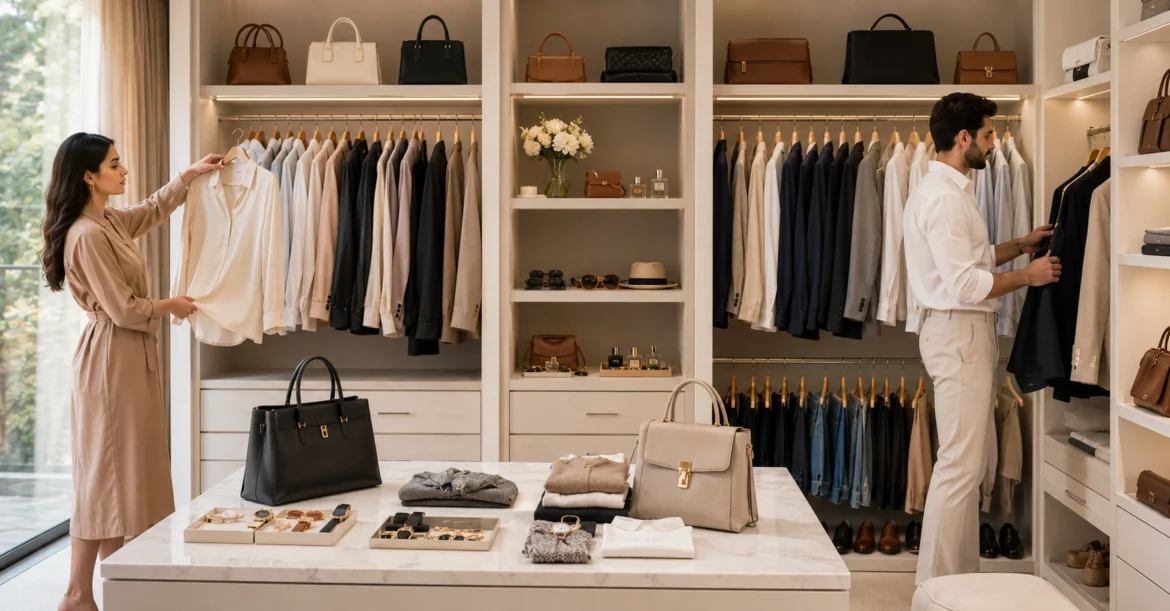
Building a capsule wardrobe is one of the smartest ways to simplify your style, reduce clutter, and create versatile outfits with fewer clothes. If you’re wondering how to build a capsule wardrobe, this complete beginner’s guide will walk you through every step.
Have you ever stood in front of a wardrobe full of clothes and still felt like you had nothing to wear?
You’re not alone.
Many people buy clothing regularly but struggle to create outfits they genuinely enjoy wearing. Instead of building a wardrobe that works together, they often end up with trendy items that are difficult to mix and match. The result is a cluttered closet, wasted money, and frustration every morning.
It offers a smarter solution.
Rather than owning hundreds of clothing items, It focuses on a carefully selected collection of versatile, timeless pieces that can be combined to create dozens of stylish outfits. This approach makes getting dressed quicker, shopping more intentional, and your personal style more consistent.
Whether you’re a student, working professional, busy parent, or someone simply looking to simplify your life, learning how to build a capsule wardrobe can save time, reduce unnecessary spending, and help you feel more confident in what you wear.
In this complete beginner’s guide, you’ll discover what a capsule wardrobe is, why it has become so popular, how many clothes you actually need, the essential pieces for men and women, practical outfit-building strategies, common mistakes to avoid, and expert tips for creating a wardrobe you’ll love wearing every day.
Quick Answer
A capsule wardrobe is a carefully planned collection of versatile clothing that can be mixed and matched to create many different outfits. Instead of owning a large number of rarely worn items, It focuses on timeless essentials, neutral colours, quality fabrics, and clothing that suits your lifestyle. This approach saves time, reduces clutter, supports sustainable fashion, and makes dressing easier every day.
Table of Contents
What Is a Capsule Wardrobe?
Capsule Wardrobe vs Traditional Wardrobe
Why Capsule Wardrobes Are So Popular
Benefits of a Capsule Wardrobe
How to Build a Capsule Wardrobe Step by Step ⭐ (New)
How Many Clothes Should a Capsule Wardrobe Have?
Essential Capsule Wardrobe Pieces for Women
Essential Capsule Wardrobe Pieces for Men
Choosing the Right Colours for a Capsule Wardrobe
Essential Fabrics for a Capsule Wardrobe ⭐ (New)
How to Build Multiple Outfits from Fewer Clothes
Seasonal Capsule Wardrobes
Capsule Wardrobe for Different Lifestyles ⭐ (New)
Capsule Wardrobe for Different Age Groups ⭐ (New)
Capsule Wardrobe on a Budget ⭐ (New)
Building a Capsule Wardrobe Without Throwing Everything Away ⭐ (New)
How to Declutter Your Wardrobe
Digital Tools That Help You Manage a Capsule Wardrobe ⭐ (New)
Common Capsule Wardrobe Mistakes to Avoid
Common Myths About Capsule Wardrobes ⭐ (New)
Real-Life Capsule Wardrobe Examples ⭐ (New)
Signs Your Capsule Wardrobe Is Working ⭐ (New)
Expert Tips for Maintaining a Capsule Wardrobe Long-Term ⭐ (New)
How a Capsule Wardrobe Supports Sustainable Fashion ⭐ (New)
Capsule Wardrobe Checklist
Smart Shopping Tips for Building a Capsule Wardrobe
Frequently Asked Questions
Conclusion
What Is a Capsule Wardrobe?
A capsule wardrobe is a thoughtfully selected collection of clothing that works well together and suits your everyday lifestyle. Instead of filling your wardrobe with fast-changing fashion trends or rarely worn items, the goal is to own fewer but better pieces that can be combined into many different outfits.
The concept was first introduced in the 1970s by London boutique owner Susie Faux, who encouraged people to invest in timeless clothing rather than constantly replacing their wardrobes with seasonal trends. Over the years, the idea has become increasingly popular as more people seek simplicity, sustainability, and smarter shopping habits.
A typical capsule wardrobe includes wardrobe essentials such as:
Plain T-shirts
Quality shirts
Well-fitting jeans
Tailored trousers
Blazers
Neutral knitwear
Comfortable shoes
Classic outerwear
These pieces are chosen because they coordinate easily, allowing you to create a wide variety of outfits with fewer items.
A capsule wardrobe doesn’t mean wearing the same clothes every day. Instead, it means owning clothing that works together so you can dress stylishly with less effort.
For readers interested in the evolution of timeless clothing and fashion concepts, the Fashion History Timeline by the Fashion Institute of Technology provides an excellent educational resource.
Capsule Wardrobe vs Traditional Wardrobe
Many beginners assume a capsule wardrobe means giving away most of their clothes. In reality, it’s about being intentional rather than restrictive.
Capsule Wardrobe
Traditional Wardrobe
Fewer, versatile pieces
Large collection of clothes
Easy to mix and match
Many items rarely worn
Focus on quality
Often focused on quantity
Timeless designs
Trend-driven purchases
Less clutter
Overfilled wardrobes
More outfit combinations
Limited coordination
A traditional wardrobe often contains duplicate styles, impulse purchases, and clothing that no longer fits your lifestyle. In contrast, a capsule wardrobe encourages thoughtful choices that maximise every item you own.
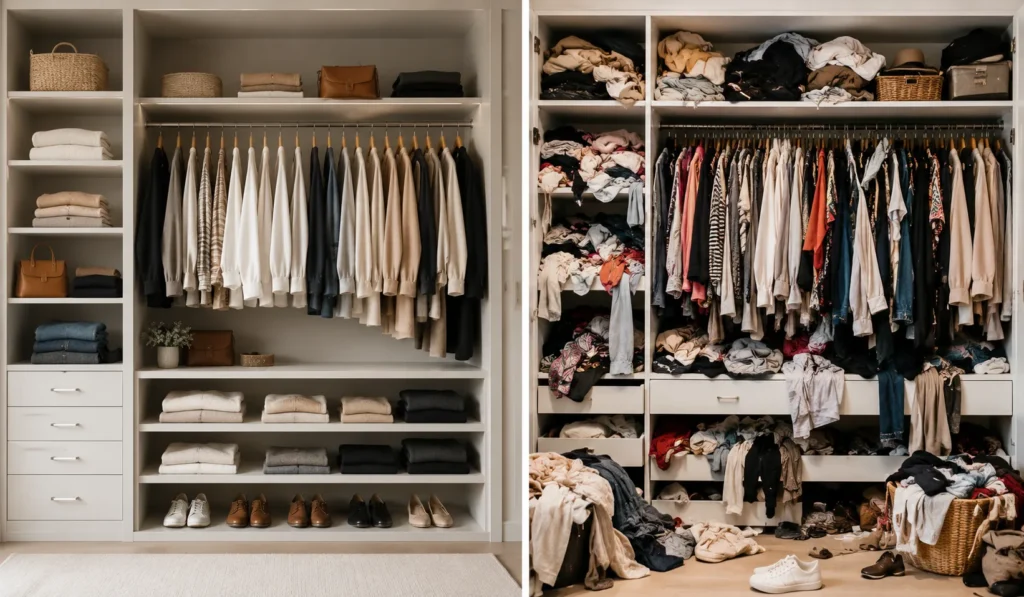
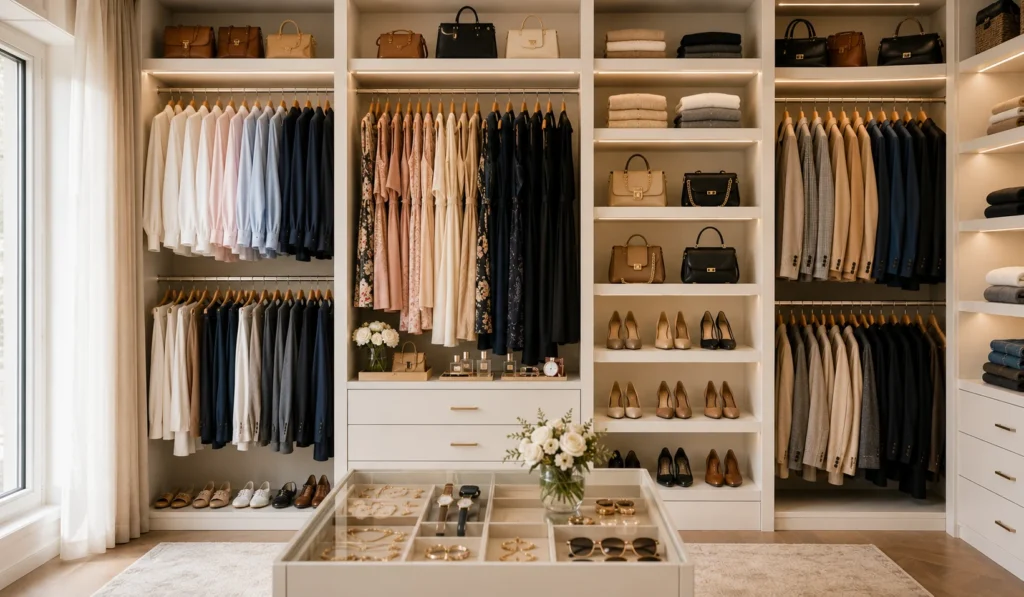
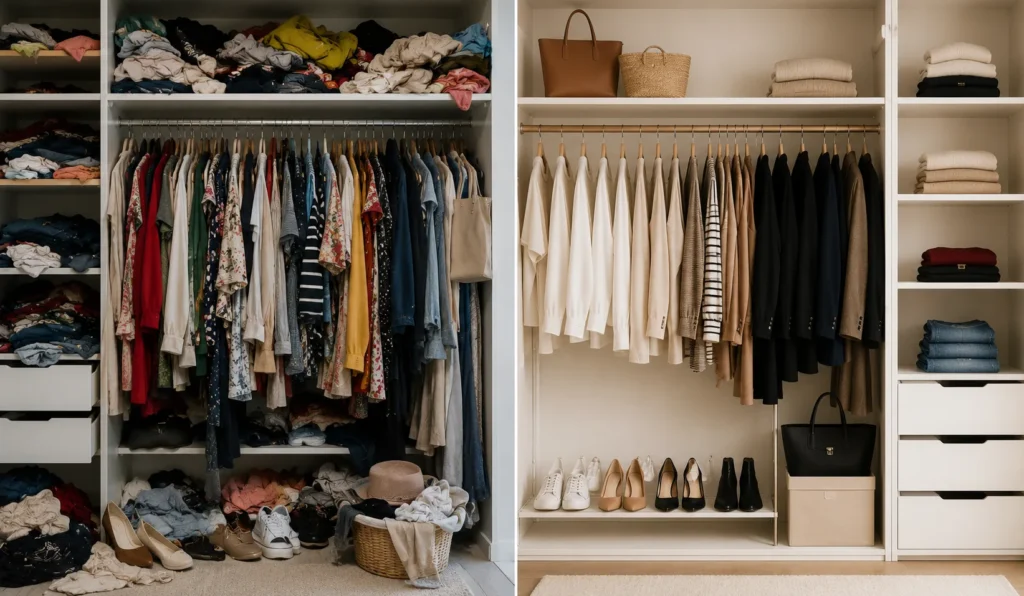
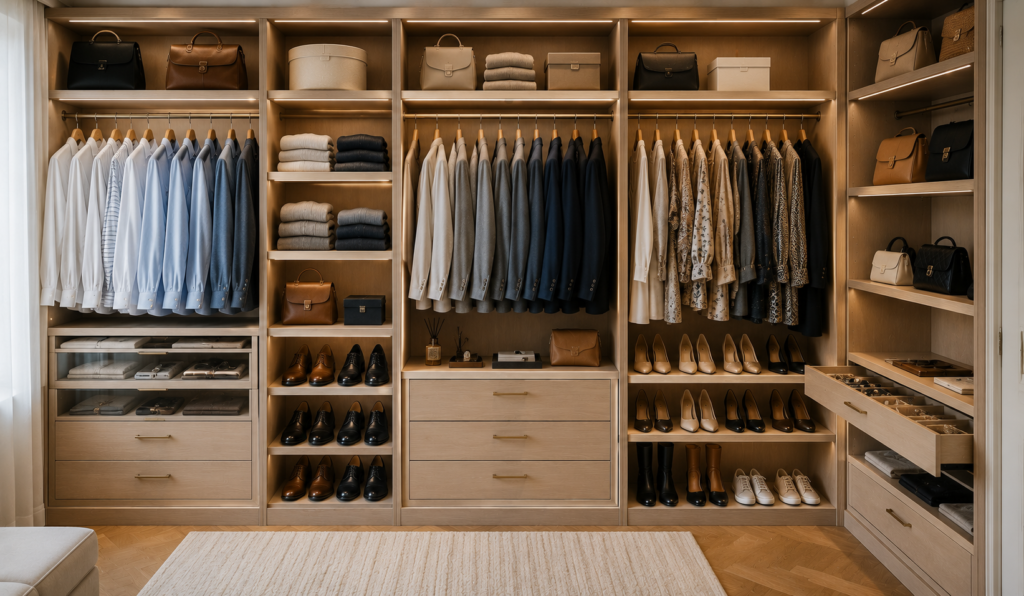
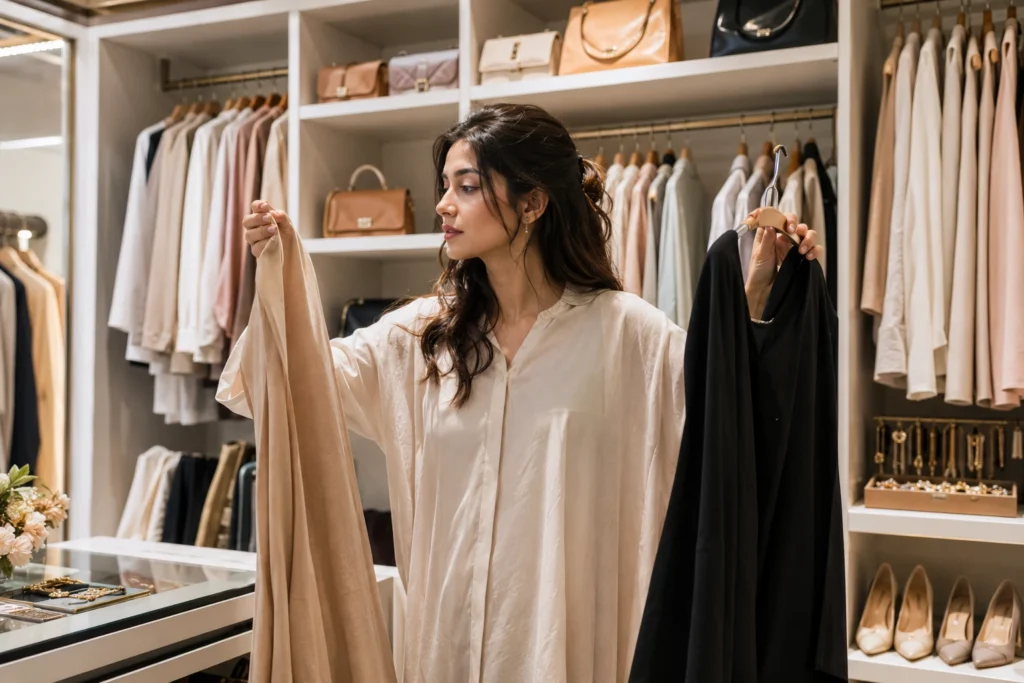
A capsule wardrobe focuses on quality and organisation instead of quantity
Why Capsule Wardrobes Are So Popular
Over the past decade, capsule wardrobes have become increasingly popular among fashion experts, professional stylists, and everyday people alike. The appeal lies in their ability to simplify daily life while helping individuals dress more confidently and intentionally.
Modern lifestyles are busy. Many people want to spend less time deciding what to wear and more time focusing on work, family, travel, or personal goals. It eliminates decision fatigue by ensuring that nearly every item works well together.
Another reason for their popularity is sustainability. As awareness of fast fashion’s environmental impact grows, more consumers are choosing fewer, higher-quality garments that last longer. Building a capsule wardrobe encourages mindful shopping, reduces textile waste, and supports a more responsible approach to fashion.
Financial savings are another advantage. Rather than buying numerous inexpensive items that quickly go out of style, investing in timeless essentials often proves more economical over time.
Finally, It helps people develop a consistent personal style. Instead of chasing every trend, you build a wardrobe that reflects your personality, complements your body shape, and fits your daily routine.
If you’re new to fashion, start with our What Is Fashion? Complete Beginner’s Guide to understand the foundations of personal style before building your capsule wardrobe.
Benefits of a Capsule Wardrobe
It is much more than a fashion trend. It is a practical approach to organising your clothes so that every item has a purpose. Instead of owning dozens of garments that rarely get worn, you focus on versatile pieces that work together and fit your lifestyle.
Whether you’re a student, a working professional, or someone looking to simplify daily life, a capsule wardrobe offers benefits that go far beyond style.
If you’re interested in responsible shopping and sustainable fashion,Fashion Revolution promotes greater transparency and encourages consumers to make informed clothing choices.
1. Saves Time Every Morning
One of the biggest advantages of a capsule wardrobe is that it eliminates the daily struggle of deciding what to wear.
Because every item coordinates with the rest of your wardrobe, creating an outfit becomes quick and effortless. Instead of trying on multiple combinations, you can confidently choose clothes that already work together.
This is especially helpful for busy mornings before work, university, or school.
2. Reduces Unnecessary Spending
Many people spend money on impulse purchases that end up sitting unused in their wardrobes.
A capsule wardrobe encourages intentional shopping by asking one simple question before every purchase:
“Will this item work with the clothes I already own?”
If the answer is no, it’s probably not worth buying.
Over time, this habit saves hundreds of dollars while helping you build a more functional wardrobe.
3. Creates More Outfit Combinations
Owning fewer clothes doesn’t mean having fewer outfits.
In fact, carefully selected wardrobe essentials allow you to create dozens—even hundreds—of outfit combinations.
For example:
Clothing Item
Can Be Paired With
White Shirt
Jeans, trousers, skirts, blazers
Black Trousers
Shirts, sweaters, jackets
Blue Jeans
T-shirts, knitwear, blazers
Neutral Blazer
Dresses, jeans, trousers
White Sneakers
Casual dresses, jeans, shorts
This flexibility is one of the biggest reasons capsule wardrobes are so popular.
4. Reduces Wardrobe Clutter
A cluttered wardrobe often makes finding clothes more difficult.
Removing rarely worn items creates:
Better organisation
More wardrobe space
Easier outfit planning
Less stress
A clean wardrobe also makes it easier to see what you already own, reducing duplicate purchases.
5. Supports Sustainable Fashion
The fashion industry is one of the world’s largest consumers of natural resources.
Buying fewer, higher-quality garments helps:
Reduce textile waste
Lower unnecessary consumption
Support responsible shopping
Extend clothing lifespan
A capsule wardrobe encourages thoughtful purchasing instead of constantly following short-term fashion trends.
6. Helps You Discover Your Personal Style
Many wardrobes contain clothing inspired by social media, advertisements, or temporary trends.
A capsule wardrobe encourages you to ask:
What colours suit me?
Which clothes do I wear most?
What makes me feel confident?
Which styles match my lifestyle?
Over time, this helps you develop a consistent personal style that feels authentic rather than trend-driven.
A capsule wardrobe saves time, reduces clutter, and makes everyday dressing easier
How to Build a Capsule Wardrobe Step by Step
Many people love the idea of a capsule wardrobe but don’t know where to begin. The process becomes much easier when you break it into manageable steps instead of trying to replace your entire wardrobe overnight.
Step 1 – Evaluate Your Current Wardrobe
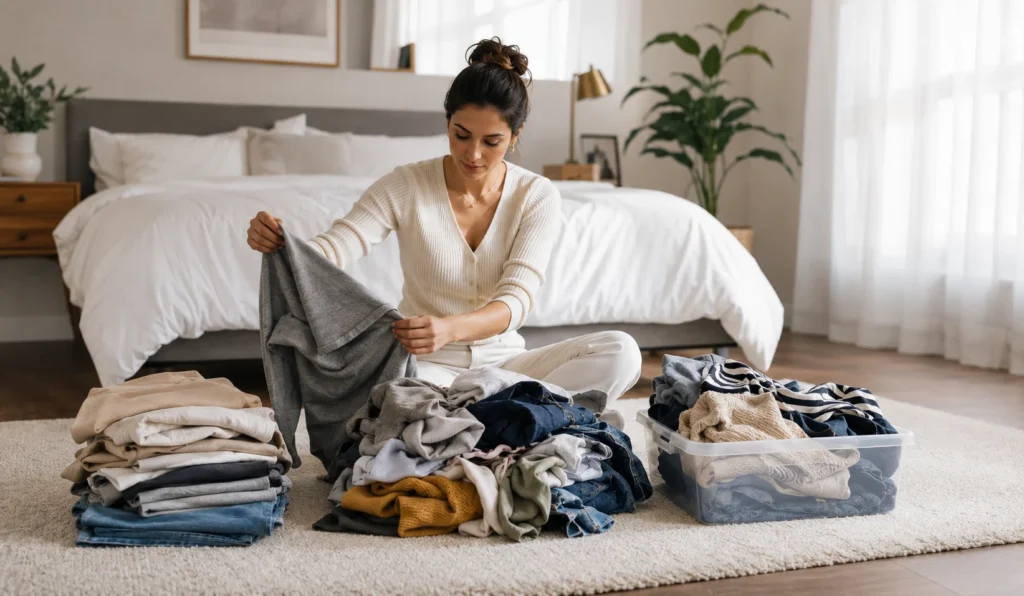
Start by taking every item out of your wardrobe.
Seeing everything together helps you understand:
What you wear regularly
What no longer fits
What needs replacing
What you own too much of
Many people are surprised to discover duplicate clothing or forgotten purchases hiding in the back of their wardrobe.
Step 2 – Keep Your Favourite Pieces
Instead of asking:
“Should I throw this away?”
Ask:
“Would I happily wear this tomorrow?”
If the answer is yes, keep it.
If not, consider donating, selling, or recycling it.
Once your basics are complete, gradually introduce accent colours that suit your personality.
Step 5 – Review Every Season
At the beginning of each season:
Store off-season clothing
Check for damaged items
Replace worn essentials
Avoid unnecessary purchases
A capsule wardrobe is never completely finished—it evolves with your lifestyle.
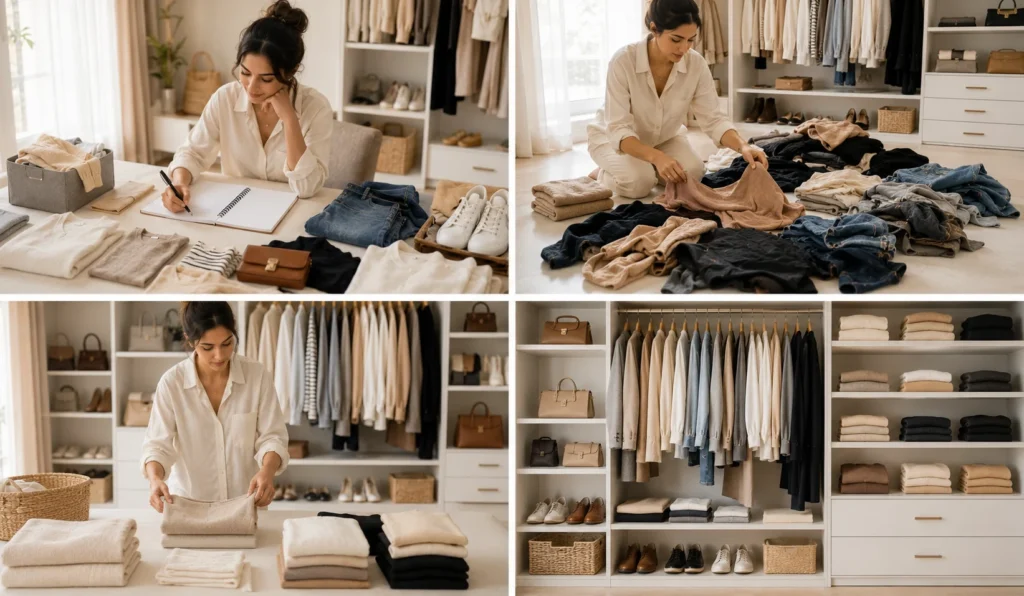
Building a capsule wardrobe becomes easy when done step by step
How Many Clothes Should a Capsule Wardrobe Have?
One of the most common questions beginners ask is:
“How many clothes should be in a capsule wardrobe?”
The answer depends on your lifestyle, climate, profession, and personal preferences. There is no strict rule that everyone must follow.
Most fashion experts recommend a wardrobe of 30 to 50 carefully chosen pieces, excluding underwear, gym clothes, sleepwear, and special-occasion outfits.
The goal isn’t to own the smallest wardrobe possible. Instead, it’s to own clothing that you genuinely wear and enjoy.
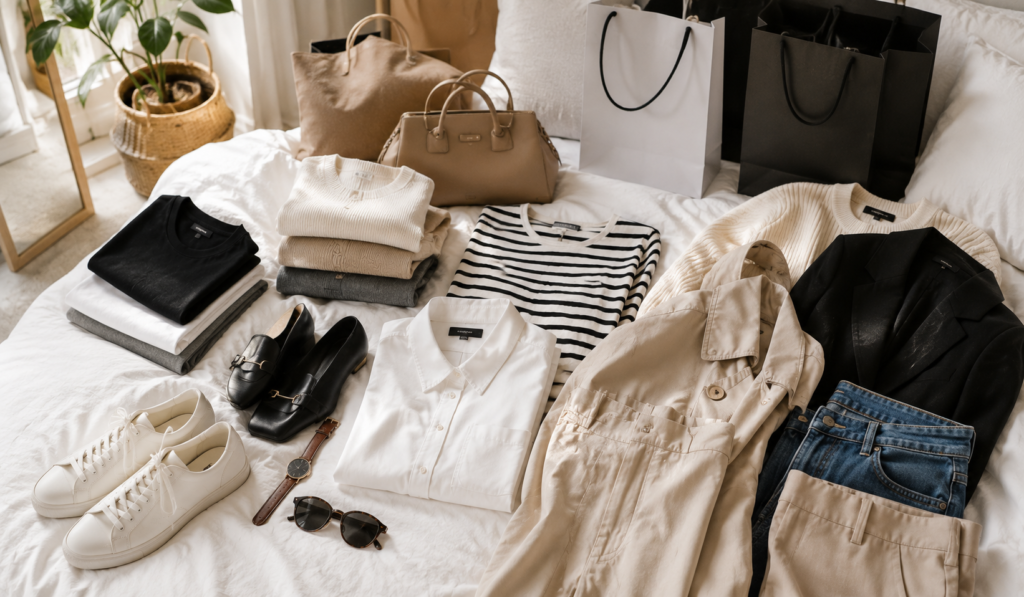
A balanced capsule wardrobe might include:
Tops
Bottoms
Dresses
Outerwear
Shoes
Accessories
Every piece should coordinate with several others, allowing you to create multiple outfits without needing excessive clothing.
Suggested Capsule Wardrobe Size
Category
Suggested Number
T-Shirts
5–8
Shirts & Blouses
4–6
Jeans
2–3
Trousers
2–3
Skirts
2–3
Dresses
3–5
Jackets & Blazers
2–4
Sweaters
3–5
Shoes
5–8 pairs
Accessories
10–15
Remember, quality matters more than quantity. A smaller collection of durable, versatile clothing often provides greater value than a wardrobe filled with rarely worn items.
Understanding your personal style makes it much easier to decide which clothing deserves a place in your capsule wardrobe. Read our Different Types of Fashion Styles guide to discover the styles that suit your personality and lifestyle.
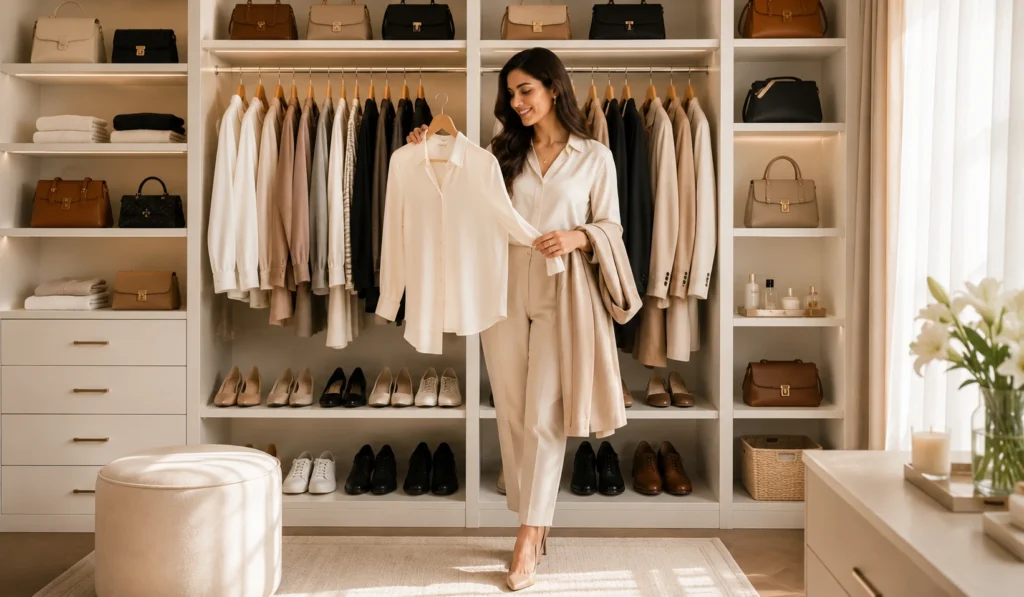
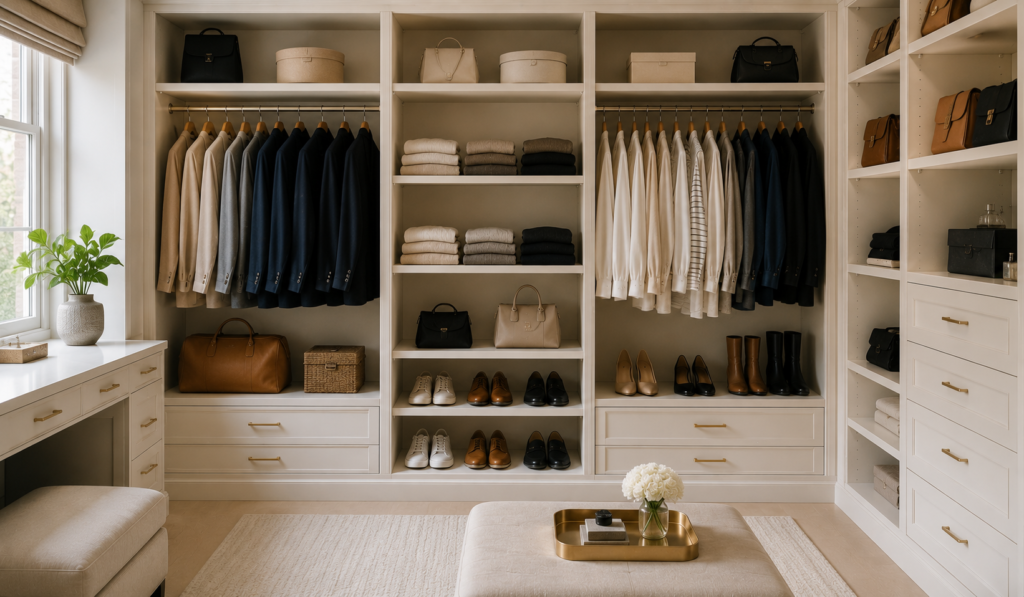
balanced capsule wardrobe contains versatile essentials that work together
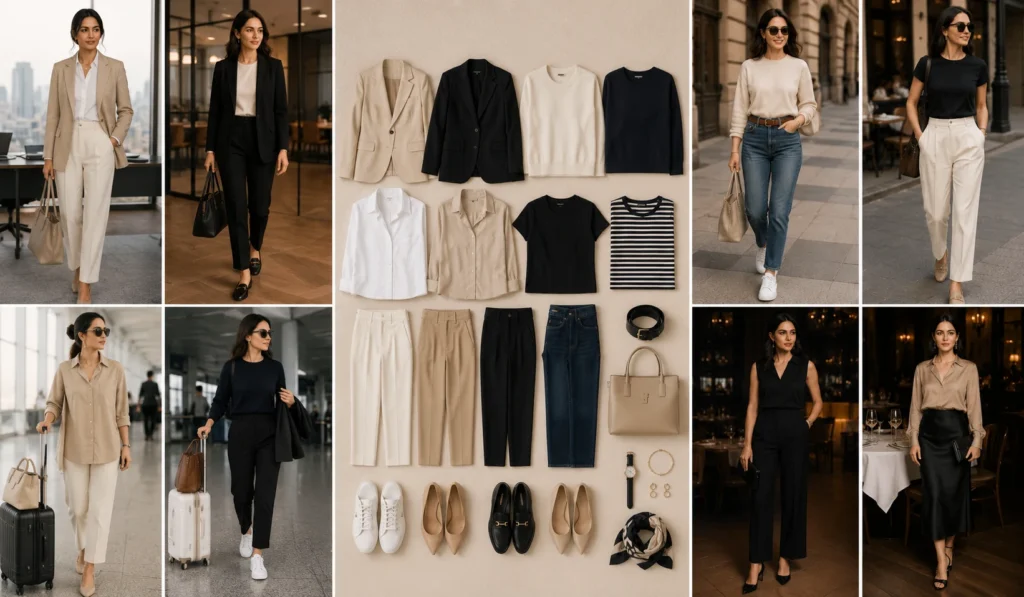
Essential Capsule Wardrobe Pieces for Women
Building a women’s capsule wardrobe starts with timeless clothing that can be worn across different seasons and occasions.
Rather than purchasing trendy items every few months, focus on wardrobe staples that remain stylish year after year.
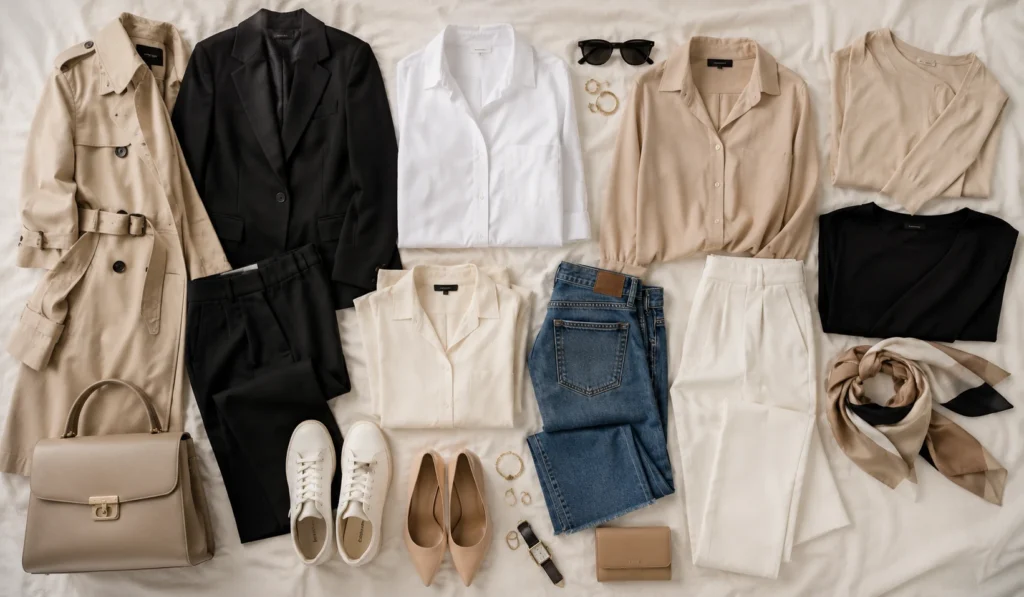
A beginner-friendly women’s capsule wardrobe should include:
Tops
White T-shirt
Black T-shirt
Neutral blouse
Button-up shirt
Lightweight knit sweater
Bottoms
Blue jeans
Black trousers
Neutral skirt
Tailored shorts
Dresses
Little black dress
Casual day dress
Neutral midi dress
Outerwear
Blazer
Denim jacket
Lightweight trench coat
Shoes
White sneakers
Ballet flats
Nude heels
Ankle boots
Accessories
Structured handbag
Crossbody bag
Leather belt
Sunglasses
Wristwatch
Minimal jewellery
Silk scarf
These essentials can create dozens of outfit combinations suitable for work, travel, casual outings, and formal occasions. The right accessories can completely transform simple outfits. Explore our Fashion Accessories Guide to learn how to choose handbags, jewellery, shoes, watches, and scarves that complement your wardrobe. These can also be used as business casuals in office.
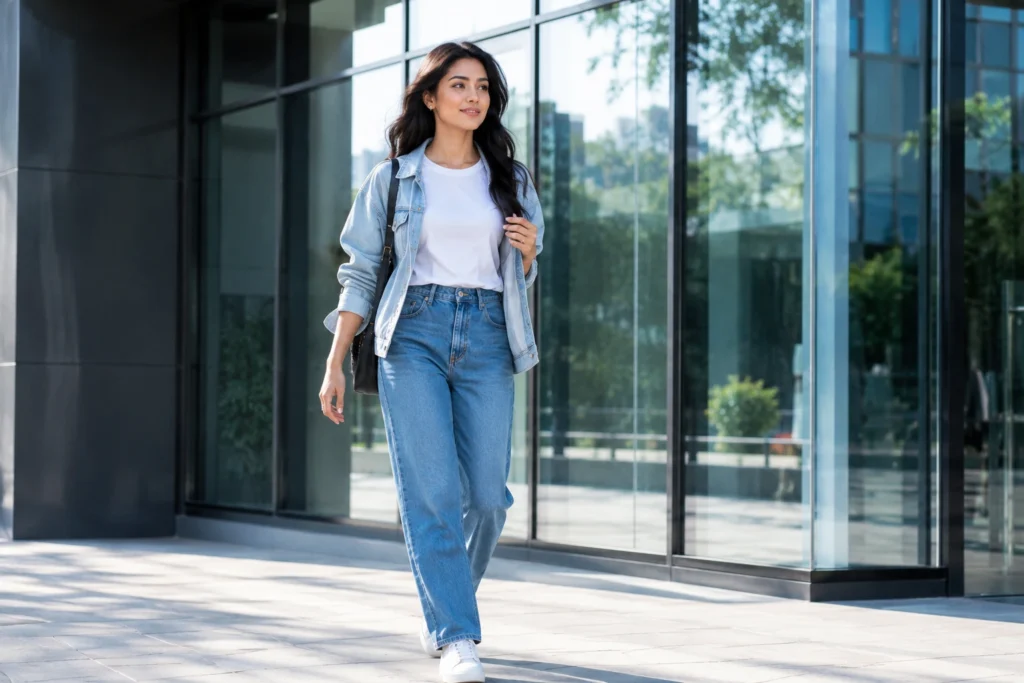
Timeless wardrobe essentials help women create versatile outfits with fewer clothes
Essential Capsule Wardrobe Pieces for Men
A men’s capsule wardrobe should focus on clothing that combines comfort, versatility, and timeless style.
Instead of following every seasonal trend, invest in garments that can be worn throughout the year.
Tops
White T-shirt
Black T-shirt
Oxford shirt
Polo shirt
Neutral knit jumper
Bottoms
Dark blue jeans
Chinos
Black trousers
Outerwear
Navy blazer
Denim jacket
Lightweight bomber jacket
Shoes
White sneakers
Leather loafers
Oxford shoes
Chelsea boots
Accessories
Leather wallet
Wristwatch
Brown belt
Black belt
Sunglasses
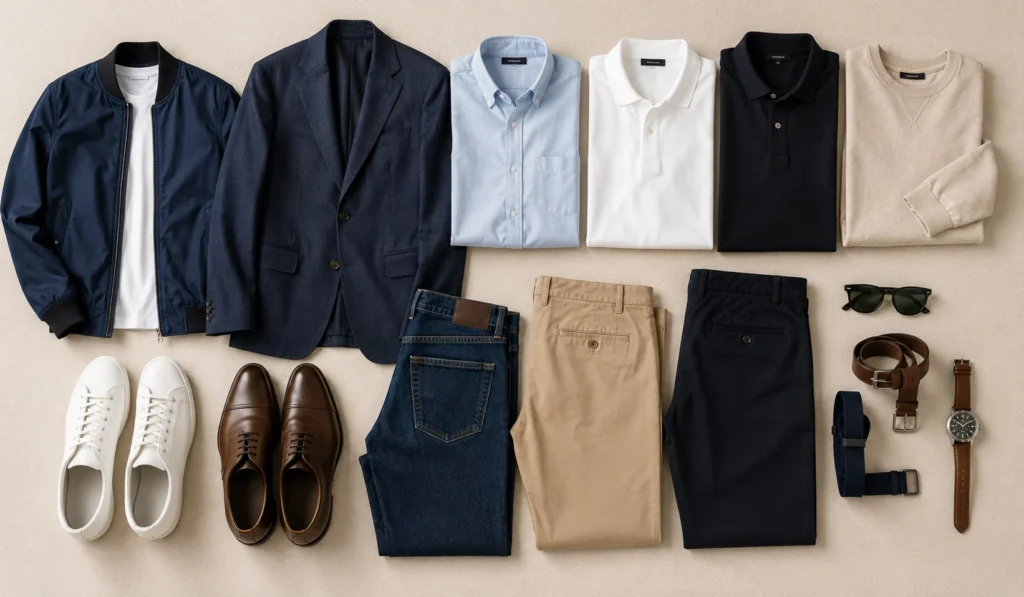
These classic pieces work together to create outfits suitable for the office, casual weekends, business meetings and special occasions.
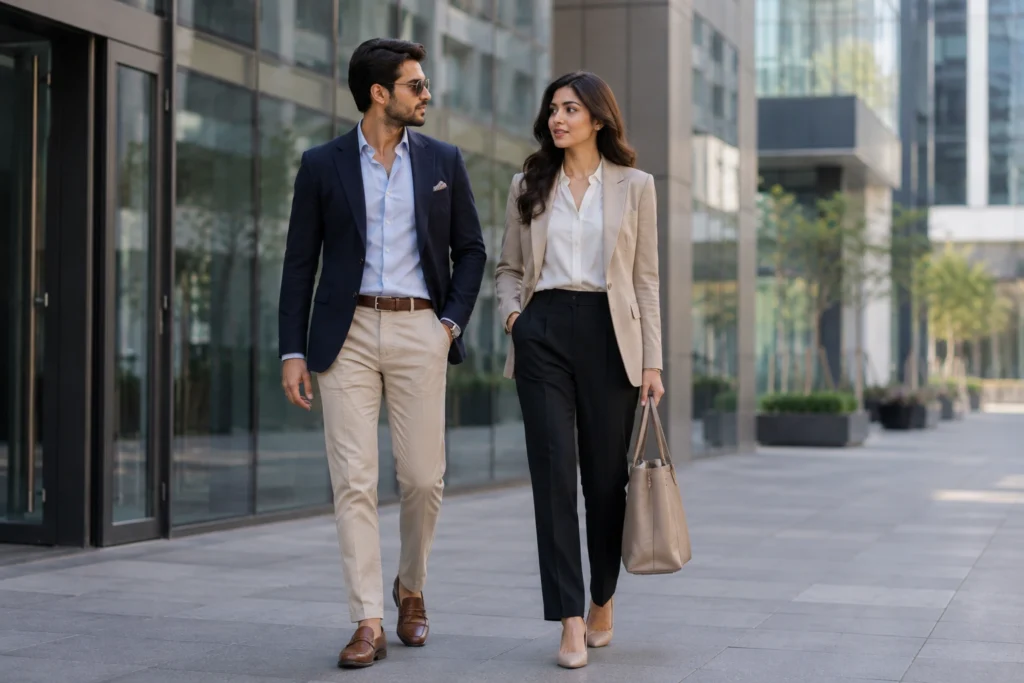
A men’s capsule wardrobe combines versatility, comfort, and timeless style
Choosing the Right Colours for a Capsule Wardrobe
One of the biggest reasons a capsule wardrobe works so well is that the colours coordinate naturally. When your clothing follows a consistent colour palette, creating stylish outfits becomes much easier.
Instead of buying clothes in random colours, choose shades that complement one another and suit your skin tone, lifestyle, and personal preferences.
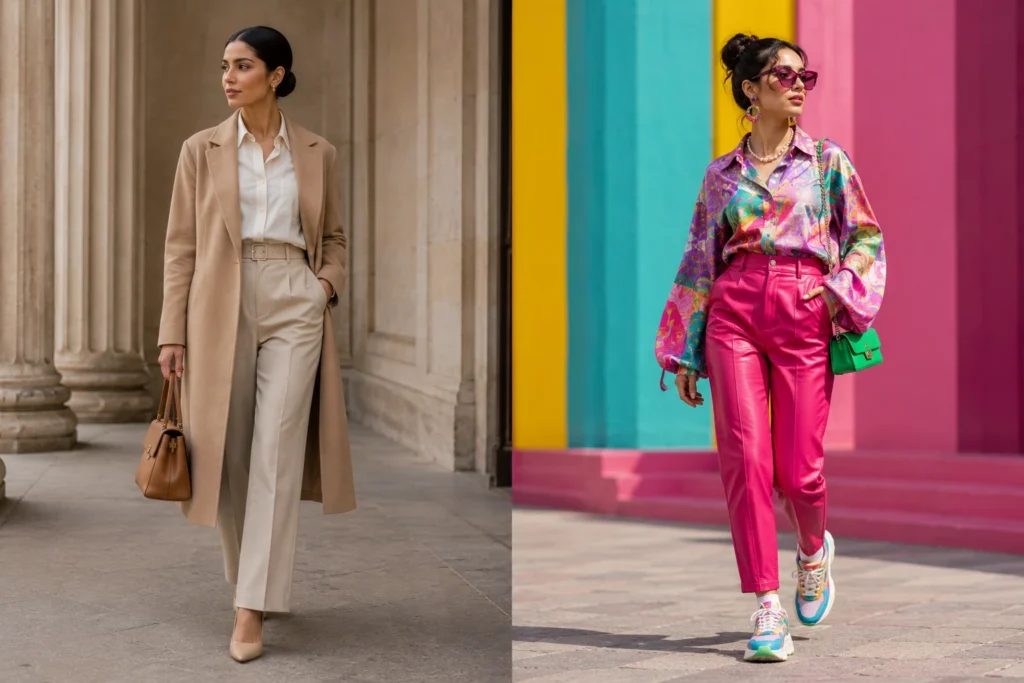
Fashion experts often recommend building your wardrobe around neutral colours, then adding a few accent colours for variety.
Neutral colours include:
White
Black
Grey
Beige
Navy
Brown
Cream
These colours pair effortlessly with one another and rarely go out of style.
Accent colours can include:
Olive Green
Burgundy
Dusty Pink
Sky Blue
Mustard Yellow
Forest Green
By limiting your colour palette, you’ll discover that nearly every top matches every bottom, making outfit planning significantly easier.
How to Choose Colours That Suit You
The best colours depend on several factors, including your complexion, hair colour, and personal style.
Here are a few general guidelines:
Skin Tone
Colours That Usually Work Well
Fair
Navy, Emerald Green, Burgundy, Soft Pink
Medium
Olive, Beige, Camel, White, Royal Blue
Warm
Mustard, Rust, Cream, Brown, Olive
Cool
Grey, Navy, Purple, Black, Blue
Remember, these are only starting points. Confidence and comfort are just as important as colour theory. The Victoria and Albert Museum preserves one of the world’s finest collections of historical fashion and textiles, offering inspiration for timeless wardrobe design.
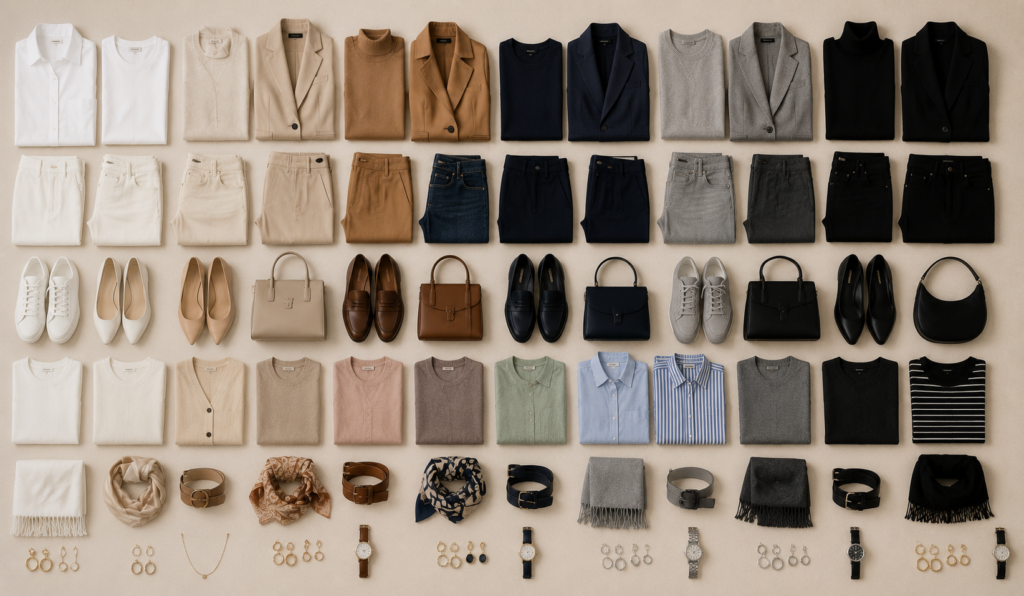
A balanced colour palette makes mixing and matching outfits effortless
Essential Fabrics for a Capsule Wardrobe
Choosing the right fabrics is just as important as choosing the right clothing.
Recommended fabrics include:
Cotton
Breathable, durable, and suitable for everyday wear.
Linen
Perfect for warm climates.
Wool
Excellent for winter layering.
Denim
Timeless and versatile.
Leather
Ideal for shoes, belts, and jackets.
Cashmere
Adds luxury and warmth to knitwear.
Quality fabrics help your wardrobe last longer.
How to Build Multiple Outfits from Fewer Clothes
One of the greatest strengths of a capsule wardrobe is versatility.
Instead of purchasing dozens of individual outfits, you create a wardrobe where every piece works with several others.
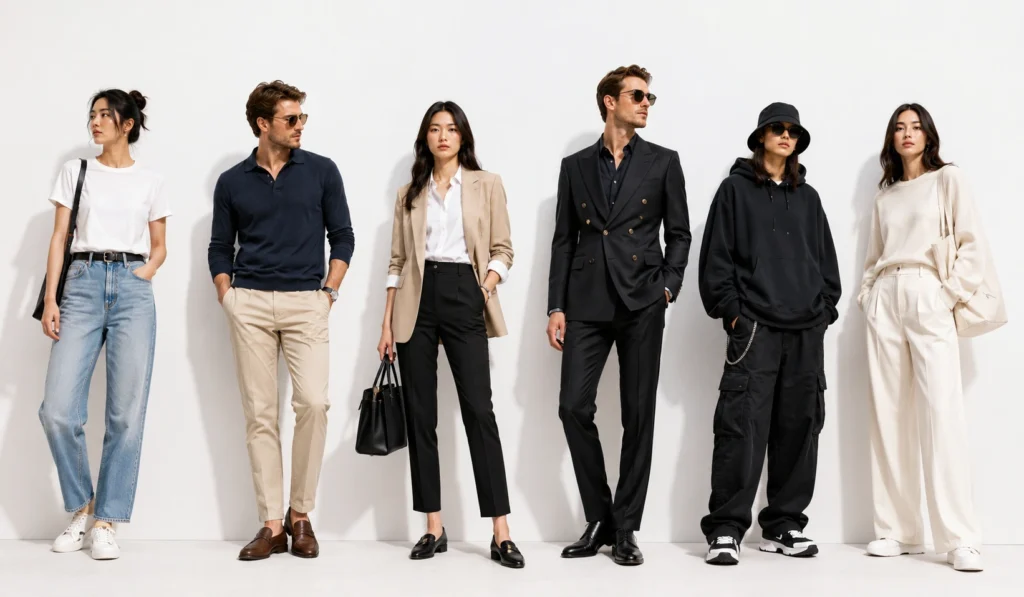
For example:
Basic Capsule Collection
White Shirt
Black Trousers
Blue Jeans
Beige Blazer
White Sneakers
Brown Loafers
From these six items alone, you can create multiple combinations suitable for work, casual outings, dinners, and travel.
Example Outfit Ideas
Occasion
Outfit
Office
White Shirt + Black Trousers + Beige Blazer + Brown Loafers
Casual
White Shirt + Blue Jeans + White Sneakers
Dinner
Black Trousers + Beige Blazer + White Sneakers
Weekend
White Shirt + Blue Jeans + Brown Loafers
The more versatile each clothing item is, the greater the number of outfit combinations you can create.
Use the “Rule of Three”
Before purchasing any new clothing item, ask yourself:
Can I wear this with at least three different outfits I already own?
If the answer is “no,” it’s worth reconsidering the purchase.
This simple rule helps prevent impulse buying and ensures every addition contributes to your wardrobe.
A few timeless clothes can create many outfit combinations
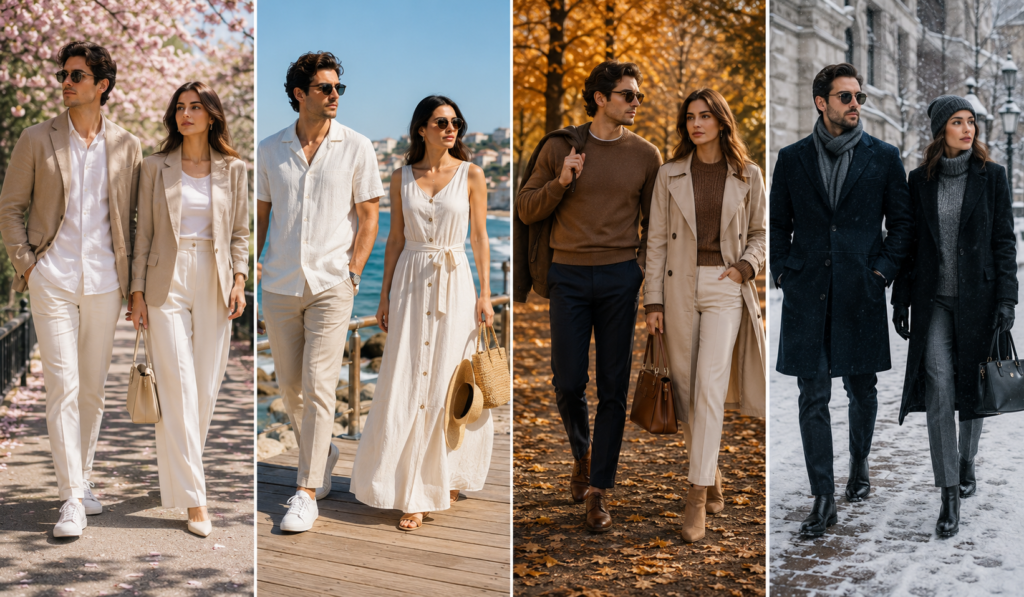
Seasonal Capsule Wardrobes
It doesn’t have to remain identical throughout the year.
Instead, many people maintain a core wardrobe while rotating seasonal clothing.
This keeps your wardrobe practical without becoming overcrowded.
Publications such as Vogue regularly feature seasonal wardrobe inspiration and styling ideas that can help you refresh your capsule wardrobe without compromising its versatility.
Spring Capsule Wardrobe
Focus on:
Lightweight jackets
Cotton shirts
Straight-leg jeans
White trainers
Floral dresses
Cardigans
Summer Capsule Wardrobe
Prioritise breathable fabrics and lighter colours.
Essentials include:
Linen shirts
Cotton T-shirts
Shorts
Summer dresses
Sandals
Sunglasses
Straw hat
Choose natural fabrics that help keep you cool during hot weather. Choosing breathable fabrics is just as important as choosing the right clothing. Read our Best Summer Fabrics for Hot Weather guide to discover which materials provide maximum comfort during warm weather.
Autumn Capsule Wardrobe
Introduce warmer layers such as:
Knit jumpers
Denim jackets
Long-sleeve shirts
Chinos
Chelsea boots
Lightweight scarves
Earth tones such as olive, camel, brown, and burgundy work particularly well during autumn.
Winter Capsule Wardrobe
Winter wardrobes should prioritise warmth without sacrificing versatility.
Include:
Wool coat
Heavy knitwear
Thermal layers
Leather boots
Wool scarf
Gloves
Beanie
Layering allows you to stay warm while creating stylish combinations.
Rotating seasonal essentials keeps your wardrobe practical all year
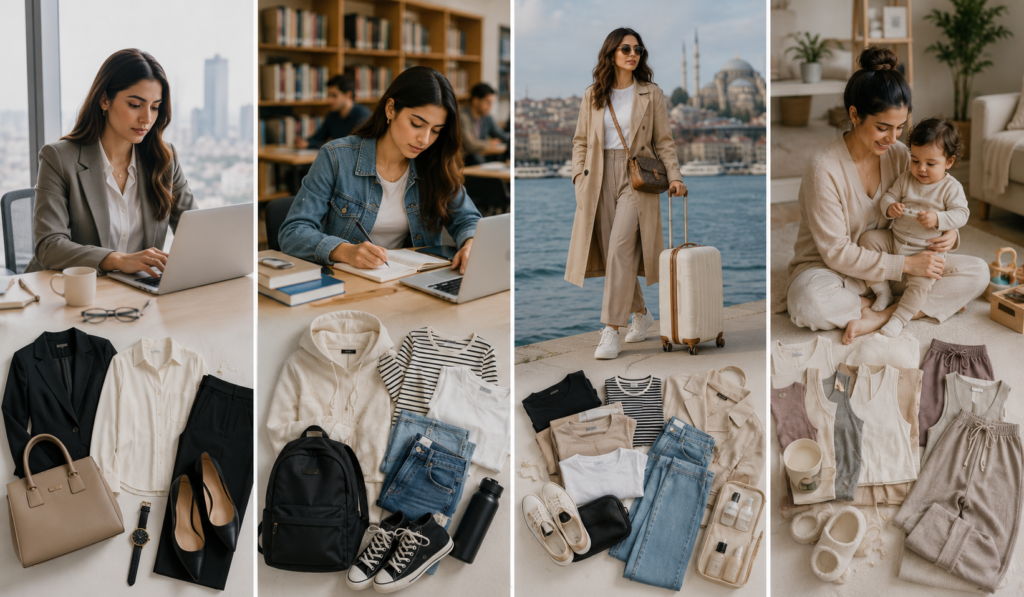
Capsule Wardrobe for Different Lifestyles
A successful capsule wardrobe should fit your daily routine rather than following a universal formula.
Office Professionals
Prioritise:
Blazers
Tailored trousers
White shirts
Loafers
Leather handbags
University Students
Choose:
Jeans
T-shirts
Trainers
Hoodies
Backpacks
Comfort and versatility should come first.
Stay-at-Home Parents
Focus on:
Comfortable trousers
Easy-care tops
Trainers
Layering pieces
Practical clothing makes daily activities easier.
Frequent Travellers
A travel-friendly capsule wardrobe includes:
Wrinkle-resistant fabrics
Neutral colours
Comfortable shoes
Lightweight jackets
Packing becomes much simpler when every item coordinates.
Creative Professionals
You can introduce:
Statement jackets
Interesting textures
Colourful accessories
while still maintaining a cohesive wardrobe.
Lifestyle should guide every capsule wardrobe
Capsule Wardrobe for Different Age Groups
A capsule wardrobe should evolve as your lifestyle changes.
Teenagers
Prioritise comfort, versatility, and affordability.
Young Professionals
Focus on office-ready clothing that also works for evenings and weekends.
Parents
Choose practical clothing that’s easy to maintain and comfortable for busy days.
Adults Over 50
Invest in timeless tailoring, premium fabrics, and high-quality footwear.
Age doesn’t define style. Lifestyle should always guide wardrobe choices.
Capsule Wardrobe on a Budget
Building a capsule wardrobe doesn’t require expensive designer clothing.
Many excellent wardrobes are built slowly over time.
Ways to save money include:
Shopping during seasonal sales
Buying quality second-hand clothing
Repairing garments
Choosing timeless basics
Avoiding impulse purchases
A smaller wardrobe filled with quality clothing usually provides better value than a large wardrobe of inexpensive fast-fashion items.
Budget Priorities
Invest more in:
Shoes
Blazers
Winter coats
Jeans
Spend less on:
Trendy colours
Seasonal novelty items
Fast-fashion accessories
You don’t need a large budget to build a timeless wardrobe
Building a Capsule Wardrobe Without Throwing Everything Away
One of the biggest misconceptions is that you must completely replace your wardrobe.
Instead:
Keep your favourite essentials.
Remove damaged items.
Donate clothing you never wear.
Replace items gradually.
This approach is more affordable and realistic.
How to declutter Your Wardrobe
Before building a capsule wardrobe, it’s important to evaluate what you already own.
Many people discover they have forgotten about perfectly usable clothing hidden behind items they never wear.
Follow these simple steps:
Step 1: Empty Your Wardrobe
Take everything out.
Seeing every item together makes it easier to identify duplicates and unnecessary purchases.
Step 2: Sort Into Categories
Create four piles:
Keep
Donate
Sell
Recycle
Be honest with yourself.
If you haven’t worn something in over a year, consider letting it go unless it has sentimental value or is for special occasions.
Step 3: Keep Only What Fits Your Lifestyle
Ask yourself:
Does it fit well?
Is it comfortable?
Would I buy it again today?
Does it match other clothes?
If the answer is “no” to most of these questions, it probably doesn’t belong in yours.
Step 4: Organise by Category
Arrange your remaining clothing into sections:
Shirts
Trousers
Dresses
Jackets
Shoes
Accessories
An organised wardrobe makes daily dressing much easier.
Decluttering is the first step towards building an organised capsule wardrobe
Digital Tools That Help You Manage a Capsule Wardrobe
Technology can make wardrobe management much easier.
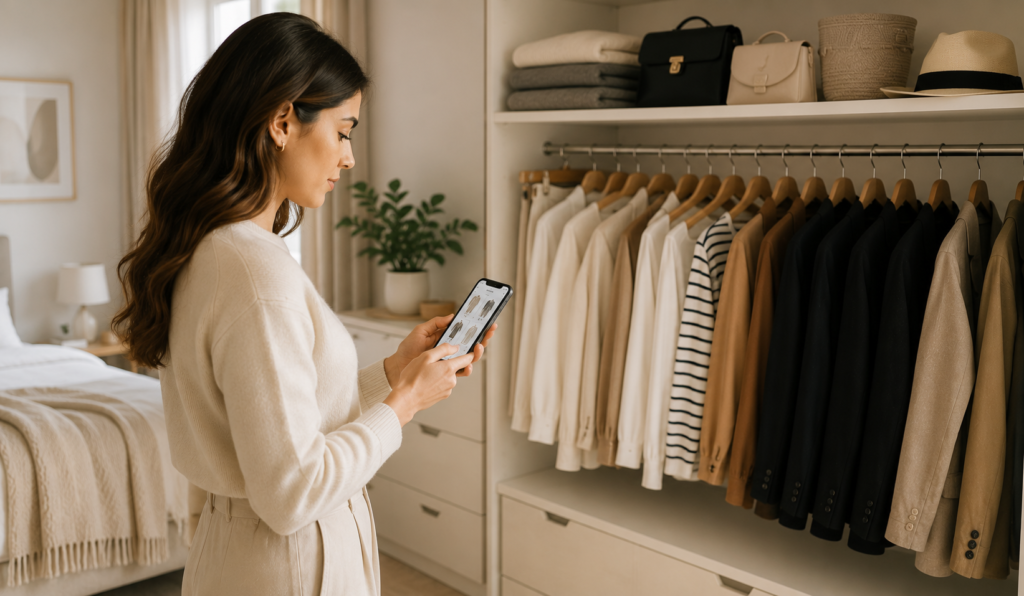
Many people now use wardrobe-planning apps to organise clothing and create outfit combinations.
Helpful digital tools allow you to:
Photograph your wardrobe
Plan outfits
Track what you wear
Create packing lists
Reduce duplicate purchases
Even if you prefer not to use an app, creating a simple spreadsheet or photo album of your clothing can help you make better shopping decisions.
Digital wardrobe planners simplify outfit organisation
Common Capsule Wardrobe Mistakes to Avoid
Even with the best intentions, beginners often make mistakes when creating a capsule wardrobe.
Avoid these common pitfalls.
Buying Everything at Once
Building a capsule wardrobe is a gradual process.
Replace clothing as needed rather than purchasing an entirely new wardrobe overnight.
Following Every Trend
Trendy clothing often becomes outdated quickly.
Choose timeless pieces first, then add seasonal trends sparingly.
Ignoring Your Lifestyle
A business professional and a university student require different wardrobes.
Build your wardrobe around how you actually live, not how you imagine you should dress.
Choosing Style Over Comfort
If clothing isn’t comfortable, you’re unlikely to wear it regularly.
Comfort and confidence should always go together.
Forgetting Accessories
Accessories play an important role in making a capsule wardrobe feel fresh.
A different scarf, handbag, belt, or watch can completely change the appearance of an outfit.
Accessories are one of the easiest ways to create new looks from a small wardrobe. Explore our Fashion Accessories Guide to discover timeless accessories that maximise every outfit.
Avoiding common mistakes helps you build a practical and stylish capsule wardrobe
Common Myths About Capsule Wardrobes
Many people misunderstand what It really means.
Myth 1
“You can only own 30 clothes.”
Reality:
There is no universal number.
Myth 2
“Capsule wardrobes are boring.”
Reality:
Accessories, colours, and layering create endless variety.
Myth 3
“They’re only for minimalists.”
Reality:
Anyone can benefit from owning more versatile clothing.
Myth 4
“You can’t follow fashion trends.”
Reality:
Add trends carefully without replacing timeless essentials.
Myth 5
“Building one is expensive.”
Reality:
Most people already own many suitable basics.
Real-Life Capsule Wardrobe Examples
Understanding the theory is helpful, but seeing how it works in everyday life makes the concept much easier to apply. Below are three practical examples that demonstrate how different lifestyles influence wardrobe choices.
Example 1: University Student
A university student often needs comfortable clothing that can transition from lectures to social activities.
A simple capsule wardrobe may include:
5 T-shirts
2 jeans
1 pair of chinos
2 hoodies
1 denim jacket
White sneakers
Backpack
Watch
These items can create more than twenty outfit combinations while remaining affordable and practical.
Example 2: Office Professional
Someone working in an office benefits from clothing that looks polished yet remains comfortable throughout the day.
Typical essentials include:
White shirts
Navy shirts
Tailored trousers
Blazer
Loafers
Leather belt
Wristwatch
Structured handbag or briefcase
Adding a few interchangeable ties or scarves creates even more variety.
Example 3: Frequent Traveller
Travellers benefit from lightweight clothing that packs easily.
Choose:
Neutral colours
Wrinkle-resistant fabrics
Comfortable trainers
Lightweight jacket
Crossbody bag
Packing becomes significantly easier because every item works together.
Signs Your Capsule Wardrobe Is Working
You’ll know your wardrobe is successful when:
Getting dressed takes only a few minutes.
Nearly every item matches another.
You stop making impulse purchases.
You wear almost everything you own.
Your wardrobe feels organised.
You feel more confident in your outfits.
These are much better indicators than simply owning fewer clothes.
Expert Tips for Maintaining a Capsule Wardrobe Long-Term
Creating a capsule wardrobe is only the beginning. Maintaining it consistently ensures it continues to save time, reduce clutter, and reflect your personal style.
Professional stylists often recommend the following habits:
Review Your Wardrobe Quarterly
Every three months:
Remove damaged items.
Repair garments where possible.
Donate pieces you no longer wear.
Follow the “One In, One Out” Rule
Whenever you buy a new clothing item, consider removing one existing item.
This helps prevent your wardrobe from gradually becoming overcrowded again.
Care for Your Clothing Properly
Good maintenance extends the life of your wardrobe.
Simple habits include:
Washing according to care labels.
Using padded hangers for delicate garments.
Folding knitwear instead of hanging it.
Storing seasonal clothing in breathable storage bags.
Avoid Emotional Shopping
Many unnecessary purchases happen because of boredom, stress, or temporary discounts.
Before buying something new, ask yourself:
Do I really need this?
Will it work with at least three outfits?
Will I still wear it next year?
Invest in Timeless Quality
Choose garments with classic cuts, durable fabrics, and neutral colours.
Fashion trends come and go, but quality essentials remain useful for many years.
Regular maintenance keeps your capsule wardrobe functional and stylish
How a Capsule Wardrobe Supports Sustainable Fashion
It isn’t only good for your wardrobe—it also benefits the environment.
Buying fewer clothes means:
Less textile waste
Reduced water consumption
Lower carbon emissions
Longer garment lifespan
Instead of replacing clothing every season, repairing and caring for quality garments helps reduce unnecessary consumption.
Many consumers now choose capsule wardrobes because they combine style with responsible shopping habits.
Capsule Wardrobe Checklist
If you’re ready to build your first capsule wardrobe, use this practical checklist to make sure you have the essentials. Remember, you don’t need to buy everything at once. Start with what you already own and gradually invest in quality pieces.
Women’s Capsule Wardrobe Checklist
Tops
□ White T-shirt
□ Black T-shirt
□ Neutral blouse
□ White button-up shirt
□ Knit sweater
Bottoms
□ Blue jeans
□ Black trousers
□ Beige trousers
□ Neutral skirt
Dresses
□ Casual day dress
□ Little black dress
□ Midi dress
Outerwear
□ Denim jacket
□ Neutral blazer
□ Trench coat
Shoes
□ White sneakers
□ Ballet flats
□ Nude heels
□ Ankle boots
Accessories
□ Structured handbag
□ Crossbody bag
□ Leather belt
□ Wristwatch
□ Sunglasses
□ Silk scarf
Men’s Capsule Wardrobe Checklist
Tops
□ White T-shirt
□ Black T-shirt
□ Oxford shirt
□ Polo shirt
□ Knit jumper
Bottoms
□ Blue jeans
□ Chinos
□ Black trousers
Outerwear
□ Navy blazer
□ Denim jacket
□ Bomber jacket
Shoes
□ White sneakers
□ Leather loafers
□ Oxford shoes
□ Chelsea boots
Accessories
□ Leather wallet
□ Wristwatch
□ Brown belt
□ Black belt
□ Sunglasses
A simple checklist helps you build a versatile wardrobe one piece at a time
Smart Shopping Tips for Building a Capsule Wardrobe
Building a capsule wardrobe doesn’t require a large budget. The key is shopping intentionally rather than impulsively.
Follow these tips to make better purchasing decisions.
Buy Quality Over Quantity
Choose durable fabrics and good construction instead of purchasing many inexpensive garments.
Shop with a List
Create a shopping list before visiting stores or shopping online.
This reduces impulse purchases.
Prioritize Versatility
Before buying anything, ask:
Can I wear this with at least three outfits I already own?
Wait Before Buying
If you’re unsure about a purchase, wait 24–48 hours.
Often you’ll realise you don’t actually need it.
Invest Slowly
It develops over time.
There’s no need to replace your entire wardrobe immediately.
Continue Exploring Fashion
Readers interested in fashion retail trends, consumer behaviour, and wardrobe investment strategies can explore additional insights from The Business of Fashion.
Continue learning with these related guides on SahraaWorld:
Professional stylists recommend several habits that can elevate even the simplest wardrobe:
Layer lightweight garments for depth.
Use accessories to refresh familiar outfits.
Mix textures such as denim, cotton, wool, and leather.
Tailor clothing for a better fit.
Invest in comfortable, high-quality shoes.
Store garments properly to extend their lifespan.
Review your wardrobe every season.
Small improvements often make a bigger difference than buying more clothes.
Frequently Asked Questions
What is a capsule wardrobe?
A capsule wardrobe is a carefully selected collection of versatile clothing that can be mixed and matched to create many outfits while reducing clutter and unnecessary shopping.
How many clothes should a capsule wardrobe have?
Most capsule wardrobes contain 30–50 versatile pieces, excluding sleepwear, underwear, sportswear, and special occasion clothing.
Is a capsule wardrobe suitable for every season?
Yes.
Many people keep a core wardrobe throughout the year while rotating seasonal items such as coats, knitwear, sandals, or linen clothing.
Can I follow fashion trends with a capsule wardrobe?
Absolutely.
The foundation should consist of timeless basics, while seasonal trends can be added through a few carefully selected pieces or accessories.
Is a capsule wardrobe only for women?
No.
Capsule wardrobes work equally well for men, women, teenagers, and anyone looking to simplify their wardrobe.
Does a capsule wardrobe save money?
Yes. Buying fewer, higher-quality garments often reduces unnecessary spending and increases the lifespan of your clothing.
Which colours work best?
Neutral colours such as:
White
Black
Grey
Navy
Beige
Brown
These colours combine easily and remain fashionable for many years.
Can accessories be included?
Definitely. Accessories help create different looks while keeping the clothing collection relatively small.
How often should I update my capsule wardrobe?
Review your wardrobe at the beginning of each season.
Replace worn-out items and add seasonal essentials only when necessary.
Is a capsule wardrobe good for sustainable fashion?
A capsule wardrobe is not about limiting your style—it’s about making smarter choices that simplify your daily life. By focusing on timeless, versatile clothing instead of constantly chasing trends, you can build a wardrobe that is practical, stylish, and easy to manage.
Whether you’re starting from scratch or reorganizing the clothes you already own, remember that building a capsule wardrobe is a gradual journey. Invest in quality essentials, choose colours that work well together, and prioritize pieces that reflect your lifestyle and personality.
With thoughtful planning, you’ll spend less time deciding what to wear, reduce unnecessary shopping, and create countless outfit combinations from a smaller collection of clothing.
Ultimately, a capsule wardrobe helps you dress with greater confidence while supporting a more sustainable and intentional approach to fashion.
Different Types of Fashion Styles: A Complete Guide for Every Occasion
Different types of fashion styles help people express their personality, lifestyle, and confidence through clothing. Whether you prefer casual outfits, luxury fashion, streetwear, business casual, or minimalist fashion, understanding these styles makes it easier to build a wardrobe that suits every occasion. In this complete guide, you’ll discover the most popular fashion styles, how to identify your own style, and practical tips for dressing with confidence.
Table of Contents
What Are Fashion Styles?
Why Understanding Fashion Styles Matters
How to Find Your Personal Style
Casual Fashion
Smart Casual
Business Casual
Formal Fashion
Streetwear
Luxury Fashion
Minimalist Fashion
Bohemian Style
Athleisure
Traditional Fashion
Sustainable Fashion
Fashion Style Comparison
Which Fashion Style Is Right for You?
Fashion Mistakes to Avoid
FAQs
Conclusion
What Are Fashion Styles?
Fashion styles are different ways of dressing that reflect a person’s personality, lifestyle, culture, profession, or preferences. While fashion trends come and go every season, fashion styles tend to remain more consistent because they represent how individuals choose to express themselves.
Think of fashion styles as different “languages” of clothing. Just as people have different personalities, they also have different ways of dressing. Some people prefer simple, timeless outfits, while others enjoy bold colors, luxury brands, or modern streetwear.
Understanding fashion styles helps you build a wardrobe that works for your daily life rather than buying clothes that you rarely wear.
Whether you’re a student, working professional, homemaker, or fashion enthusiast, discovering your style can make shopping easier, improve your confidence, and help you create outfits that truly represent who you are.
Why Understanding Fashion Styles Matters
Many beginners believe they need to follow every new trend to look fashionable. In reality, understanding your personal fashion style is much more important than chasing seasonal trends.
Knowing your preferred style helps you:
Build a practical wardrobe.
Save money by avoiding unnecessary purchases.
Dress confidently for different occasions.
Create outfits more quickly.
Develop a consistent personal image.
For example, someone who prefers minimalist fashion will naturally choose clean lines and neutral colors, while someone drawn to streetwear may enjoy oversized clothing and sneakers.
Neither style is better than the other—they simply suit different personalities and lifestyles.
Fashion becomes much easier when you stop asking, “What’s trending?” and start asking, “What suits me?”
Fashion Style vs Fashion Trend
Many people confuse fashion styles with fashion trends, but they are different concepts.
Fashion Style
Fashion Trend
Reflects personality
Changes every season
Long-term
Temporary
Consistent wardrobe
Influenced by designers and social media
Personal expression
Popular at a particular time
Develops gradually
Can disappear quickly
For example, a person may have a minimalist style while occasionally incorporating a trending color or accessory into their outfit.
The trend changes, but the underlying style remains the same.
Before exploring specific fashion styles, you may find it helpful to read our What Is Fashion? The Complete Beginner’s Guide, which explains the fundamentals of fashion, personal style, and how trends influence the way we dress.
How to Discover Your Personal Style
Finding your personal style doesn’t happen overnight. It’s a gradual process of understanding what makes you feel comfortable, confident, and authentic.
Here are a few practical steps to help you discover your style.
1. Understand Your Lifestyle
Your wardrobe should reflect how you spend your time.
Ask yourself:
Do you work in an office?
Are you a university student?
Do you attend formal events often?
Do you travel frequently?
Do you prefer comfort or elegance?
Your answers will help you identify the types of clothing you need most.
2. Choose Clothes That Fit Well
No matter which fashion style you prefer, proper fit is essential.
Well-fitted clothing looks more polished, feels more comfortable, and improves confidence.
Instead of focusing only on brand names, pay attention to:
Shoulder fit
Sleeve length
Trouser length
Waist fit
Fabric quality
3. Build Around Wardrobe Essentials
Every style begins with versatile basics.
Examples include:
White shirt
Blue jeans
Black trousers
Neutral blazer
Comfortable sneakers
Leather shoes
Simple handbag
Classic watch
These essentials work with almost every fashion style.
Different Types of Fashion Styles: Casual Fashion
Casual fashion is the most popular clothing style in everyday life. It focuses on comfort, practicality, and effortless style.
Unlike formal clothing, casual fashion allows greater flexibility while still looking neat and fashionable.
Typical casual wardrobe items include:
T-shirts
Jeans
Polo shirts
Sneakers
Hoodies
Casual dresses
Denim jackets
Comfortable sandals
Casual fashion is ideal for:
University
Shopping
Weekend outings
Travel
Everyday activities
Wardrobe Essentials
White sneakers
Blue jeans
Plain T-shirts
Denim jacket
Lightweight hoodie
Styling Tip
Choose well-fitted basics in neutral colors, then add one colorful accessory such as a scarf, cap, or handbag to create visual interest.
Smart Casual Fashion
Smart casual is one of the most versatile fashion styles because it balances comfort with sophistication.
It sits between casual and formal wear, making it suitable for occasions where you want to look polished without appearing overly formal.
Examples of smart casual outfits include:
Women
Tailored trousers with a blouse
Midi dress with loafers
Blazer over a simple top and jeans
Men
Chinos with a polo shirt
Oxford shirt with dark jeans
Lightweight blazer with loafers
Smart casual works well for:
Dinner dates
Business lunches
Networking events
Casual office environments
Family celebrations
Wardrobe Essentials
Neutral blazer
Chinos or tailored trousers
Loafers
Oxford shirt
Leather belt
Common Mistake
Avoid combining very formal pieces, such as a business suit and tie, with sporty clothing. Smart casual should look balanced and intentional.
Business Casual Fashion
Business casual is a professional dress style that combines the polished appearance of formal wear with the comfort of casual clothing. It has become increasingly popular in modern workplaces where employees are encouraged to dress professionally without wearing a full suit every day.
Business casual is ideal for professionals who want to look smart, approachable, and confident.
Unlike formal business attire, business casual allows more flexibility in colors, fabrics, and outfit combinations.
Key Characteristics
Business casual focuses on clean, well-fitted clothing that maintains a professional appearance.
Typical clothing includes:
Women
Blazers
Tailored trousers
Midi skirts
Blouses
Closed-toe flats
Block heels
Men
Chinos
Oxford shirts
Polo shirts
Blazers
Leather loafers
Dress shoes
Neutral colors such as navy, grey, beige, black, and white work particularly well.
Best Occasions
Business casual is perfect for:
Office work
Client meetings
Conferences
Business lunches
Interviews (where a full suit isn’t required)
Professional networking events
Wardrobe Essentials
Navy blazer
White Oxford shirt
Beige chinos
Black trousers
Leather loafers
Structured handbag
Classic wristwatch
Outfit Example
Women
White blouse + Beige tailored trousers + Black blazer + Nude heels + Leather tote bag
Men
Light blue Oxford shirt + Navy chinos + Brown loafers + Navy blazer + Leather belt
Styling Tip
Keep accessories minimal. A clean watch, quality belt, and structured handbag often create a more professional impression than wearing multiple accessories.
Common Mistakes
Avoid:
Ripped jeans
Graphic T-shirts
Sportswear
Flip-flops
Oversized hoodies
Excessively bright patterns
Business casual should always look neat and intentional.
Formal Fashion
Formal fashion represents elegance, sophistication, and timeless style. It is reserved for occasions that require a polished and refined appearance.
Formal clothing emphasizes excellent tailoring, premium fabrics, and attention to detail.
Key Characteristics
Formal fashion typically includes:
Women
Evening gowns
Cocktail dresses
Elegant heels
Clutches
Fine jewelry
Men
Business suits
Tuxedos
Dress shirts
Silk ties
Oxford shoes
Dark, neutral colors such as black, navy, charcoal, and deep burgundy are commonly associated with formal wear.
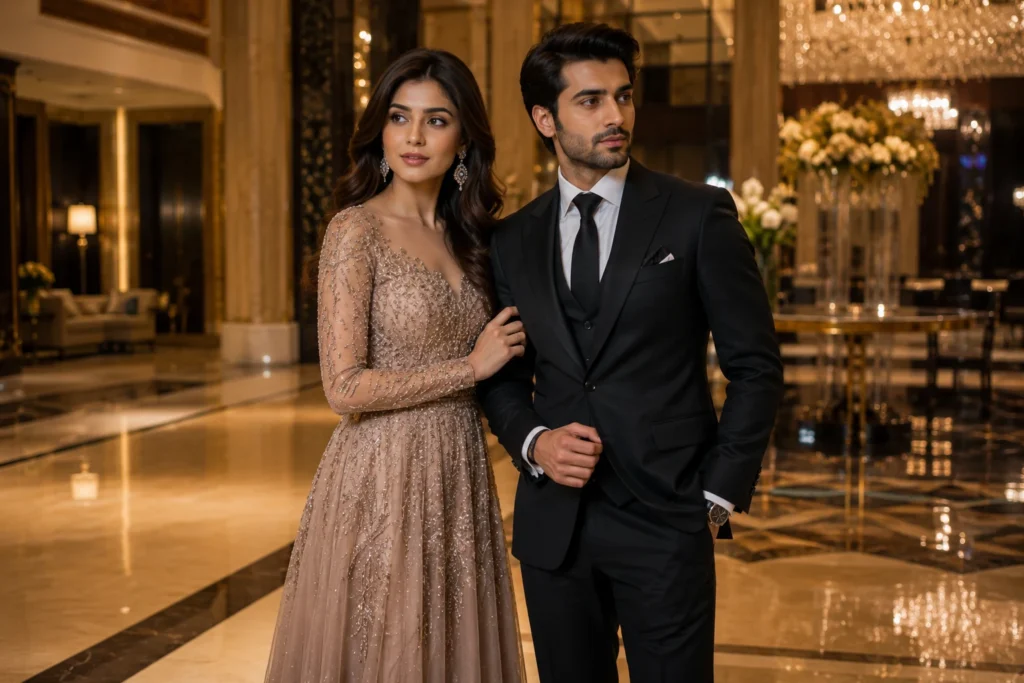
Black suit + White dress shirt + Black tie + Oxford shoes
Styling Tip
When dressing formally, focus on fit before fashion. Even a simple outfit looks luxurious when tailored correctly.
Common Mistakes
Avoid:
Wrinkled clothing
Casual sneakers
Large backpacks
Loud prints
Poorly fitted jackets
Different Types of Fashion Styles: Streetwear
Streetwear is one of the most influential modern fashion styles. Originating from skateboarding, hip-hop, and youth culture, it has grown into a global movement embraced by both luxury brands and everyday fashion enthusiasts. A capsule wardrobe can be adapted to any style as well.
Streetwear values individuality, comfort, and creativity over traditional fashion rules.
Key Characteristics
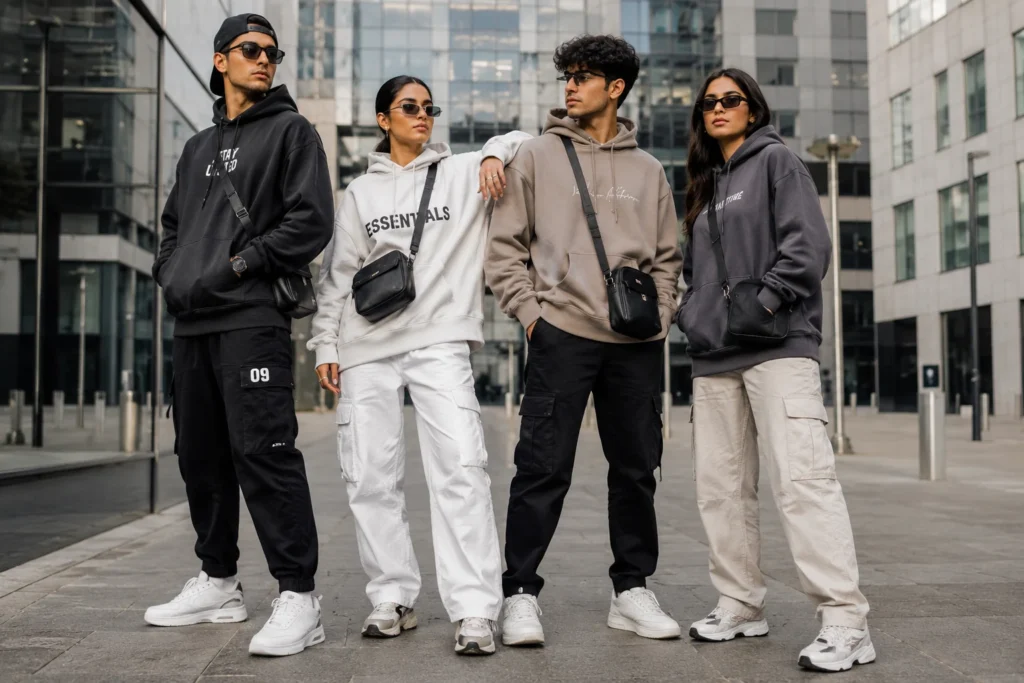
Streetwear often features:
Oversized hoodies
Graphic T-shirts
Cargo pants
Sneakers
Baseball caps
Bomber jackets
Crossbody bags
It frequently combines bold graphics with relaxed silhouettes.
Best Occasions
Streetwear works well for:
Casual outings
Shopping
Travel
University
Music festivals
Weekend activities
Wardrobe Essentials
Oversized hoodie
Graphic T-shirt
White sneakers
Cargo pants
Denim jacket
Cap
Outfit Example
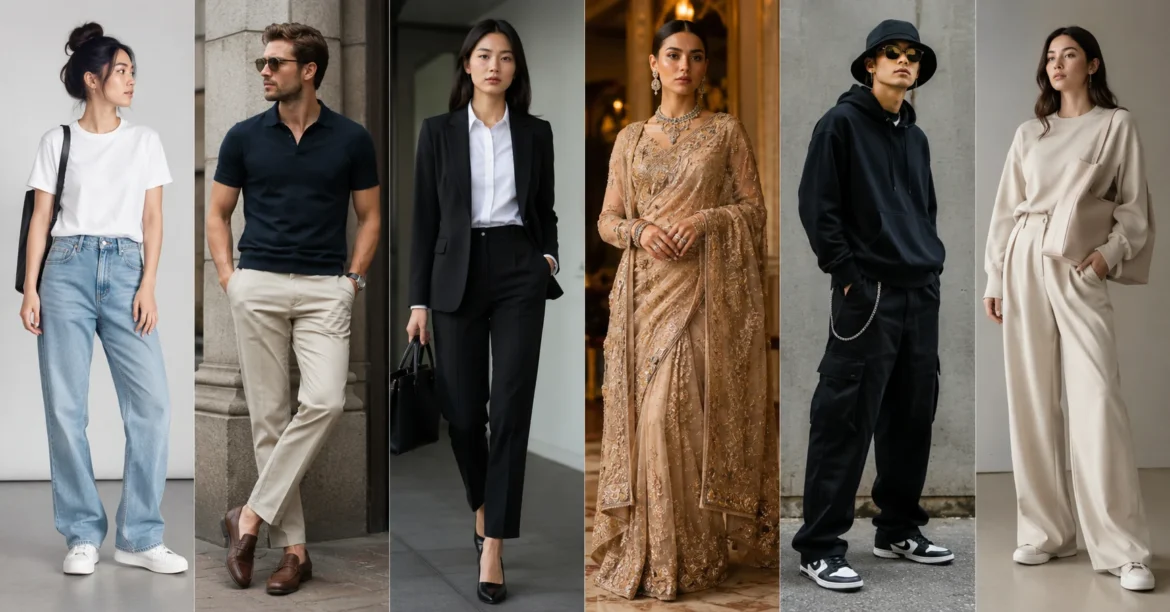
Oversized hoodie + Black cargo trousers + White sneakers + Crossbody bag + Baseball cap
Styling Tip
Balance oversized pieces with more fitted garments. For example, pair an oversized hoodie with slim-fit trousers to create a cleaner silhouette.
Common Mistakes
Avoid:
Wearing oversized clothing from head to toe
Mixing too many bold graphics
Neglecting clean sneakers
Wearing poorly maintained clothing
Luxury Fashion
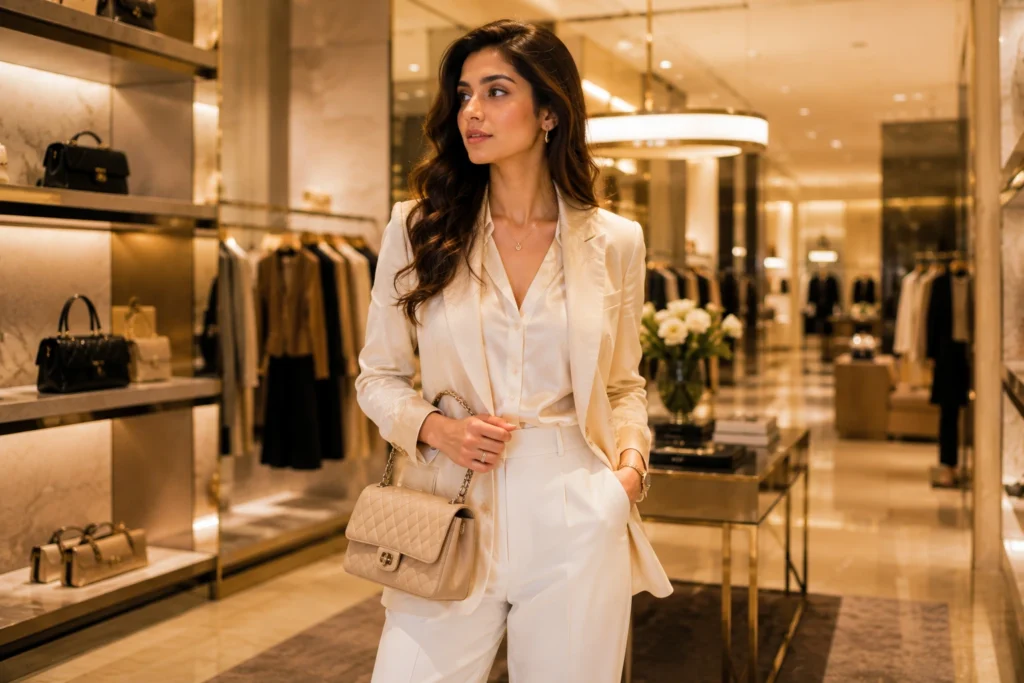
Luxury fashion is one of the most elegant different types of fashion styles. It focuses on exceptional craftsmanship, premium materials, timeless design, and exclusivity. Rather than changing rapidly with every trend, luxury fashion often emphasises quality and longevity.
Luxury clothing is designed with meticulous attention to detail, using high-quality fabrics and skilled tailoring.
Understanding these styles becomes much easier when you know how fashion has evolved over time. Explore our History of Fashion: How Clothing Evolved Through Time to discover how today’s clothing styles developed through centuries of cultural and social change.
For readers interested in luxury fashion, runway collections, and designer insights, Vogue regularly covers global fashion trends and luxury collections.
Key Characteristics
Luxury fashion typically includes:
Premium fabrics
Excellent tailoring
Elegant silhouettes
Limited collections
Timeless color palettes
High-quality accessories
The emphasis is on craftsmanship rather than simply displaying logos.
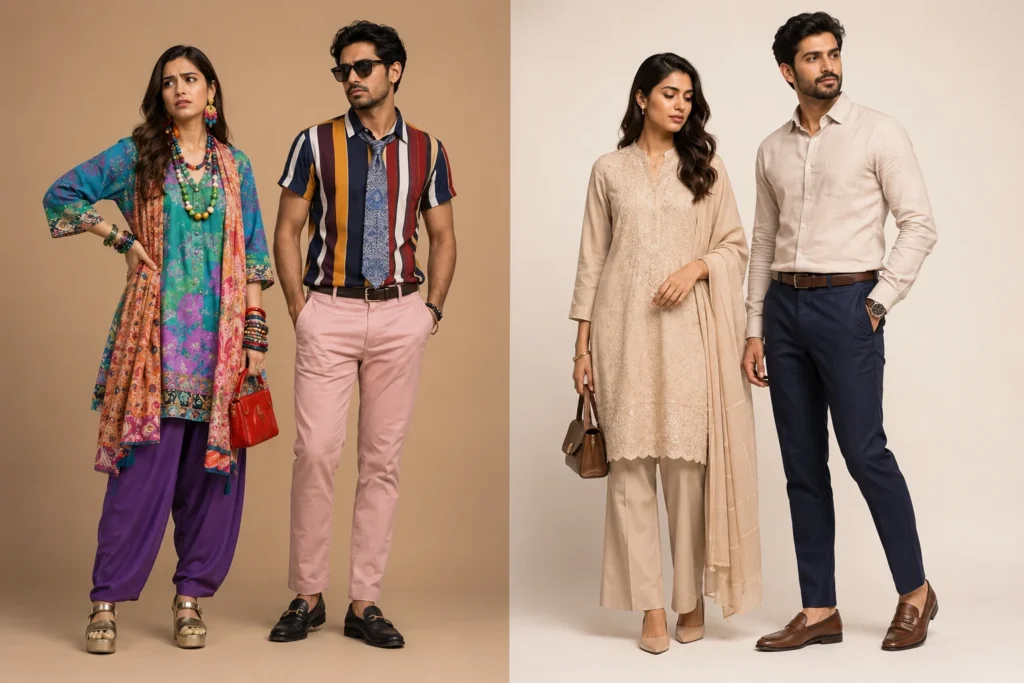
Luxury style doesn’t require an expensive wardrobe. Choosing fewer, well-made pieces often creates a more elegant appearance than owning many lower-quality items.
Common Mistakes
Avoid:
Buying fake luxury products
Wearing large logos on every item
Ignoring fit and tailoring
Prioritizing brand names over quality
Comparison Table
Style
Comfort
Formality
Best For
Casual
⭐⭐⭐⭐⭐
⭐
Everyday wear
Smart Casual
⭐⭐⭐⭐
⭐⭐⭐
Social events, dinners
Business Casual
⭐⭐⭐
⭐⭐⭐⭐
Office and meetings
Formal
⭐⭐
⭐⭐⭐⭐⭐
Weddings, ceremonies
Streetwear
⭐⭐⭐⭐⭐
⭐
Youth culture and travel
Luxury
⭐⭐⭐
⭐⭐⭐⭐⭐
Premium events and refined occasions
Minimalist Fashion
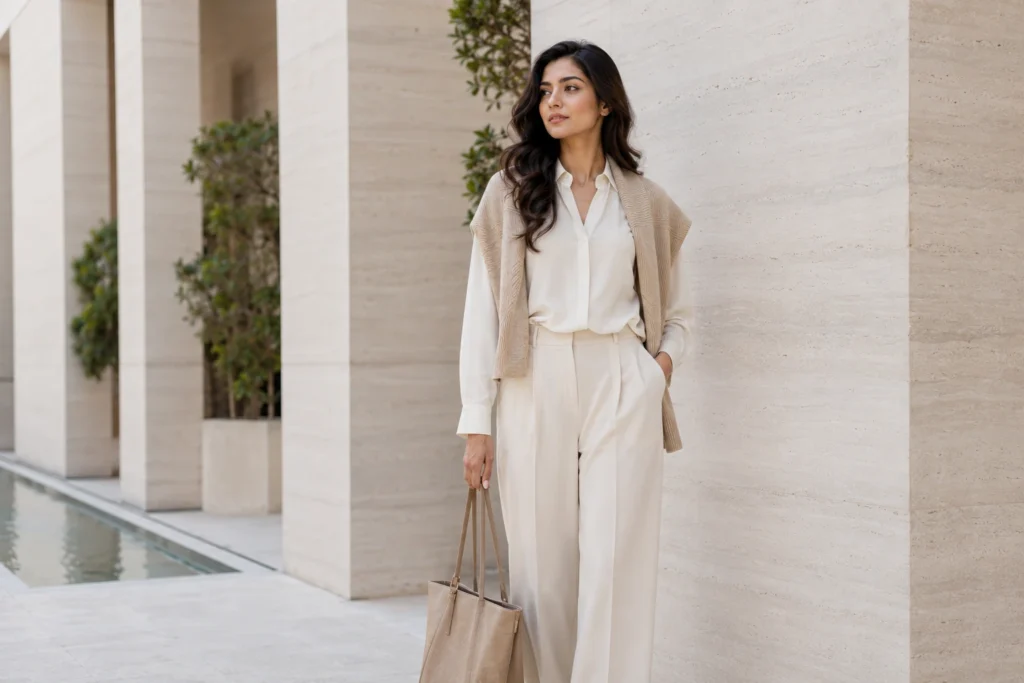
Minimalist fashion is built around the idea that less is more. Instead of following every trend, it focuses on timeless clothing, neutral colors, clean lines, and versatile wardrobe pieces that can be mixed and matched effortlessly. Minimalism is one of the easiest different types of fashion styles for beginners
This style is ideal for people who value simplicity, elegance, and practicality.
A minimalist wardrobe doesn’t mean owning fewer clothes just for the sake of it. It means choosing high-quality pieces that work well together and remain stylish for years.
Key Characteristics
Minimalist fashion typically includes:
Neutral color palettes
Simple patterns
Clean silhouettes
High-quality fabrics
Timeless designs
Minimal accessories
Popular colors include:
White
Black
Grey
Beige
Navy
Olive
Best Occasions
Minimalist fashion works well for:
Office
University
Business meetings
Daily wear
Travel
Casual dinners
Wardrobe Essentials
White shirt
Black trousers
Beige blazer
Straight-leg jeans
White sneakers
Leather loafers
Neutral handbag
Outfit Example
Women
White oversized shirt + Beige trousers + White sneakers + Black leather handbag
Men
White Oxford shirt + Navy chinos + Brown loafers + Minimal watch
Styling Tip
Invest in fewer but better-quality garments. Quality fabrics and excellent tailoring are the foundation of minimalist fashion.
Common Mistakes
Avoid:
Buying clothing with large logos
Mixing too many colors
Wearing poor-quality basics
Over-accessorising
Bohemian (Boho) Fashion
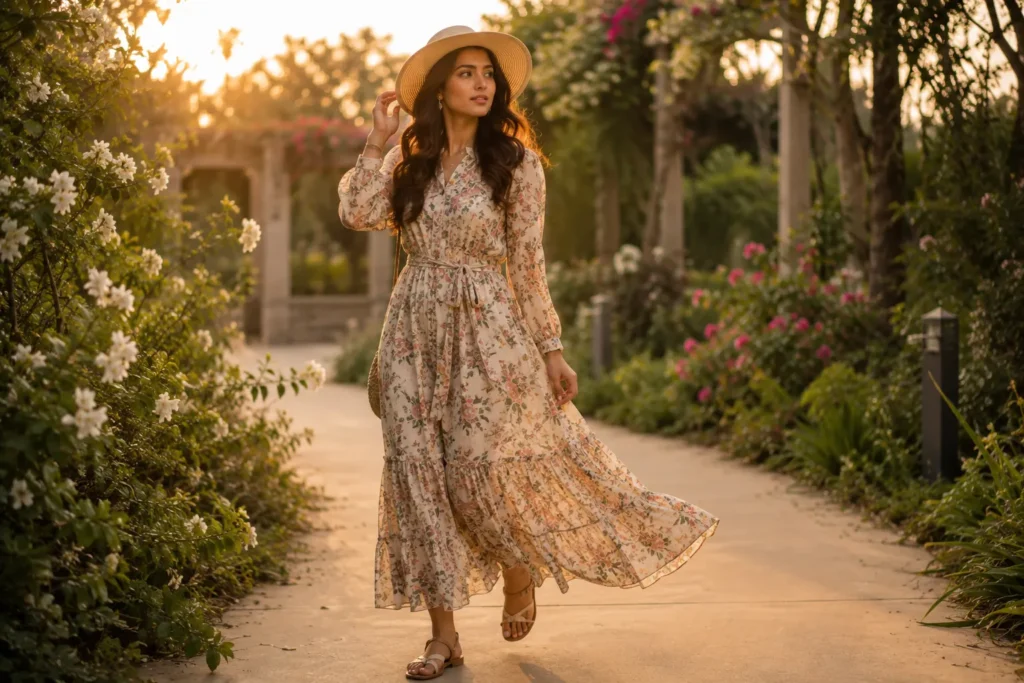
Bohemian fashion, often called Boho style, is inspired by artistic freedom, travel, and nature. It embraces relaxed silhouettes, earthy colors, handcrafted accessories, and flowing fabrics. Bohemian fashion is one of the most elegant different types of fashion styles.
Boho fashion became especially popular during the 1960s and 1970s and continues to influence modern fashion today.
Key Characteristics
Bohemian style often includes:
Maxi dresses
Wide-leg trousers
Floral prints
Crochet fabrics
Fringes
Layered jewelry
Straw hats
Sandals
Earth tones such as brown, beige, olive green, mustard, and terracotta are common.
Best Occasions
Boho fashion is suitable for:
Vacations
Outdoor festivals
Beach holidays
Weekend outings
Creative work environments
Wardrobe Essentials
Maxi dress
Kimono
Wide-brim hat
Leather sandals
Crossbody bag
Layered necklaces
Outfit Example
Floral maxi dress + Straw hat + Brown sandals + Woven handbag
Styling Tip
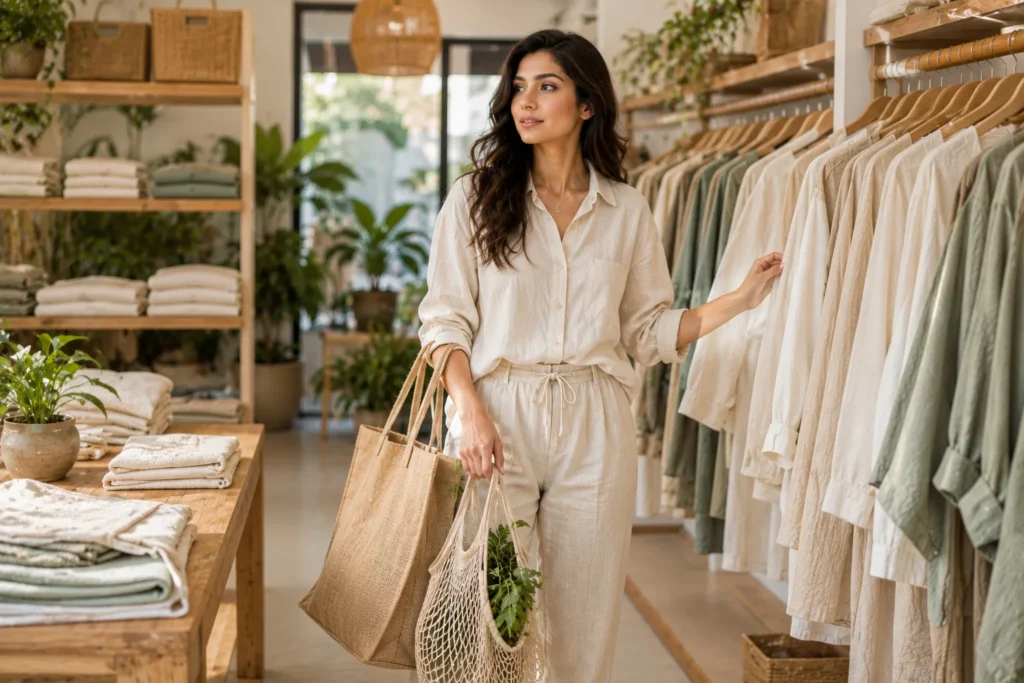
Choose natural fabrics such as cotton and linen to create a relaxed and breathable look.
Athleisure Fashion
Athleisure is another example of the different types of fashion styles popular today. It is one of the fastest-growing fashion styles in recent years. It blends athletic clothing with everyday fashion, allowing people to remain comfortable while looking stylish.
Unlike traditional sportswear, athleisure is designed to be worn both inside and outside the gym.
Key Characteristics
Athleisure commonly includes:
Leggings
Joggers
Hoodies
Sweatshirts
Sports bras
Running shoes
Zip-up jackets
Best Occasions
Athleisure works well for:
Gym
Walking
Shopping
Travel
Casual outings
Working from home
Wardrobe Essentials
Black leggings
Neutral hoodie
White sneakers
Performance jacket
Sports T-shirt
Outfit Example
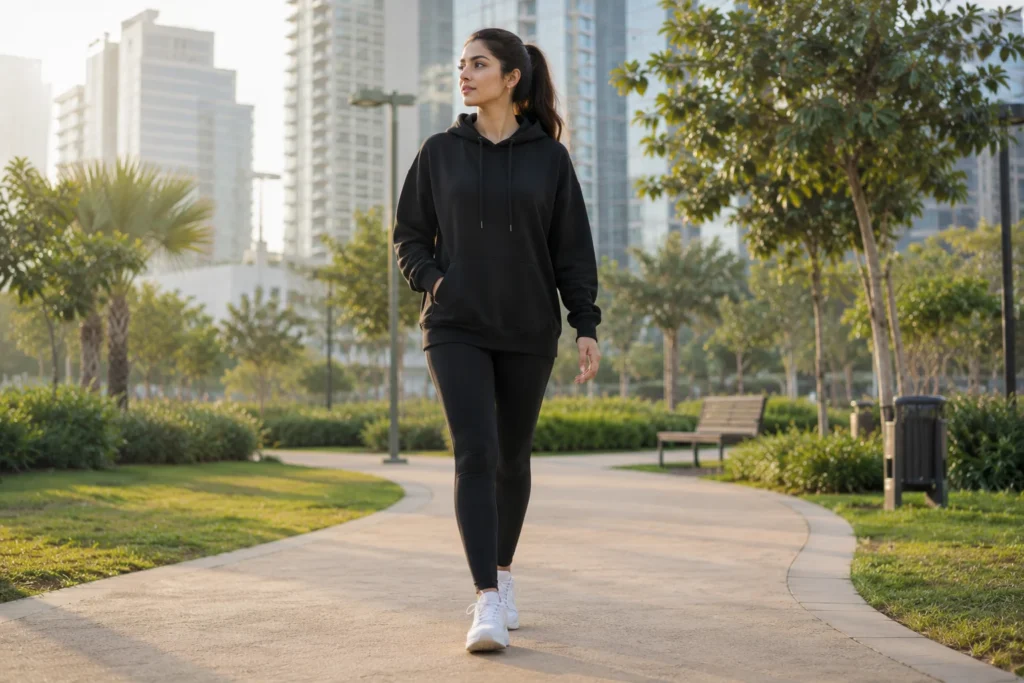
Black leggings + Oversized hoodie + White sneakers + Crossbody bag
Styling Tip
Choose clean, neutral athletic pieces rather than brightly branded sports uniforms if you want a polished athleisure look.
Sustainable Fashion
Sustainable fashion is becoming one of today’s fastest-growing different types of fashion styles. It focuses on reducing environmental impact while encouraging ethical production and responsible shopping habits.
Rather than constantly buying new clothing, sustainable fashion promotes thoughtful purchasing decisions and long-lasting wardrobe pieces.
Organizations and fashion publications such as The Business of Fashion regularly discuss sustainability, ethical manufacturing, and the future of responsible fashion.
Key Characteristics
Sustainable fashion emphasizes:
Eco-friendly materials
Ethical manufacturing
Quality over quantity
Recycling
Repairing clothing
Responsible shopping
Best Occasions
Sustainable fashion isn’t tied to a specific occasion. Instead, it’s a philosophy that can be applied to every wardrobe.
Wardrobe Essentials
Organic cotton T-shirts
Linen shirts
Recycled denim
Durable leather alternatives
Timeless basics
Styling Tip
Choose versatile clothing that can be worn across multiple seasons and occasions.
Traditional Fashion
Traditional fashion celebrates the cultural identity, craftsmanship, and heritage of different regions around the world. While trends change over time, traditional clothing remains an important part of festivals, weddings, religious events, and national celebrations. It is another example of the different types of fashion styles popular now a days.
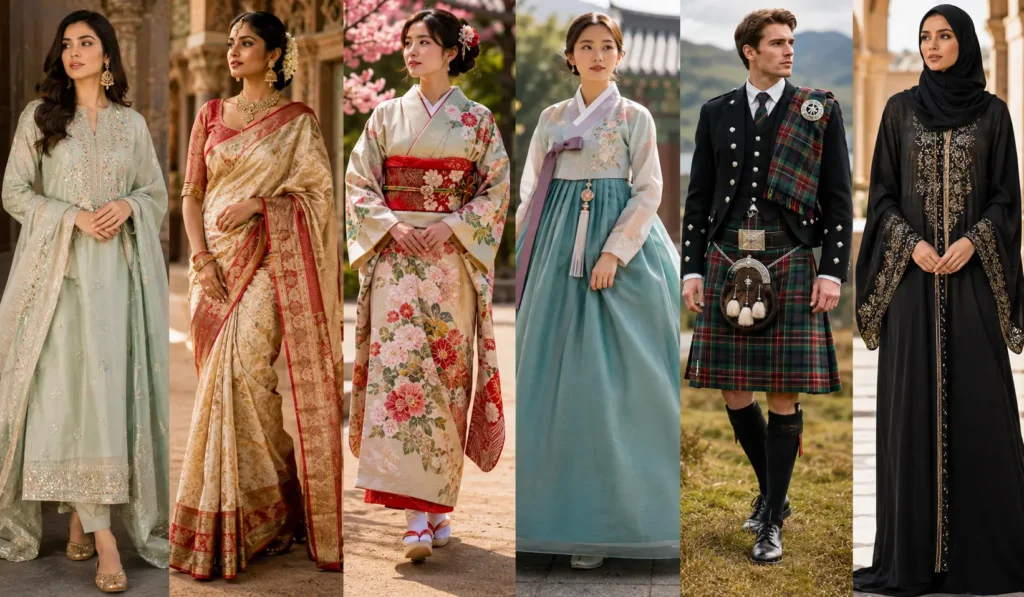
Examples include:
Pakistani Shalwar Kameez
Indian Saree
Japanese Kimono
Korean Hanbok
Scottish Kilt
Middle Eastern Abaya
Modern designers often combine traditional garments with contemporary elements, creating styles that respect cultural heritage while appealing to today’s fashion lovers.
Understanding the history behind these clothing styles helps you appreciate how fashion has evolved across cultures. Read our History of Fashion: How Clothing Evolved Through Time to explore the origins of many traditional and modern fashion styles.
Which Fashion Style Is Right for You?
Choosing a fashion style doesn’t mean limiting yourself to one look forever. Most people naturally combine elements from several styles depending on their lifestyle, profession, and personal preferences.
Ask yourself these questions:
✔ Do you prioritize comfort?
You may prefer Casual or Athleisure.
✔ Do you work in a professional environment?
Business Casual or Formal may suit you best.
✔ Do you appreciate timeless elegance?
Consider Minimalist or Luxury Fashion.
✔ Do you enjoy creativity and artistic expression?
Explore Bohemian or Streetwear.
✔ Do you value sustainability?
Build a wardrobe based on Sustainable Fashion principles.
The best wardrobe reflects your personality, not just current trends.
📋 Quick Fashion Style Finder
If you like…
Consider…
Comfort
Casual, Athleisure
Professional appearance
Business Casual, Formal
Simplicity
Minimalist
Premium quality
Luxury
Creativity
Bohemian, Streetwear
Eco-conscious living
Sustainable Fashion
Common Fashion Style Mistakes to Avoid
Even the most stylish wardrobes can be affected by small mistakes. Avoiding these common errors can instantly improve your overall appearance and help you build a more versatile wardrobe.
1. Following Every Trend
Fashion trends change quickly, and not every trend suits everyone. Buying every trending item often leads to a wardrobe full of clothes that are rarely worn.
Expensive clothing won’t look good if it doesn’t fit properly.
Avoid garments that are:
Too tight
Too loose
Too long
Poorly tailored
Well-fitted clothing always looks more polished.
3. Ignoring Fabric Quality
Fabric affects:
Comfort
Appearance
Durability
Breathability
Choosing quality fabrics often provides better value than buying many low-quality garments.
4. Wearing Too Many Accessories
Accessories should complement an outfit—not overpower it.
Choose one or two statement accessories rather than wearing everything at once.
5. Ignoring the Occasion
Different occasions require different styles.
For example:
Weddings → Formal
Office → Business Casual
Weekend → Casual
Travel → Athleisure
Dressing appropriately demonstrates confidence and good judgment.
Wardrobe Checklist for Every Beginner
If you’re just starting to build your wardrobe, focus on versatile pieces that work across multiple fashion styles.
Essential Tops
White T-shirt
Black T-shirt
White Oxford shirt
Neutral blouse
Polo shirt
Bottoms
Blue jeans
Black trousers
Beige chinos
Denim skirt (optional)
Outerwear
Neutral blazer
Denim jacket
Lightweight cardigan
Footwear
White sneakers
Black loafers
Comfortable sandals
Formal shoes
Accessories
Leather belt
Wristwatch
Neutral handbag or backpack
Sunglasses
These basics can be mixed and matched to create dozens of outfits.
How Fashion Styles Change with the Seasons
Although your personal Fashion styles remains consistent, your wardrobe should adapt to the weather.
Season
Recommended Fabrics
Popular Colors
Spring
Cotton, Linen
Pastels, Light Green
Summer
Lawn, Cotton, Linen
White, Beige, Sky Blue
Autumn
Denim, Knits
Brown, Olive, Rust
Winter
Wool, Cashmere
Black, Navy, Grey
Seasonal changes are a great opportunity to refresh your wardrobe while staying true to your personal style.
Fashion Style Comparison
Style
Comfort
Formality
Best For
Key Pieces
Casual
⭐⭐⭐⭐⭐
⭐
Everyday wear
Jeans, T-shirts, Sneakers
Smart Casual
⭐⭐⭐⭐
⭐⭐⭐
Dinners, Social Events
Blazer, Chinos
Business Casual
⭐⭐⭐
⭐⭐⭐⭐
Office
Oxford Shirt, Loafers
Formal
⭐⭐
⭐⭐⭐⭐⭐
Weddings, Galas
Suit, Evening Dress
Streetwear
⭐⭐⭐⭐⭐
⭐
Travel, Youth Culture
Hoodies, Sneakers
Luxury
⭐⭐⭐
⭐⭐⭐⭐⭐
Premium Events
Tailored Blazer, Leather Accessories
Minimalist
⭐⭐⭐⭐
⭐⭐⭐
Daily Wear
Neutral Basics
Bohemian
⭐⭐⭐⭐⭐
⭐⭐
Holidays, Festivals
Maxi Dress, Sandals
Athleisure
⭐⭐⭐⭐⭐
⭐
Gym, Travel
Leggings, Joggers
Sustainable
⭐⭐⭐⭐
⭐⭐⭐
Everyday Wear
Organic Cotton, Linen
Frequently Asked Questions
What is the most popular fashion style?
Casual fashion is the most popular because it combines comfort, versatility, and practicality for everyday life.
Can I combine different?
Yes. Many people mix styles, such as combining minimalist basics with smart casual pieces or adding streetwear accessories to casual outfits.
How do I find my personal fashion style?
Start by considering your lifestyle, favorite colors, preferred clothing fit, and the occasions you dress for most often. Build your wardrobe around timeless essentials and gradually refine your look.
Is expensive clothing necessary to look stylish?
No. Well-fitted clothing made from quality fabrics often looks more stylish than expensive garments that don’t fit properly.
Which fashion style is best for beginners?
Casual and minimalist styles are excellent starting points because they are versatile, easy to wear, and simple to build over time different types of fashion styles.
What is the difference between smart casual and business casual?
Smart casual is more relaxed and suitable for social occasions, while business casual is designed for professional environments and workplace settings.
Does fashion style change with age?
Your style can evolve over time as your lifestyle, career, and preferences change, but there are no strict age rules. The goal is to wear clothing that makes you feel confident and comfortable.
How many fashion styles should I follow?
You don’t need to limit yourself to one. Most people combine elements from several styles depending on the occasion.
Conclusion
Fashion is a powerful way to express your personality, confidence, and lifestyle. While trends come and go, understanding different fashion styles helps you make smarter wardrobe choices that suit your everyday life.
Whether you prefer the simplicity of minimalist fashion, the elegance of luxury fashion, the comfort of casual wear, or the creativity of streetwear, the best style is the one that makes you feel authentic and confident.
Instead of chasing every new trend, focus on building a wardrobe filled with quality pieces that reflect your personality and can be worn across different occasions. Over time, your personal style will become a natural extension of who you are.
Remember, fashion isn’t about wearing the most expensive clothes—it’s about wearing the right clothes with confidence. New to fashion? Start with our complete guide: What Is Fashion? Complete Beginner’s Guide
Continue Exploring Fashion
If you enjoyed this guide, continue learning with these articles on SahraaWorld: