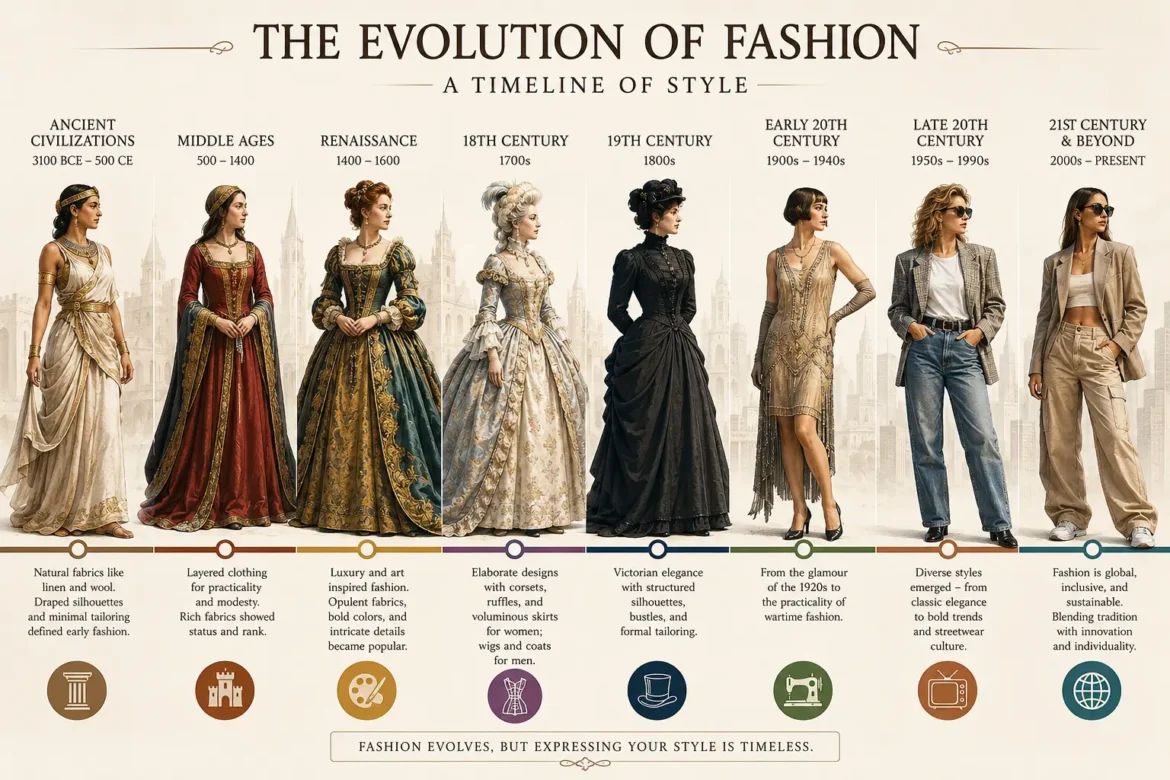
Introduction
Fashion did not begin with luxury brands, fashion shows, or social media influencers. Long before modern clothing existed, people around the world used garments for protection, identity, status, and cultural expression.
Today, fashion is a multi-trillion-dollar global industry that influences art, business, technology, and lifestyle. However, its roots stretch back thousands of years to some of the earliest human civilizations.
Understanding the history of fashion helps us appreciate why certain styles continue to return, why traditional clothing remains culturally important, and how clothing has evolved alongside human civilization.
Whether you’re a student, a fashion enthusiast, or someone just beginning to explore personal style, learning about fashion history provides valuable insight into why we dress the way we do today.
In this complete guide, we’ll travel through thousands of years of fashion history, exploring how clothing evolved from simple animal skins to today’s innovative and sustainable designs.
Table of Contents
- What Is the History of Fashion?
- Why Fashion History Matters
- Fashion Before Civilization
- Ancient Egypt
- Ancient Greece
- Ancient Rome
- Fashion in Ancient Asia
- Timeline of Early Fashion
- How Ancient Fashion Influences Modern Clothing
- Conclusion of Part 1
What Is the History of Fashion?
Fashion history is the study of how clothing, accessories, hairstyles, and personal appearance have changed throughout human civilization.
Unlike temporary fashion trends, fashion history focuses on the long-term development of clothing across different cultures and historical periods.
Fashion has always reflected:
- Culture
- Religion
- Climate
- Social status
- Economy
- Technology
- Politics
- Art
Every civilization has contributed something unique to modern fashion.
For example:
- Ancient Egyptians introduced elegant linen garments.
- Greeks emphasized graceful draping.
- Romans popularized tailored clothing.
- Asian civilizations developed luxurious silk textiles.
- European designers later revolutionized haute couture.
Modern fashion continues to borrow inspiration from these historical influences.
Why Understanding Fashion History Is Important
Many people ask:
“Why should I learn fashion history?”
The answer is simple.
Fashion is much more than clothing—it tells the story of humanity.
Understanding fashion history helps us appreciate how different societies expressed themselves through clothing and how those traditions continue to influence modern style.
Learning fashion history also helps people:
- Understand why trends repeat.
- Appreciate traditional clothing.
- Develop a stronger personal style.
- Make informed fashion choices.
- Recognize quality craftsmanship.
- Respect cultural diversity.
Fashion becomes much more meaningful when you understand the stories behind it.
Fashion Before Civilisation
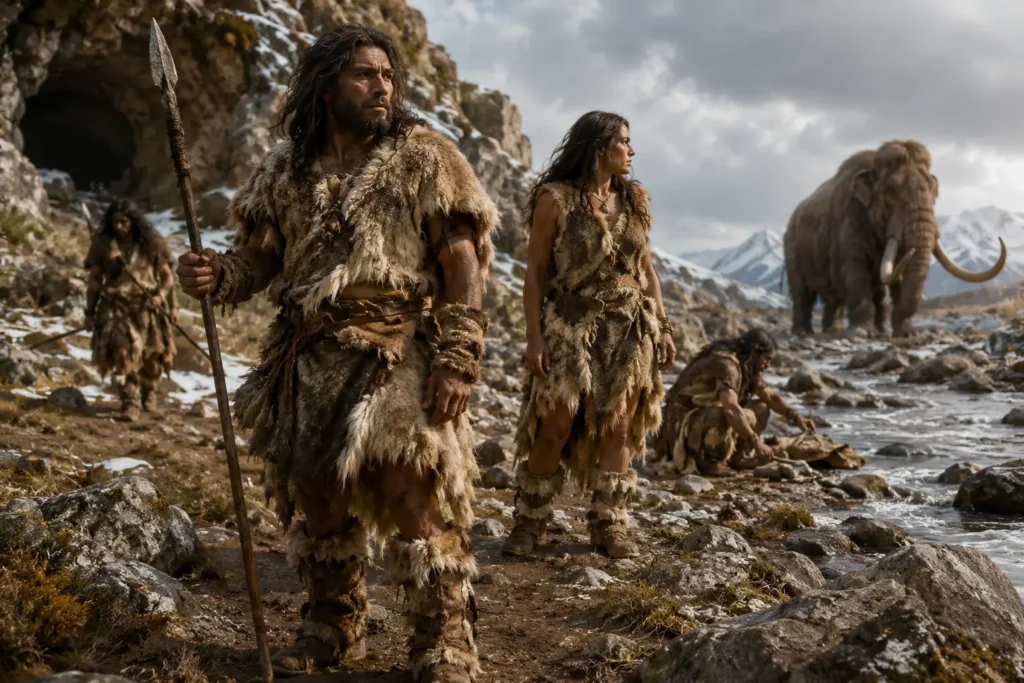
Long before woven fabrics were invented, early humans relied on natural materials for protection.
The earliest clothing was made from:
- Animal skins
- Fur
- Leaves
- Tree bark
- Grass
- Plant fibers
These garments protected people from:
- Cold weather
- Rain
- Sunlight
- Insects
Over time, clothing also became a symbol of identity within early communities.
People began decorating garments using:
- Bones
- Feathers
- Shells
- Natural dyes
- Stones
These decorations represented social status, achievements, or tribal identity.
Although primitive, these early forms of clothing laid the foundation for the fashion industry we know today.
Fashion in Ancient Egypt
Ancient Egypt is often considered one of the first civilizations to develop sophisticated fashion.
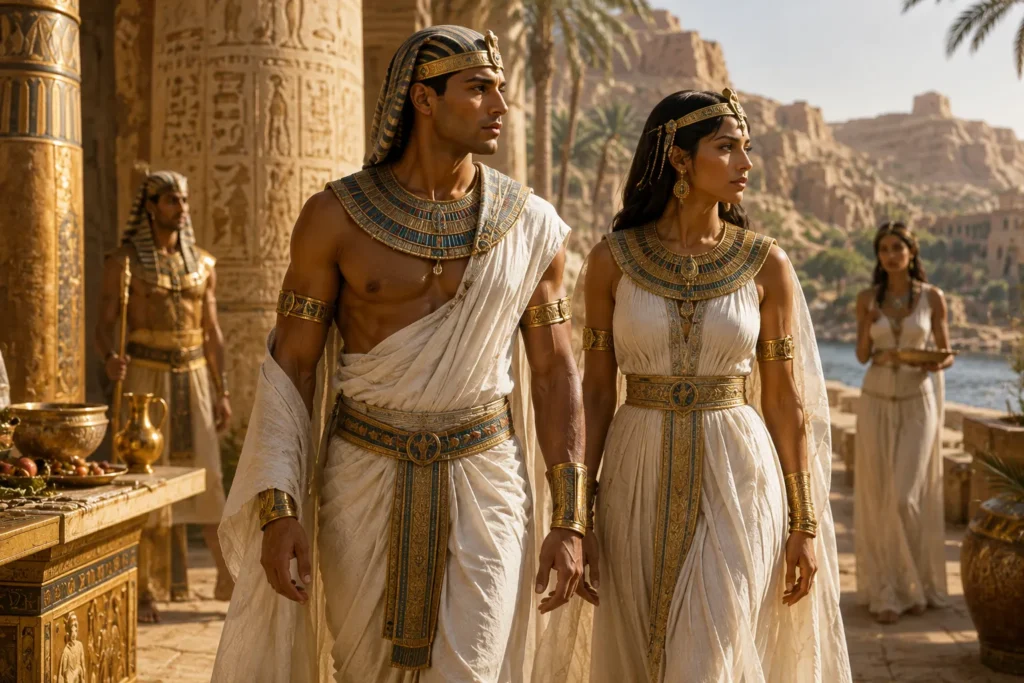
Because Egypt’s climate was extremely hot, lightweight linen became the preferred fabric.
Men typically wore simple linen kilts, while women wore long, fitted dresses that emphasized elegance and practicality.
Jewelry played an important role in Egyptian fashion.
Popular accessories included:
- Gold necklaces
- Bracelets
- Earrings
- Decorative collars
- Headpieces
Clothing also reflected social status.
The wealthy wore finely woven linen decorated with gold and precious stones, while ordinary citizens wore simpler garments.
Natural beauty was equally important.
Both men and women used cosmetics, perfumes, and wigs to enhance their appearance.
Ancient Egyptian fashion demonstrated that clothing could be both practical and beautiful.
To explore historical fashion periods in greater detail, the Fashion History Timeline by the Fashion Institute of Technology (FIT) provides an extensive educational resource covering clothing across different civilizations and eras.
Fashion in Ancient Greece
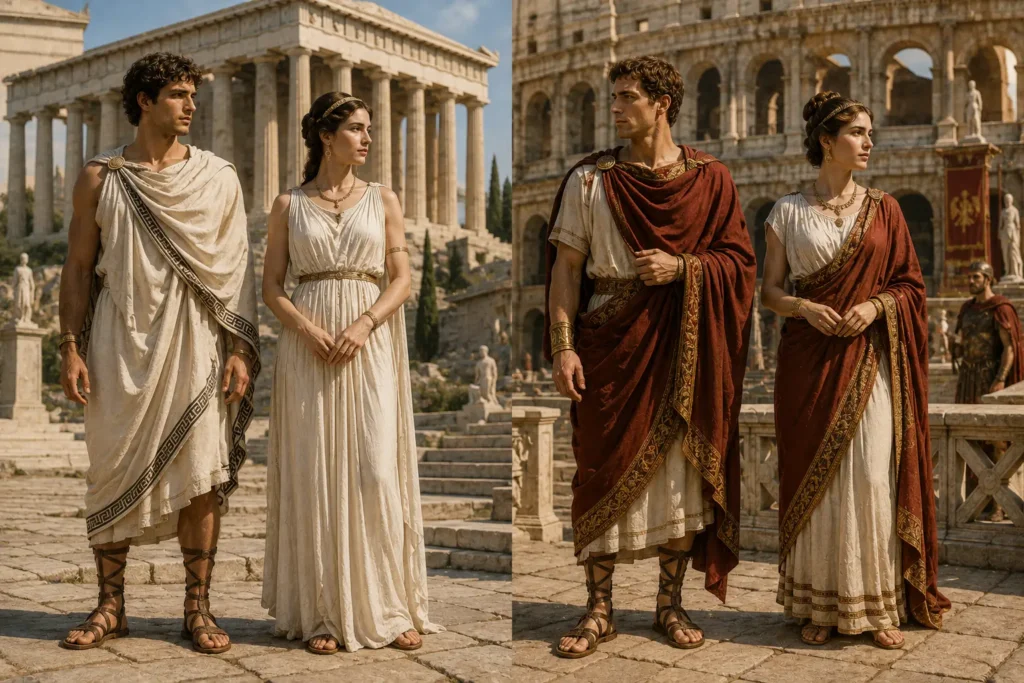
Greek fashion emphasized simplicity, elegance, and natural beauty.
Instead of heavily tailored garments, Greeks preferred flowing fabrics that draped naturally around the body.
The two most famous garments were:
- Chiton
- Himation
These garments allowed freedom of movement while creating graceful silhouettes.
Greek fashion celebrated balance and proportion.
Accessories remained minimal compared to Egyptian fashion, allowing the clothing’s elegant draping to become the main focus.
Greek ideals of simplicity continue to inspire modern designers today.
Many evening gowns and bridal dresses borrow elements from classical Greek fashion.
Fashion in Ancient Rome
The Romans adopted many ideas from Greek fashion but added greater structure and symbolism.
The most famous Roman garment was the toga.
However, togas were not everyday clothing.
They were worn mainly by male citizens during official ceremonies and public events.
Women commonly wore the stola, a long flowing garment often paired with decorative shawls.
Roman fashion also reflected wealth.
Affluent families wore:
- Dyed fabrics
- Imported silk
- Fine wool
- Decorative embroidery
Purple garments became associated with royalty and high-ranking officials because the dye was rare and expensive.
Roman fashion helped establish the connection between clothing and social status that still exists today.
Fashion in Ancient Asia
While Europe and the Mediterranean developed their own clothing traditions, Asian civilizations created some of the world’s most influential textiles.
China revolutionized fashion through the discovery of silk.
The Silk Road later introduced luxurious fabrics to Europe, transforming global fashion.
Traditional Chinese clothing emphasized:
- Flowing robes
- Fine embroidery
- Symbolic colors
- Elegant tailoring
Meanwhile, Japan developed the kimono, a garment known for its graceful shape and artistic patterns.
India became famous for cotton textiles, intricate embroidery, and garments such as the sari, which continues to be worn around the world today.
These civilizations demonstrated that fashion could represent both cultural identity and artistic excellence.
Timeline – Early Fashion History
| Period | Approximate Date | Fashion Highlights |
|---|---|---|
| Prehistoric Age | Before 3000 BC | Animal skins and plant fibers |
| Ancient Egypt | 3000–30 BC | Linen clothing and gold jewelry |
| Ancient Greece | 800–146 BC | Flowing draped garments |
| Ancient Rome | 753 BC–476 AD | Togas, stolas, and tailored clothing |
| Ancient China | 1600 BC onwards | Silk production and embroidered robes |
| Ancient India | 2500 BC onwards | Cotton textiles and traditional draped garments |
The earliest civilizations transformed clothing from a basic necessity into a powerful form of cultural expression. Ancient Egypt introduced elegant linen garments, Greece celebrated simplicity and graceful draping, Rome connected clothing with social status, and Asian civilizations revolutionized textiles through silk, cotton, and artistic craftsmanship.
These early developments laid the foundation for everything that followed in fashion history. In Part 2, we’ll continue the journey by exploring the Middle Ages, the Renaissance, and the Industrial Revolution—periods that reshaped clothing, craftsmanship, and the global fashion industry.
Before exploring later fashion eras, you may also enjoy our What Is Fashion? The Complete Beginner’s Guide to Style, Trends & Personal Fashion, which explains the fundamentals of fashion, personal style, and why clothing continues to play an important role in our everyday lives.
Fashion During the Middle Ages (5th–15th Century)
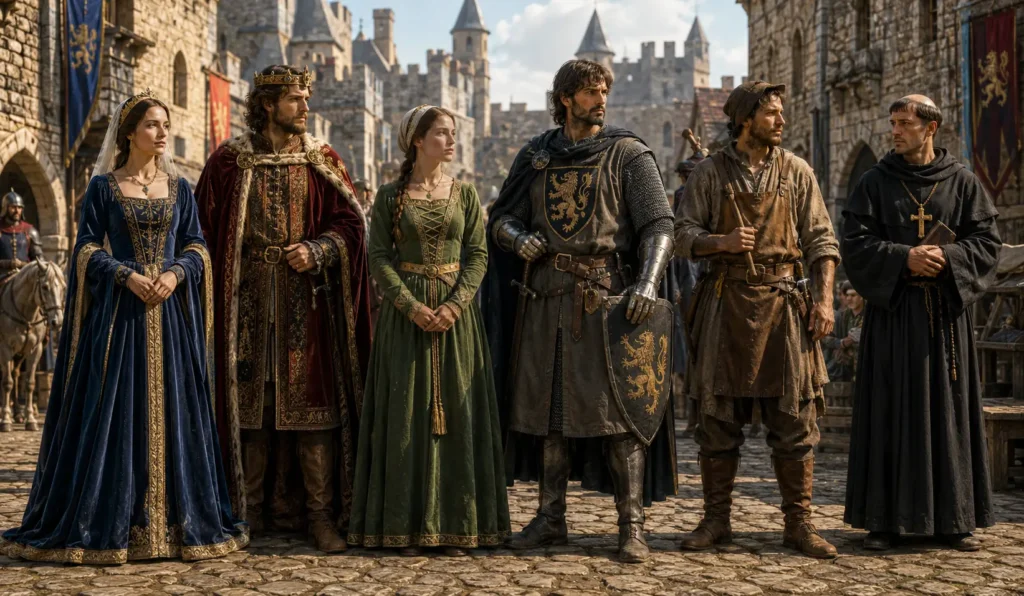
The Middle Ages marked a significant turning point in the history of fashion. Unlike ancient civilizations, where clothing was largely influenced by climate and practicality, medieval fashion became closely linked with social class, religion, occupation, and wealth.
During this period, Europe experienced political changes, religious influence, and economic development, all of which shaped the way people dressed.
Clothing became more structured, layered, and symbolic. A person’s outfit could often reveal their profession, financial status, and position in society.
Clothing for the Wealthy
Nobles and royalty wore luxurious garments made from expensive fabrics such as:
- Velvet
- Silk
- Fine wool
- Brocade
Their clothing often featured:
- Embroidery
- Fur trims
- Decorative sleeves
- Long flowing robes
- Jewel-encrusted accessories
Rich colors like purple, crimson, and deep blue were associated with wealth because producing these dyes was extremely expensive.
Clothing for Common People
Ordinary people dressed much more simply.
Their garments were made from:
- Wool
- Linen
- Hemp
Typical clothing included:
- Tunics
- Long dresses
- Cloaks
- Leather shoes
Comfort and durability were more important than decoration because clothing was expensive and often handmade.
Religion and Fashion
Religion greatly influenced medieval clothing.
Many garments emphasized modesty.
Women’s dresses became longer, sleeves widened, and head coverings became common.
Monks and religious leaders wore simple robes that reflected humility rather than wealth.
Fashion During the Renaissance (14th–17th Century)
The Renaissance was one of the most influential periods in fashion history.
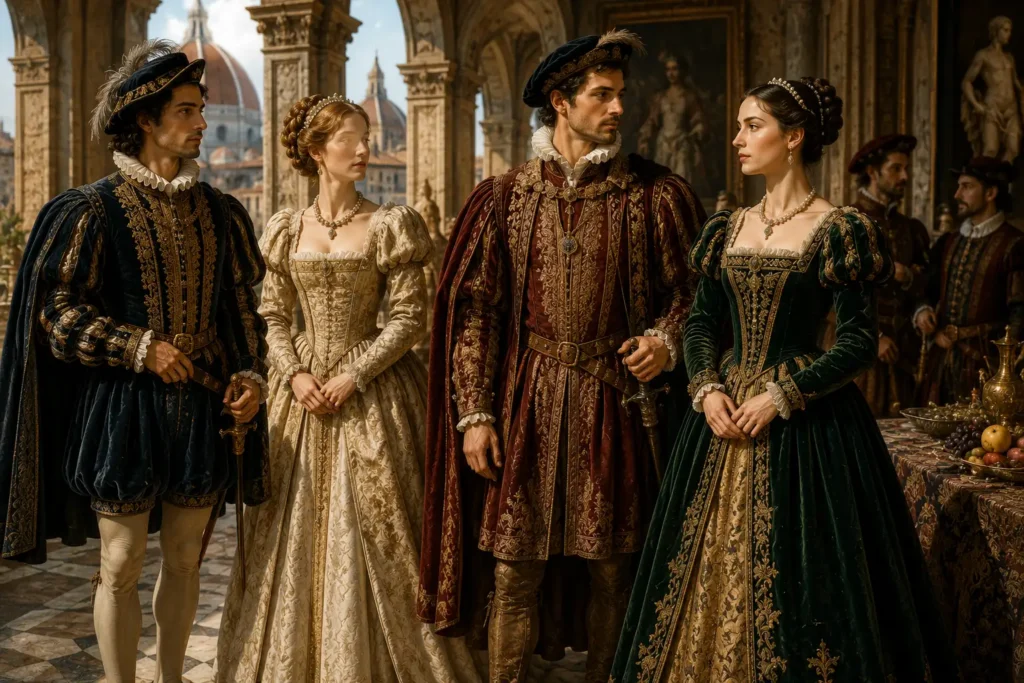
As art, science, and culture flourished throughout Europe, clothing became more colorful, detailed, and luxurious than ever before.
Fashion transformed into an important symbol of wealth, education, and creativity.
Italy became one of the world’s earliest fashion centers.
Cities like:
- Florence
- Venice
- Milan
became famous for producing luxurious textiles and elegant garments.
Rich Fabrics
Popular materials included:
- Silk
- Velvet
- Satin
- Brocade
- Lace
These fabrics were often imported through international trade routes.
Tailoring Improved
Unlike ancient draped garments, Renaissance clothing became carefully tailored.
Men wore:
- Doublets
- Breeches
- Cloaks
Women wore:
- Corsets
- Structured gowns
- Decorative sleeves
- Layered skirts
Fashion became increasingly personalized.
Jewelry Became Essential
Accessories gained tremendous importance.
Popular items included:
- Pearl necklaces
- Gold rings
- Decorative hats
- Feathered caps
- Gloves
Jewelry was no longer simply decoration—it became a symbol of prestige.
Many original Renaissance garments and textiles are preserved in museums today. The Victoria and Albert Museum features one of the world’s most respected collections of historical fashion and textile artefacts.
The Industrial Revolution Changed Fashion Forever
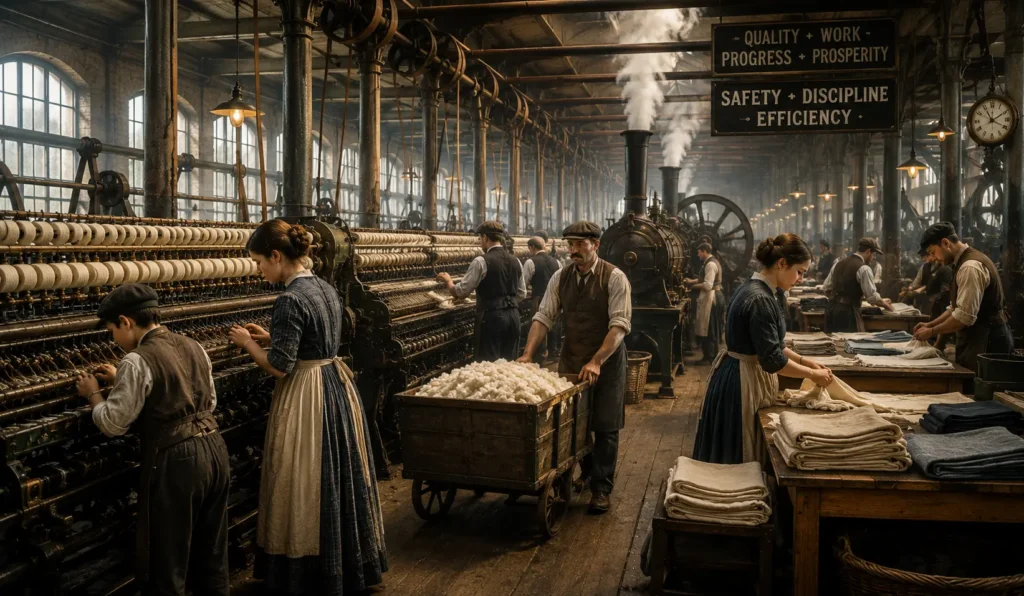
The Industrial Revolution, beginning in the late 18th century, completely transformed the fashion industry.
Before this period, most clothing was handmade by skilled tailors.
Producing garments was expensive and time-consuming.
The invention of textile machinery changed everything.
Factories began producing clothing much faster and at lower costs.
Fashion gradually became accessible to ordinary people rather than remaining exclusive to the wealthy.
Textile Innovation
Important inventions included:
- Spinning Jenny
- Power Loom
- Sewing Machine
These innovations dramatically increased production while reducing costs.
Ready-to-Wear Clothing
Mass production eventually led to ready-to-wear clothing.
Instead of ordering custom-made garments, people could purchase clothing in standard sizes.
This laid the foundation for today’s global fashion industry.
Fashion Magazines Appeared
Fashion communication also changed.
Printed magazines began introducing:
- Seasonal trends
- New silhouettes
- Accessories
- Hairstyles
People could now follow fashion beyond their local communities.
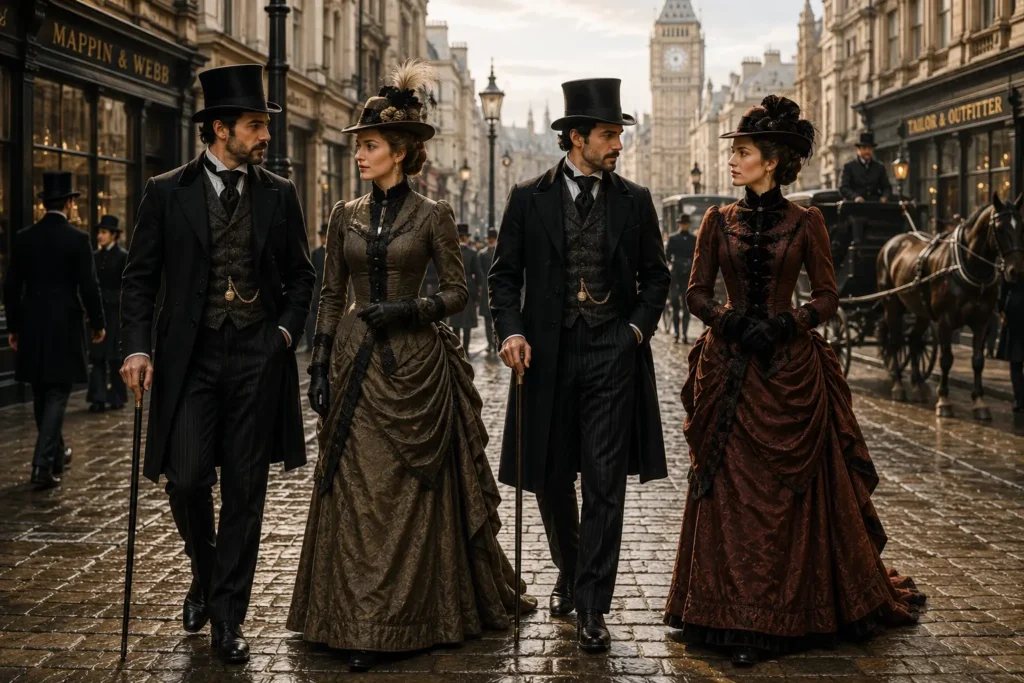
Victorian Fashion (1837–1901)
The Victorian Era, named after Queen Victoria of Britain, introduced one of the most recognizable fashion periods in history.
Fashion emphasized elegance, modesty, and refinement.
Clothing became increasingly sophisticated and carefully constructed.
Women’s Fashion
Typical Victorian women’s clothing included:
- Corsets
- Full skirts
- Bustles
- Gloves
- Bonnets
- High-neck dresses
Attention to detail became extremely important.
Men’s Fashion
Men commonly wore:
- Three-piece suits
- Waistcoats
- Top hats
- Pocket watches
- Tailored coats
Many elements of today’s formal menswear originated during the Victorian Era.
Accessories Became Fashion Statements
Accessories became essential parts of an outfit.
Popular Victorian accessories included:
- Walking sticks
- Umbrellas
- Gloves
- Decorative hats
- Handbags
Fashion was no longer just about clothing—it became a complete lifestyle.
The Metropolitan Museum of Art also showcases remarkable historical garments that illustrate how fashion evolved during different centuries and cultures.
Timeline – Medieval to Victorian Fashion
| Period | Approximate Years | Major Fashion Development |
|---|---|---|
| Middle Ages | 500–1500 | Social class reflected through clothing |
| Renaissance | 1400–1600 | Luxury fabrics, tailoring, artistic fashion |
| Industrial Revolution | 1760–1840 | Mass production of textiles and clothing |
| Victorian Era | 1837–1901 | Elegant tailoring and sophisticated formal wear |
Comparison Table
| Era | Main Fabrics | Fashion Characteristics |
|---|---|---|
| Middle Ages | Wool, Linen | Layered clothing, modesty |
| Renaissance | Silk, Velvet | Luxury, color, tailoring |
| Industrial Revolution | Cotton, Wool | Factory production, affordability |
| Victorian Era | Silk, Lace, Wool | Formal elegance, structured clothing |
Did You Know?
- The zipper wasn’t widely used until the 20th century.
- Purple clothing was once reserved for royalty because purple dye was extremely expensive.
- The sewing machine revolutionised clothing production and made fashion more accessible.
- Fashion magazines began influencing trends long before television or the internet existed.
As clothing became more affordable and accessible, fashion gradually evolved into the personal expression we know today. If you’re new to fashion, our What Is Fashion? The Complete Beginner’s Guide explains how fashion has developed into a powerful form of self-expression.
Fashion in the 20th Century: The Birth of Modern Style
The 20th century transformed fashion more rapidly than any previous period in history. Advances in technology, world events, women’s changing roles in society, and the rise of mass media all influenced how people dressed.
Unlike earlier centuries, where fashion changed gradually, the 20th century introduced entirely new styles every few decades. Designers became celebrities, fashion magazines reached millions of readers, and clothing evolved from a symbol of social status into a form of personal identity.
Fashion in the Early 1900s
At the beginning of the century, clothing remained formal and structured.
Women commonly wore:
- Long dresses
- Corsets
- Large hats
- Gloves
- Decorative coats
Men typically wore:
- Three-piece suits
- Pocket watches
- Formal hats
- Leather shoes
Dressing formally was considered appropriate even for everyday activities.
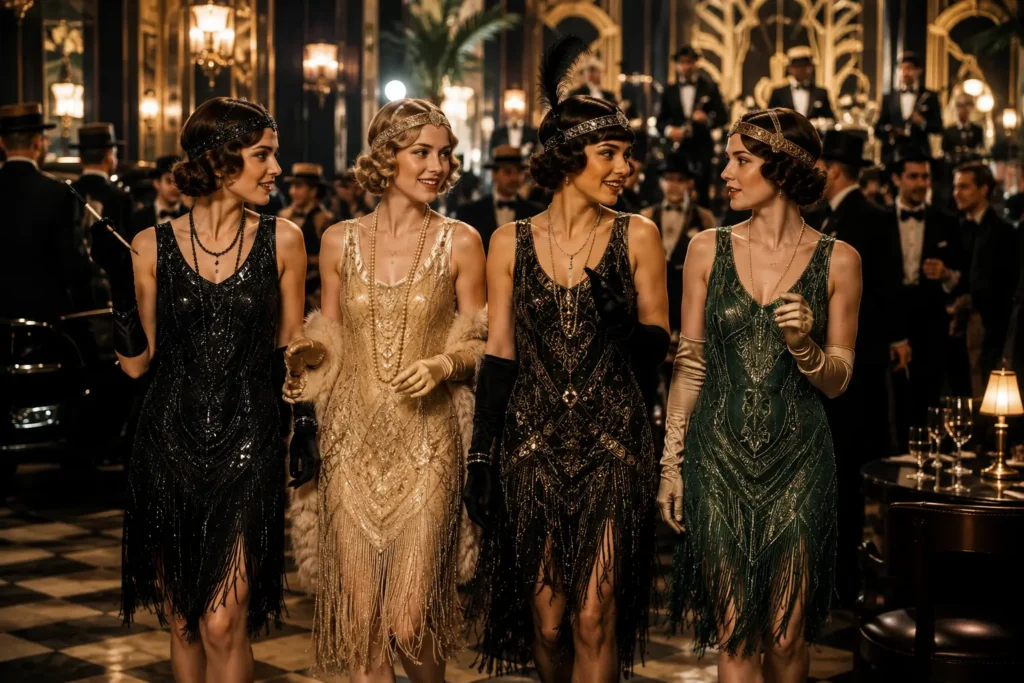
Fashion During the 1920s
The 1920s, often called the Roaring Twenties, marked one of fashion’s biggest revolutions.
Women began embracing greater independence, and fashion reflected this social change.
Popular trends included:
- Flapper dresses
- Shorter hemlines
- Loose silhouettes
- Bob hairstyles
- Long pearl necklaces
This era symbolized freedom, confidence, and modernity.
Fashion During World War II
World War II significantly affected clothing production.
Because materials were limited, fashion became more practical.
People wore:
- Simpler designs
- Shorter skirts
- Utility clothing
- Military-inspired jackets
Fabric rationing encouraged designers to create elegant clothing using fewer materials.
This period demonstrated that fashion could adapt even during difficult times.
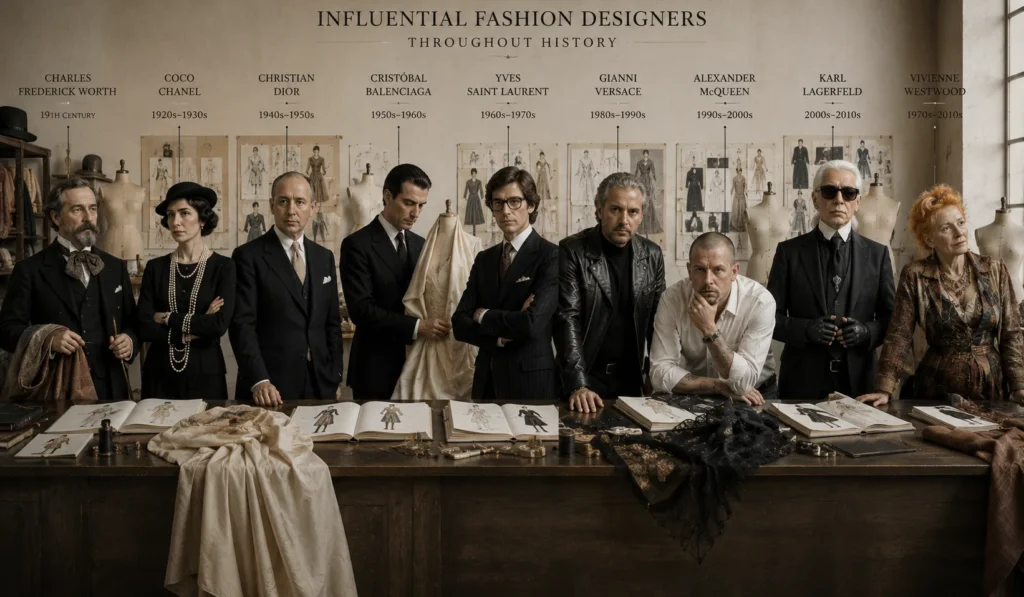
Legendary Fashion Designers Who Changed History
Fashion history has been shaped by visionary designers whose ideas continue to influence clothing today.
Coco Chanel
Few names are as influential as Coco Chanel.
She challenged restrictive women’s clothing by introducing:
- Comfortable tailoring
- Jersey fabrics
- The little black dress
- Tweed jackets
- Timeless elegance
Her philosophy was simple:
Luxury should also be comfortable.
Many of her design principles remain relevant today.
Christian Dior
In 1947, Christian Dior introduced the famous New Look.
Its characteristics included:
- Narrow waists
- Full skirts
- Feminine silhouettes
- Elegant tailoring
The New Look restored glamour after the hardships of World War II.
Yves Saint Laurent
Yves Saint Laurent revolutionized women’s fashion by introducing the tuxedo suit for women.
He believed women should have the same fashion freedom as men.
His collections blended elegance with confidence and continue to inspire designers worldwide.
Gianni Versace
Versace brought bold colors, luxury, and glamour to fashion during the 1980s and 1990s.
His designs became famous for:
- Vibrant prints
- Gold accents
- Dramatic silhouettes
- Celebrity collaborations
Giorgio Armani
Armani transformed business fashion by creating relaxed, elegant suits.
His minimalist approach influenced corporate fashion worldwide.
The Rise of Fashion Weeks
Fashion Week is now one of the most important events in the global fashion industry.
These events allow designers to showcase upcoming collections before they reach stores.
Today, the four major Fashion Weeks are:
- New York
- London
- Milan
- Paris
Together, they influence fashion trends around the world.
Fashion Weeks help:
- Introduce new designers
- Predict seasonal trends
- Inspire retailers
- Shape consumer preferences
Many trends seen in stores begin months earlier on these international runways.
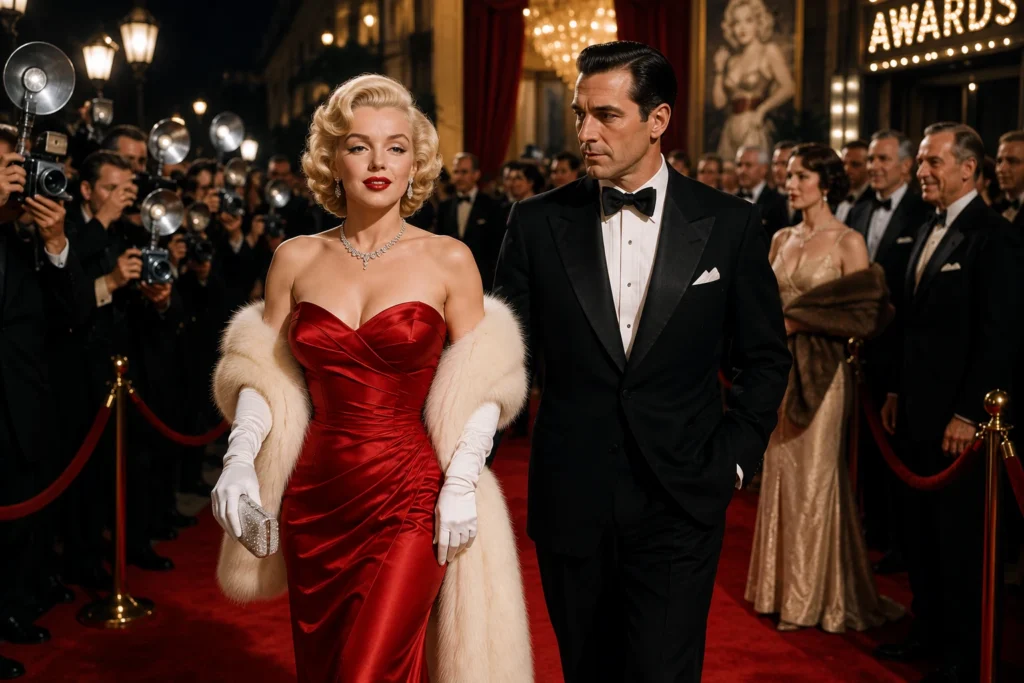
Hollywood’s Influence on Fashion
Movies and celebrities have played an enormous role in popularizing fashion.
Actors and actresses often become style icons whose clothing choices inspire millions.
Classic examples include:
- Audrey Hepburn
- Marilyn Monroe
- James Dean
- Grace Kelly
More recently, celebrities, musicians, and public figures continue to influence fashion through award shows, social media, and brand collaborations.
Hollywood demonstrates how entertainment and fashion have become closely connected.
Streetwear Becomes a Global Movement
Streetwear is now one of the world’s most influential fashion movements. To understand how modern fashion styles have evolved, start with our What Is Fashion? The Complete Beginner’s Guide, where we explain the foundations of personal style and fashion trends. During the late 20th century, streetwear emerged from skateboarding, hip-hop, and youth culture.
Unlike traditional luxury fashion, streetwear emphasised:
- Comfort
- Creativity
- Individuality
- Oversized clothing
- Sneakers
- Graphic T-shirts
Brands such as Nike, Adidas, Supreme, and Stüssy helped popularize this movement.
Today, streetwear influences both luxury fashion and everyday clothing.
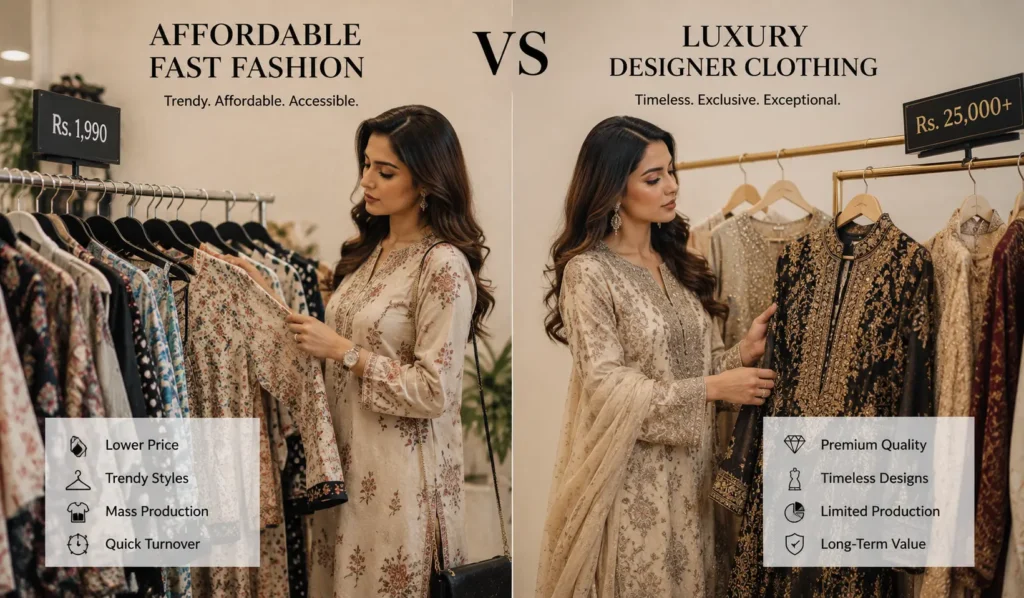
Fast Fashion vs Luxury Fashion
Modern consumers now have more fashion choices than ever before.
Two major approaches dominate the industry.
| Fast Fashion | Luxury Fashion |
|---|---|
| Affordable | Premium pricing |
| Rapid production | Limited collections |
| Trend-focused | Timeless design |
| Mass production | Exceptional craftsmanship |
| Frequent new arrivals | Long-lasting quality |
Many consumers now combine both approaches by investing in timeless essentials while occasionally purchasing trend-driven items.
Timeline – Fashion in the 20th Century
| Decade | Fashion Highlights |
|---|---|
| 1900s | Formal tailoring and corsets |
| 1920s | Flapper dresses and modern elegance |
| 1940s | Practical wartime fashion |
| 1950s | Christian Dior’s New Look |
| 1960s | Youth culture and mini skirts |
| 1970s | Bohemian fashion |
| 1980s | Power dressing and bold colors |
| 1990s | Minimalism and streetwear |
Did You Know?
- The little black dress became globally popular because of Coco Chanel.
- Fashion Week collections are often presented six months before they reach stores.
- Sneakers were once considered only sports footwear but are now a major part of luxury fashion.
- Many luxury brands collaborate with streetwear labels to reach younger audiences.
Fashion in the Digital Age
The 21st century has transformed fashion more rapidly than any previous era. The internet, smartphones, and social media have changed how people discover, buy, and wear clothing.
In the past, people waited for fashion magazines or seasonal runway shows to learn about new styles. Today, trends spread worldwide within minutes through platforms like Instagram, Pinterest, TikTok, and YouTube.
Consumers now have access to thousands of fashion brands and online stores from almost anywhere in the world.
Digital technology has made fashion more accessible, interactive, and personalized than ever before.
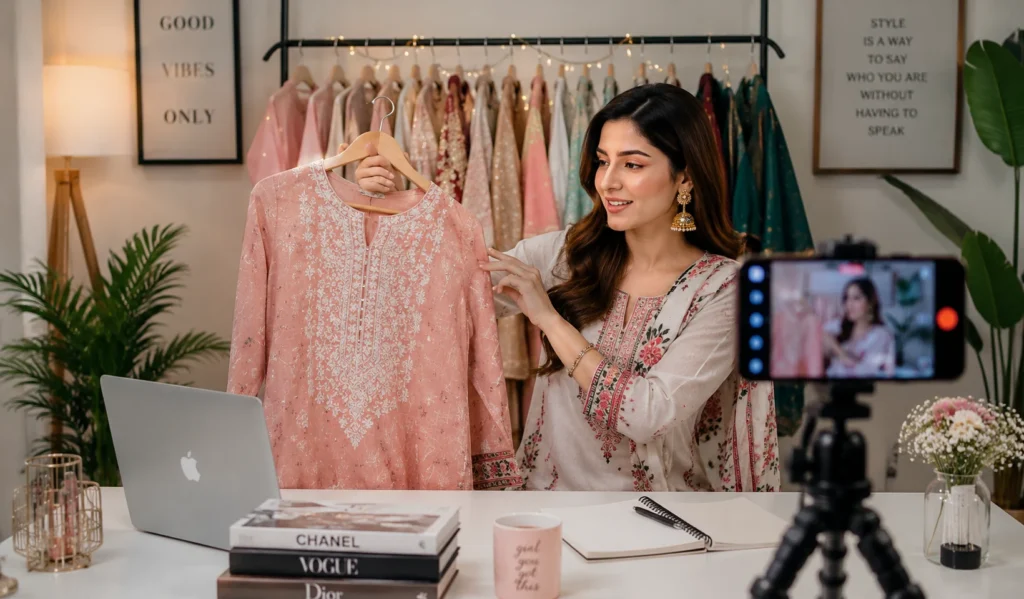
Social Media Changed Fashion Forever
Social media has become one of the biggest influences on modern fashion.
Alongside social media, established fashion publications such as Vogue continue to report on runway collections, designer interviews, and seasonal fashion trends that influence the global industry.
Fashion creators now share:
- Outfit inspiration
- Styling tips
- Shopping recommendations
- Seasonal trends
- Product reviews
- Fashion tutorials
Unlike traditional advertising, social media allows brands to communicate directly with customers.
Today, even small fashion businesses can reach a global audience through creative content and consistent branding.
Sustainable Fashion: A Growing Movement
As the fashion industry expanded, concerns about environmental impact also increased.
Consumers today are becoming more aware of:
- Textile waste
- Water consumption
- Ethical manufacturing
- Recycling
- Fair wages
- Eco-friendly materials
This awareness has encouraged many brands to adopt more sustainable practices.
Sustainable fashion promotes buying fewer, higher-quality garments that last longer while supporting responsible production methods.
How Consumers Can Support Sustainable Fashion
Everyone can contribute to a more sustainable fashion industry by making thoughtful purchasing decisions.
Simple ways include:
- Buying quality clothing instead of fast-changing trends.
- Choosing natural or recycled fabrics.
- Donating or recycling unwanted garments.
- Repairing clothing instead of replacing it immediately.
- Supporting brands with transparent manufacturing practices.
Sustainability is becoming an important part of modern fashion and will likely continue shaping the industry in the future.
Technology and the Future of Fashion
Technology is redefining how clothing is designed, produced, and sold.
Innovations such as artificial intelligence (AI), 3D printing, and virtual fitting rooms are creating new opportunities for both brands and consumers.
Some fashion retailers now use AI to recommend products based on customer preferences, while digital design tools help designers create collections more efficiently.
Virtual try-on technology also allows shoppers to preview clothing online before making a purchase.
These advancements are making fashion more personalized and convenient.
Readers interested in the commercial side of fashion—including retail, luxury brands, sustainability, and market trends—can explore additional industry insights from The Business of Fashion.
Artificial Intelligence in Fashion
AI is increasingly used across the fashion industry for tasks such as:
- Predicting fashion trends.
- Recommending products.
- Improving inventory management.
- Personalizing online shopping experiences.
- Assisting designers with creative concepts.
It’s important to remember that AI supports human creativity rather than replacing it. Successful fashion brands combine technology with originality, craftsmanship, and a deep understanding of customer needs.
What We Can Learn from Fashion History
Studying fashion history teaches us valuable lessons that remain relevant today.
Fashion constantly evolves.
Every generation introduces new styles while reinterpreting ideas from the past.
Personal style is timeless.
Although trends change, developing a personal style helps you build a capsule wardrobe that reflects your individuality.
Quality often outlasts trends.
Well-made clothing remains useful long after seasonal trends disappear.
Fashion reflects society.
Political events, technological innovations, economic conditions, and cultural movements have always influenced clothing choices.
Confidence is the best accessory.
Regardless of the era, the most memorable outfits are worn with confidence.
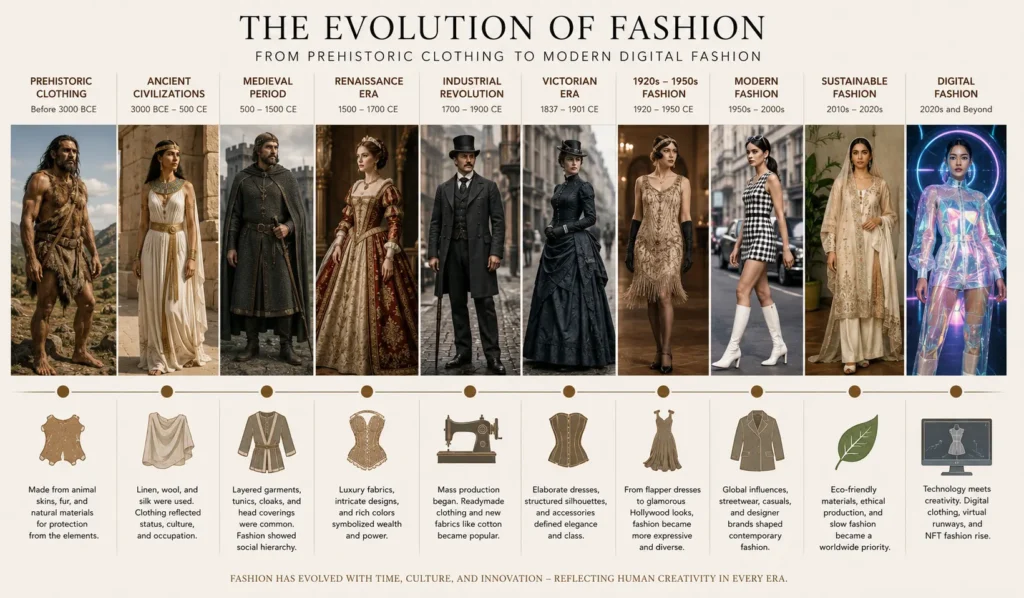
Timeline – The Evolution of Fashion
| Period | Key Development |
|---|---|
| Prehistoric Age | Clothing for protection |
| Ancient Egypt | Linen garments and jewelry |
| Ancient Greece | Draped clothing |
| Ancient Rome | Tailored garments and social status |
| Middle Ages | Clothing reflected class and religion |
| Renaissance | Luxury fabrics and artistic tailoring |
| Industrial Revolution | Mass production of clothing |
| Victorian Era | Elegant formal fashion |
| 20th Century | Designer brands and global trends |
| 21st Century | Digital fashion, sustainability, AI |
Frequently Asked Questions
What is the history of fashion?
The history of fashion explores how clothing, accessories, and personal style have evolved across different civilizations, cultures, and historical periods.
Which civilization had the greatest influence on fashion?
Many civilizations made important contributions. Ancient Egypt introduced elegant linen garments, Greece emphasized graceful draping, Rome popularized tailored clothing, while China revolutionized textiles through silk production.
Why does fashion change over time?
Fashion changes because societies, technologies, cultures, economies, and lifestyles continue to evolve.
What is the oldest known clothing?
Early humans wore garments made from animal skins, fur, leaves, and plant fibers primarily for protection from the environment.
Who are some of the most influential fashion designers?
Influential designers include Coco Chanel, Christian Dior, Yves Saint Laurent, Giorgio Armani, and Gianni Versace, each of whom introduced ideas that continue to shape modern fashion.
What is sustainable fashion?
Sustainable fashion focuses on environmentally responsible production, ethical manufacturing, and encouraging consumers to buy fewer, higher-quality garments.
How has technology changed fashion?
Technology has transformed fashion through online shopping, social media, AI-powered recommendations, virtual fitting rooms, and digital design tools.
Why is learning fashion history important?
Fashion history helps us understand cultural traditions, appreciate craftsmanship, recognize recurring trends, and make more informed personal style choices.
Conclusion
Fashion has always been more than clothing. Throughout history, it has reflected culture, identity, technology, art, and social change. From the earliest garments made for protection to today’s innovative digital fashion, clothing has evolved alongside human civilization.
Understanding the history of fashion allows us to appreciate the craftsmanship, creativity, and cultural influences behind the clothes we wear every day. It also reminds us that while trends come and go, personal style, quality, and confidence remain timeless.
Whether you’re exploring fashion for the first time or expanding your knowledge, learning about its history provides valuable insight into the evolution of style and the future of the fashion industry.
As fashion continues to embrace sustainability, technology, and innovation, one thing remains certain: clothing will always be one of humanity’s most powerful forms of self-expression.
Continue Exploring Fashion
If you enjoyed this guide, continue your fashion journey with these beginner-friendly resources on SahraaWorld:
- What Is Fashion? The Complete Beginner’s Guide
- Top 10 Summer Fashion Trends 2026
- Best Summer Outfit Ideas for Women
- Best Summer Fabrics for Hot Weather
- Business Casual Attire: The Complete Guide for Men & Women (2026)
- Men’s Summer Wardrobe Essentials (2026): The Ultimate Guide to Building a Stylish Summer Closet