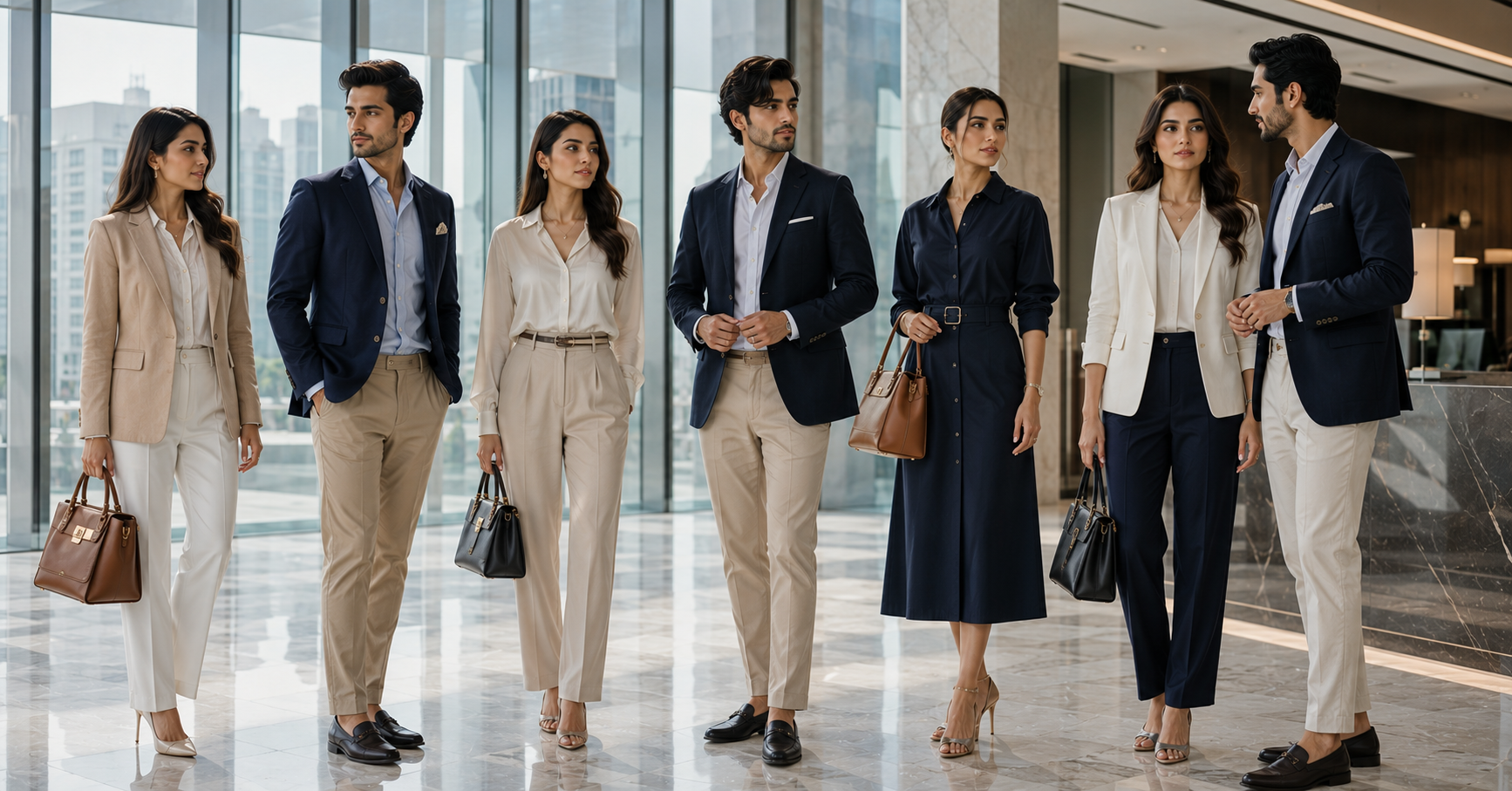
Business Casual Attire: The Complete Guide for Men & Women (2026)
Table of Contents
Business casual attire has become one of the most common workplace dress codes around the world. It offers the perfect balance between professionalism and comfort, allowing people to look polished without wearing a traditional formal suit every day. Furthermore, as workplaces continue to embrace flexible environments, understanding how to dress appropriately while expressing personal style has become more important than ever.
Whether you’re starting your first office job, attending client meetings, working in a hybrid environment, or simply looking to upgrade your professional wardrobe, learning the fundamentals of business casual attire can help you create a confident and versatile wardrobe that works in almost every professional setting.
In this comprehensive guide, you’ll learn what business casual really means, how it differs from other dress codes, wardrobe essentials for both men and women, seasonal outfit ideas, common mistakes to avoid, and practical styling tips that help you look professional every day.To understand how clothing, style, and personal expression work together, start with our What Is Fashion? Complete Beginner’s Guide.
Business casual attire is a professional dress code that combines polished office clothing with everyday comfort. It typically includes blazers, tailored trousers, chinos, button-down shirts, blouses, loafers, and modest dresses. Ultimately, the goal is to maintain a professional appearance while allowing greater comfort and personal style than traditional business formal clothing..
Table of Contents
- What Is Business Casual Attire?
- Why Business Casual Matters
- Business Casual vs Business Professional
- Characteristics of Business Casual Clothing
- Business Casual for Women
- Business Casual for Men
- Business Casual Outfit Ideas
- Business Casual vs Smart Casual
- Business Casual by Season
- Best Colors for Business Casual
- Best Fabrics for Business Casual
- Business Casual in Different Workplaces
- Business Casual for Hybrid Work
- Common Business Casual Mistakes
- Styling Tips from Fashion Experts
- Build a Business Casual Capsule Wardrobe
- Business Casual Shopping Guide
- Sustainable Business Casual Fashion
- Quick Business Casual Checklist
- Business Casual Outfit Ideas for Different Professions
- 30 Business Casual Outfit Combinations
- Business Casual Fashion Trends in 2026
- Business Casual for Different Body Types
- The Psychology of Professional Dressing
- Expert Styling Tips
- Business Casual Attire Checklist: 20 Essential Rules
- Key Takeaways
- Frequently Asked Questions
- Final Thoughts
What Is Business Casual Attire?
Business casual attire is a professional dress code that combines the polished appearance of traditional office wear with the comfort and flexibility of modern fashion. Unlike formal business clothing, which typically includes full suits and ties, business casual focuses on clean, well-fitted clothing that looks refined without appearing overly formal.
The exact definition can vary between companies and industries. For example, corporate offices, financial institutions, and law firms often expect a more polished version of business casual, whereas technology companies, creative agencies, and start-ups usually allow greater flexibility and individual expression.
Nevertheless, the core principle remains the same: presenting yourself as professional, approachable, and confident while maintaining a comfortable style suitable for the workplace.
Typical business casual attire includes:
For Women
- Tailored blouses and elegant tops
- Structured blazers
- Midi dresses
- Knee-length skirts
- Tailored trousers
- Chinos
- Loafers
- Ballet flats
- Low heels
- Minimal accessories
For Men
- Button-down shirts
- Polo shirts
- Chinos
- Dress trousers
- Lightweight blazers
- Knit sweaters
- Loafers
- Oxford shoes
- Derby shoes
- Leather belts
Business casual emphasizes quality fabrics, proper fit, neutral colors, and timeless pieces rather than flashy designs or fast-changing trends.
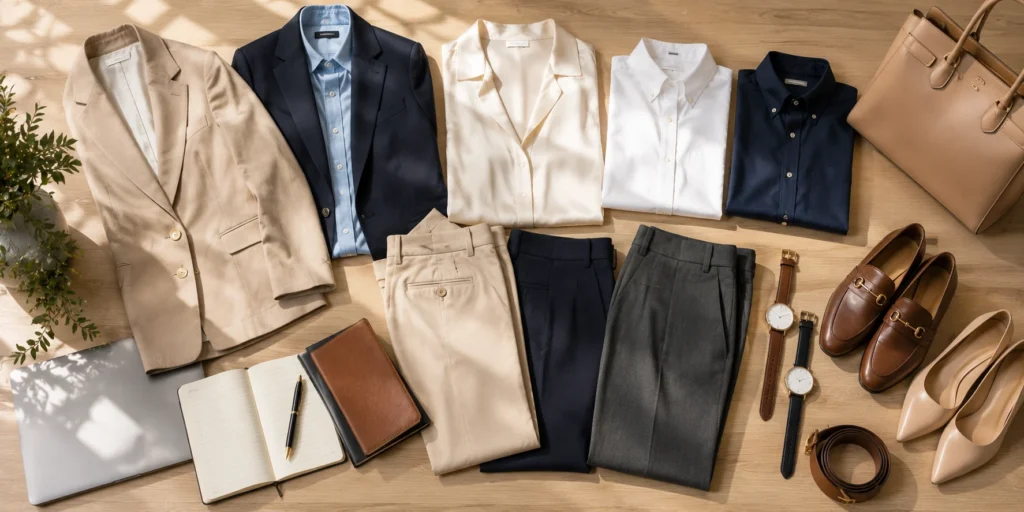
Why Business Casual Matters
Your appearance influences first impressions, workplace confidence, and professional credibility. Although skills and performance remain the most important factors in career success, dressing appropriately demonstrates respect for colleagues, clients, and the workplace culture. Furthermore, professional networking experts emphasise the importance of making a positive first impression.
A thoughtfully chosen business casual wardrobe offers several advantages:
Creates a Professional First Impression
Your clothing often communicates professionalism before you even speak. For example, clean, coordinated outfits suggest attention to detail, reliability, and confidence.
Builds Confidence
Wearing clothing that fits well and aligns with workplace expectations can improve confidence during meetings, presentations, interviews, and networking events. As a result, you are more likely to feel comfortable and perform at your best.
Offers Comfort Without Sacrificing Style
Modern business casual attire allows greater freedom of movement while maintaining a polished appearance. Consequently, it is ideal for long workdays, hybrid work environments, and business travel.
Saves Time
Building a versatile business casual wardrobe with interchangeable pieces simplifies daily outfit planning and reduces decision fatigue.
Reflects Professionalism
Business casual clothing helps communicate that you take your role seriously while remaining approachable. Likewise, a polished appearance can strengthen trust with colleagues, clients, and employers.
Business Casual vs Business Professional
Many people confuse these two dress codes, but they serve different purposes.
| Business Casual | Business Professional |
|---|---|
| Relaxed yet polished | Traditional formal office wear |
| Blazers optional | Full suits expected |
| Polo shirts acceptable | Dress shirts required |
| Chinos and tailored trousers | Matching suit trousers |
| Loafers and flats | Formal dress shoes |
| Flexible styling | Conservative styling |
Business professional remains common in industries such as banking, law, executive leadership, and high-level client meetings, while business casual has become the standard in many modern workplaces.
Characteristics of Business Casual Clothing
Successful business casual outfits share several common qualities:
Proper Fit
Well-fitted clothing always looks more professional than expensive clothing that doesn’t fit correctly.
Neutral Color Palette
Classic colors include:
- Navy
- Black
- Grey
- Beige
- White
- Cream
- Olive
- Camel
Accent colors can be added through scarves, ties, handbags, or jewelry.
High-Quality Fabrics
Choose breathable, durable materials such as:
- Cotton
- Linen blends
- Wool
- Merino wool
- Tencel
- Viscose blends
- Quality knitwear
Minimal Patterns
Simple patterns work best:
- Pinstripes
- Small checks
- Subtle florals
- Fine textures
Avoid overly bold graphics or distracting prints.
Business Casual for Women
Business casual attire for women offers flexibility while maintaining professionalism. In general, it combines elegant, comfortable, and well-fitted clothing that reflects confidence without appearing overly formal or too casual. As a result, women can create versatile outfits that are suitable for meetings, office work, and professional events.
Unlike strict corporate dress codes, business casual allows women to express their personal style through colours, textures, and accessories while maintaining a polished appearance. At the same time, every outfit should remain appropriate for the workplace. Therefore, choosing timeless pieces with quality fabrics creates a professional and sophisticated look.
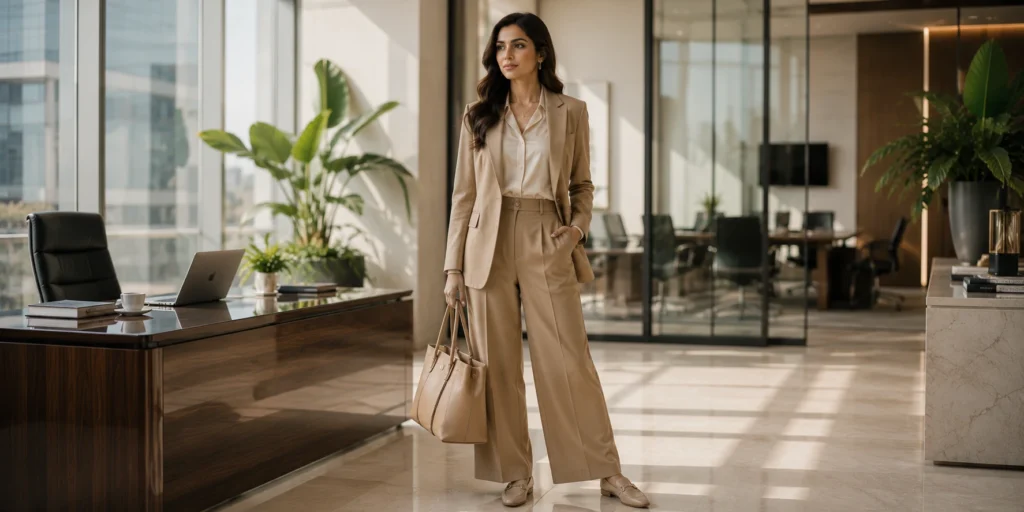
Essential Business Casual Clothing for Women
A versatile business casual wardrobe starts with timeless essentials that can be mixed and matched throughout the week.
1. Blouses
Elegant blouses are the foundation of many professional outfits.
Choose:
- Silk blouses
- Cotton shirts
- Satin tops
- Lightweight knit tops
- Structured wrap tops
Neutral colors such as white, cream, beige, navy, soft blue, and blush pink pair easily with different bottoms.
Avoid:
- Deep necklines
- Transparent fabrics
- Oversized ruffles
- Graphic prints
2. Blazers
A tailored blazer instantly elevates any outfit.
Popular options include:
- Single-breasted blazers
- Double-breasted blazers
- Linen blazers for summer
- Lightweight cotton blazers
- Relaxed-fit blazers
Classic colors:
- Black
- Navy
- Beige
- Camel
- Grey
- White
A quality blazer can transform a simple blouse and trousers into a professional office outfit.
3. Dress Pants
Tailored trousers remain one of the best business casual investments.
Recommended styles:
- Straight-leg trousers
- Wide-leg trousers
- Slim-fit trousers
- Cropped ankle pants
- High-waisted trousers
These styles create clean lines while remaining comfortable throughout the workday.
4. Skirts
Professional skirts continue to be an excellent option.
Best choices:
- Pencil skirts
- A-line skirts
- Midi skirts
- Pleated skirts
Ideal length:
Around the knee or slightly below.
Avoid:
- Mini skirts
- Extremely tight silhouettes
- Excessively flowing beach-style skirts
5. Business Casual Dresses
Dresses provide an easy one-piece outfit solution.
Popular choices include:
- Sheath dresses
- Wrap dresses
- Midi dresses
- Shirt dresses
- Structured knit dresses
Pair them with:
- Blazers
- Cardigans
- Loafers
- Block heels
Shoes for Women
Footwear completes every business casual outfit.
Excellent choices include:
- Leather loafers
- Ballet flats
- Low block heels
- Pointed-toe flats
- Elegant ankle boots
- Closed-toe pumps
Neutral colors work best:
- Black
- Nude
- Beige
- Brown
- Navy
Avoid:
- Flip-flops
- Sports sandals
- Platform heels
- Worn-out sneakers (unless your workplace specifically allows premium minimalist sneakers).
Accessories for Women
Accessories should complement—not overpower—your outfit.
Recommended:
- Leather handbags
- Structured tote bags
- Simple watches
- Delicate necklaces
- Stud earrings
- Minimal rings
- Silk scarves
Accessories can make a simple office outfit look more polished and intentional. Read our Fashion Accessories Guide for practical advice on choosing watches, bags, belts, jewellery, shoes, and other finishing touches.
The goal is understated elegance.
Business Casual for Men
Business casual attire for men combines professional tailoring with modern comfort.
The wardrobe focuses on timeless clothing that can be mixed and matched easily throughout the week.
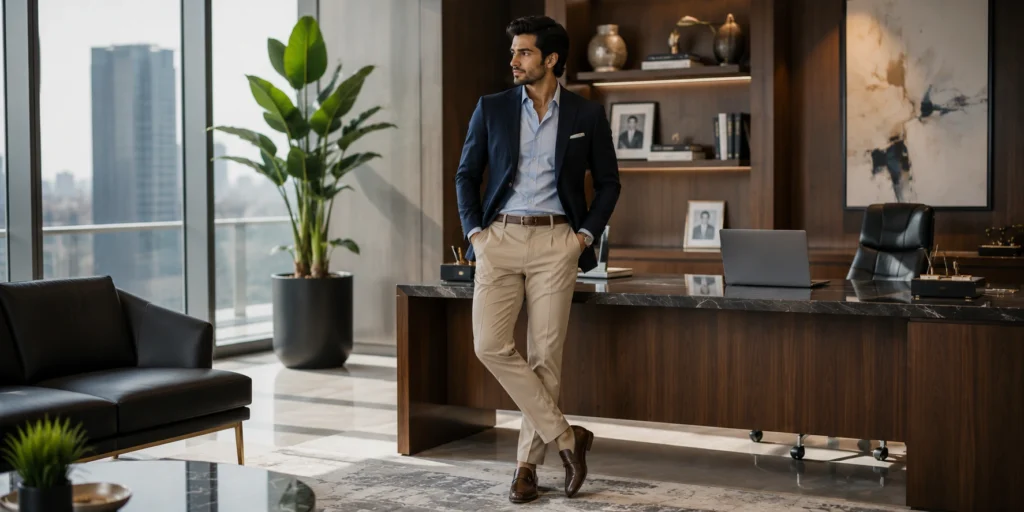
Essential Business Casual Clothing for Men
1. Button-Down Shirts
Every business casual wardrobe begins with quality shirts.
Best options include:
- Oxford shirts
- Poplin shirts
- Cotton shirts
- Linen shirts (summer)
- Performance stretch shirts
Ideal colors:
- White
- Light blue
- Navy
- Grey
- Soft pink
- Olive
Subtle stripes and checks are also acceptable.
2. Polo Shirts
Many modern offices allow premium polo shirts.
Choose:
- Solid colors
- High-quality cotton
- Slim or regular fit
Avoid:
- Oversized logos
- Bright graphics
- Sports jerseys
3. Chinos
Chinos have become a business casual staple.
Recommended colors:
- Khaki
- Navy
- Olive
- Grey
- Stone
- Black
Pair them with:
- Button-down shirts
- Blazers
- Knit sweaters
- Polo shirts
4. Dress Trousers
Dress trousers offer a more polished appearance.
Choose:
- Flat-front trousers
- Slim tailored cuts
- Wool blends
- Stretch fabrics
5. Blazers
A quality blazer instantly enhances your professional image.
Popular colors:
- Navy
- Charcoal
- Grey
- Camel
Wear over:
- Oxford shirts
- Fine-knit sweaters
- Polo shirts
Shoes for Men
Shoes significantly influence the overall impression.
Recommended:
- Leather loafers
- Oxford shoes
- Derby shoes
- Monk straps
- Chelsea boots
- Premium minimalist leather sneakers (if workplace appropriate)
Avoid:
- Running shoes
- Hiking boots
- Flip-flops
- Sandals
Accessories for Men
Business casual accessories should remain simple and refined.
Consider:
- Leather belt matching your shoes
- Classic wristwatch
- Leather briefcase
- Laptop bag
- Pocket square (optional)
- Minimal bracelet (if appropriate)
Avoid excessive jewelry or flashy accessories.
Business Casual Outfit Ideas
Women’s Outfit Example
- White silk blouse
- Beige wide-leg trousers
- Camel blazer
- Nude block heels
- Structured leather tote
- Gold watch
- Stud earrings
Result:
A polished, elegant outfit suitable for meetings, presentations, and everyday office wear.
Men’s Outfit Example
- Light blue Oxford shirt
- Navy chinos
- Brown leather belt
- Brown loafers
- Grey blazer
- Silver wristwatch
Result:
A timeless professional look that balances sophistication with comfort.
Why Quality Matters More Than Quantity
One of the biggest misconceptions is that you need dozens of office outfits.
Instead, invest in fewer, higher-quality pieces.
Benefits include:
- Better durability
- Easier outfit combinations
- Timeless appearance
- Lower long-term cost
- Consistent professional image
A carefully planned business casual wardrobe of 20–30 interchangeable pieces can create hundreds of outfit combinations while keeping your style polished and consistent.
Business Casual vs Smart Casual
Many people confuse business casual with smart casual because both dress codes blend style and comfort. However, they serve different purposes in professional settings. As a result, understanding these differences helps you choose clothing that matches workplace expectations while maintaining your personal style.

Business casual is designed primarily for professional environments, while smart casual allows more creativity and personal expression.
| Feature | Business Casual | Smart Casual |
|---|---|---|
| Purpose | Professional workplace | Casual office, social events |
| Blazer | Recommended | Optional |
| Tie | Rarely required | Usually not worn |
| Jeans | Usually discouraged | Often acceptable |
| Sneakers | Minimalist leather only (if workplace allows) | Fashion sneakers commonly accepted |
| T-shirts | Not recommended | Premium plain T-shirts may be acceptable |
| Overall Appearance | Professional and polished | Relaxed but stylish |
Business casual and smart casual are only two of many clothing aesthetics. Explore our Different Types of Fashion Styles guide to understand how professional, casual, minimalist, luxury, and streetwear styles differ.
When to Choose Business Casual
Business casual is appropriate for:
- Office work
- Client meetings
- Interviews
- Conferences
- Professional networking events
- Presentations
- Corporate training sessions
Additionally, this dress code creates a polished and professional appearance while still allowing comfort throughout the workday.
When Smart Casual Works Better
Smart casual is suitable for:
- Creative workplaces
- Casual Fridays
- Team lunches
- Weekend business events
- Informal networking
- Coffee meetings
Understanding the difference helps you dress appropriately for every occasion while maintaining confidence. However, it is important to consider your company’s dress code before choosing smart casual for professional occasions.
Ultimately, understanding the difference between business casual and smart casual helps you dress appropriately for every occasion while maintaining confidence and professionalism.
Business Casual by Season
A great business casual wardrobe adapts to changing weather while maintaining professionalism.
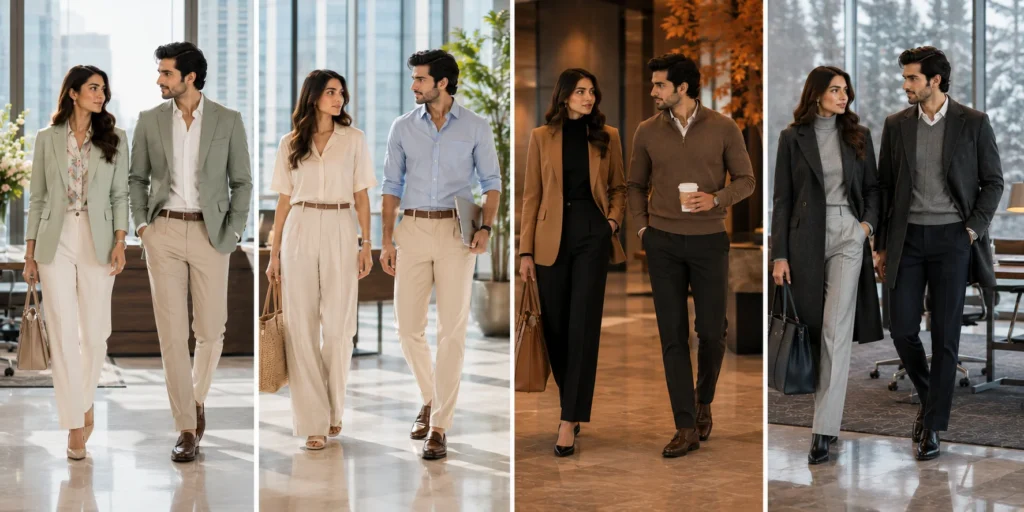
Spring Business Casual
Spring introduces warmer temperatures while mornings may still feel cool.
Women
- Lightweight blazers
- Floral blouses
- Midi dresses
- Straight-leg trousers
- Ballet flats
Men
- Cotton chinos
- Oxford shirts
- Lightweight blazers
- Loafers
- Thin knit sweaters
Recommended colors:
- Sage green
- Sky blue
- Cream
- Light grey
- Soft pink
Summer Business Casual
Summer clothing should prioritize breathable fabrics without sacrificing professionalism.
Women
- Linen trousers
- Cotton blouses
- Sleeveless tops with blazers
- Lightweight dresses
- Block heels
- Loafers
For more warm-weather styling inspiration, explore our Best Summer Outfit Ideas for Women, including breathable, modest, and elegant looks for different occasions.
Men
- Linen shirts
- Cotton chinos
- Lightweight polo shirts
- Breathable blazers
- Loafers
Best fabrics:
- Linen
- Cotton
- Tencel
- Lightweight wool blends
Choosing breathable material is especially important in hot climates. Our guide to the Best Summer Fabrics for Hot Weather explains which fabrics offer the best comfort, airflow, and professional appearance.
Avoid:
- Heavy denim
- Thick polyester
- Bulky jackets
Autumn Business Casual
Autumn allows richer colors and layering.
Popular colors include:
- Camel
- Burgundy
- Olive
- Chocolate brown
- Navy
- Charcoal
Layering ideas:
- Cardigans
- Structured blazers
- Fine-knit sweaters
- Scarves
Winter Business Casual
Winter outfits focus on warmth while remaining polished.
Women
- Wool coats
- Turtlenecks
- Wool trousers
- Leather ankle boots
- Cashmere sweaters
Men
- Wool overcoats
- Merino wool sweaters
- Layered shirts
- Chelsea boots
- Dark trousers
Choose premium winter fabrics such as:
- Wool
- Cashmere
- Merino wool
- Heavy cotton
Best Colours for Business Casual
Colour plays an important role in creating a professional appearance.
Neutral Colors
Every wardrobe should include:
- Black
- White
- Grey
- Navy
- Beige
- Camel
- Cream
These colors are timeless and easy to combine.
Accent Colors
Accent colors add personality while remaining professional.
Recommended options:
- Olive green
- Burgundy
- Dusty blue
- Soft lavender
- Forest green
- Rust
- Mauve
Avoid overly bright neon shades in professional settings.
Best Fabrics for Business Casual
Fabric quality often matters more than brand names.
Cotton
Comfortable, breathable, and suitable throughout the year.
Ideal for:
- Shirts
- Blouses
- Chinos
Linen
Perfect for summer due to its breathability.
Best for:
- Shirts
- Blazers
- Dresses
- Trousers
Remember that linen wrinkles naturally, which is part of its relaxed elegance.
Wool
Excellent for cooler seasons.
Used in:
- Blazers
- Trousers
- Coats
- Sweaters
Merino Wool
Soft, lightweight, and naturally temperature-regulating.
Perfect for:
- Knitwear
- Layering
- Office sweaters
Tencel
An eco-friendly fabric known for:
- Soft texture
- Breathability
- Elegant drape
- Wrinkle resistance
Increasingly popular in modern business wardrobes.
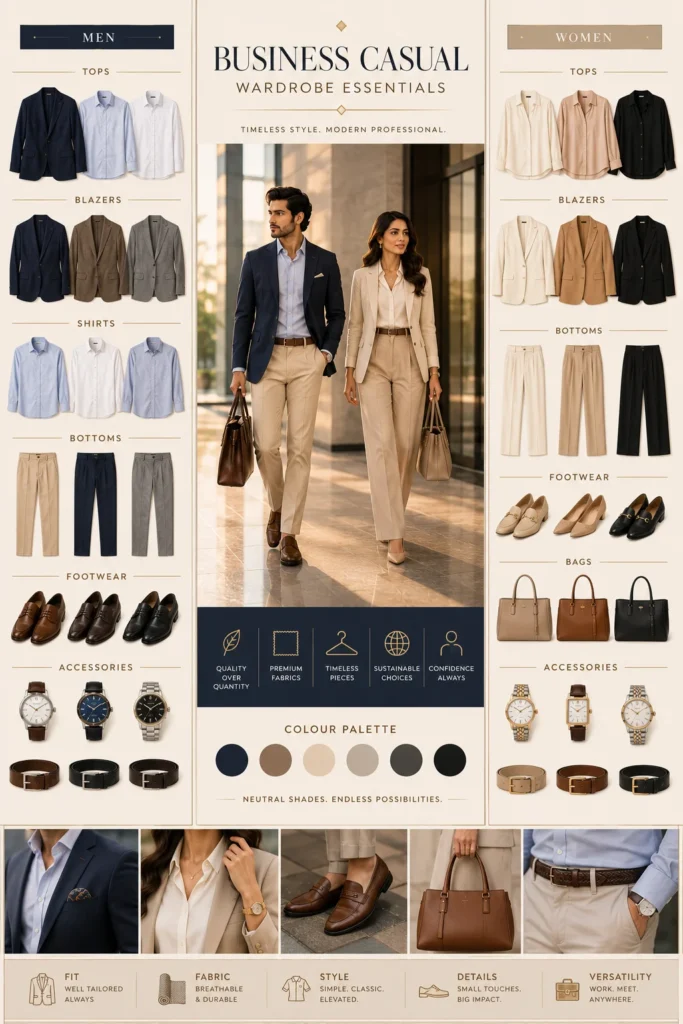
Business Casual in Different Workplaces
Not every office interprets business casual the same way. Therefore, many organizations establish their own workplace dress code policies based on their culture and industry. In addition, the Society for Human Resource Management (SHRM) provides valuable guidance on professional workplace expectations, employee policies, and business etiquette. Consequently, employees can better understand how dress codes vary across different industries and choose appropriate business casual outfits with confidence.

Corporate Offices
Expect:
- Blazers
- Dress trousers
- Conservative colors
- Leather shoes
Avoid:
- Sneakers
- Hoodies
- Jeans
Technology Companies
Often more relaxed.
Acceptable:
- Premium polos
- Chinos
- Minimalist sneakers
- Lightweight jackets
Creative Agencies
Greater flexibility allows:
- Trendier colors
- Contemporary silhouettes
- Fashion-forward accessories
- Unique textures
Professionalism should still remain the priority.
Education
Teachers and lecturers often choose:
- Comfortable trousers
- Polo shirts
- Knitwear
- Midi dresses
- Loafers
Clothing should support movement while maintaining authority.
Business Casual for Hybrid Work
Hybrid work has transformed workplace fashion.
Many professionals now need outfits suitable for:
- Home office
- Video meetings
- Client visits
- Coworking spaces
Recommended strategy:
Invest in versatile pieces that transition easily between virtual meetings and in-person work.
Examples include:
- Knit polos
- Structured cardigans
- Comfortable blazers
- Stretch trousers
- Premium loafers
Common Business Casual Mistakes
Even expensive clothing can look unprofessional if styled incorrectly.
Avoid these common mistakes:
Wearing Clothes That Don’t Fit
Oversized or overly tight clothing reduces the polished appearance.
Always prioritize proper tailoring.
Ignoring Grooming
Professional style includes:
- Clean shoes
- Ironed clothing
- Well-groomed hair
- Minimal wrinkles
Wearing Athletic Clothing
Avoid:
- Hoodies
- Joggers
- Running shoes
- Sportswear
Unless your workplace explicitly allows them.
Too Many Accessories
Less is more.
Choose:
- One watch
- Simple jewelry
- Elegant handbag or briefcase
Avoid excessive layering of accessories.
Wearing Loud Prints
Business casual favors timeless sophistication over attention-grabbing patterns.
Subtle prints always appear more professional.
Neglecting Shoes
Beautiful outfits lose their impact when paired with worn-out footwear.
Invest in quality leather shoes that are cleaned and maintained regularly.
Styling Tips from Fashion Experts
Fashion professionals consistently recommend:
- Build your wardrobe around neutral basics.
- Invest in quality over quantity.
- Tailor your clothing for the best fit.
- Choose timeless designs instead of chasing every trend.
- Keep accessories simple and elegant.
- Prioritize comfort without sacrificing professionalism.
- Refresh your wardrobe seasonally rather than replacing everything each year.
These habits help create a wardrobe that remains stylish and practical for years.
- Business Casual Capsule Wardrobe (complete checklist)
- Shopping Guide & Budget Tips
- Sustainable Business Casual Fashion
- Frequently Asked Questions (SEO-rich)
- Conclusion
- Complete internal link placement
- External authority links
- Image placement table with AI prompts
- Meta title, meta description, slug, excerpt, tags, and Yoast optimization
Build a Business Casual Capsule Wardrobe
A business casual capsule wardrobe is a carefully selected collection of versatile clothing pieces that can be mixed and matched to create dozens of professional outfits. Instead of buying large quantities of clothing, focus on timeless, high-quality essentials that work together effortlessly.
For a complete step-by-step method, read our guide on How to Build a Capsule Wardrobe, including wardrobe planning, colour coordination, seasonal rotation, and shopping tips.
As a result, this approach saves time, reduces unnecessary spending, and helps maintain a polished appearance throughout the year.
This approach saves time, reduces unnecessary spending, and helps maintain a polished appearance throughout the year.
Women’s Business Casual Capsule Wardrobe
A well-balanced wardrobe may include:
Tops
- 4–5 elegant blouses
- 3 quality button-down shirts
- 2 lightweight knit tops
- 2 fine sweaters
Outerwear
- 2 tailored blazers
- 1 neutral cardigan
- 1 trench coat
- 1 wool coat (winter)
Bottoms
- 3 tailored trousers
- 2 wide-leg pants
- 2 pencil skirts
- 2 midi skirts
Dresses
- 2 sheath dresses
- 2 wrap dresses
Shoes
- Black loafers
- Nude block heels
- Ballet flats
- Ankle boots
Accessories
- Leather tote bag
- Structured handbag
- Classic wristwatch
- Silk scarf
- Minimalist jewelry
Men’s Business Casual Capsule Wardrobe
Shirts
- 5 Oxford shirts
- 3 polo shirts
- 2 linen shirts
Bottoms
- 3 chinos
- 3 dress trousers
Jackets
- Navy blazer
- Grey blazer
- Wool overcoat
Knitwear
- Crewneck sweater
- Merino wool sweater
- Cardigan
Shoes
- Brown loafers
- Black Oxford shoes
- Chelsea boots
- White leather minimalist sneakers (if workplace permits)
Accessories
- Leather belt
- Professional briefcase
- Watch
- Leather wallet
Business Casual Shopping Guide
Building a professional wardrobe doesn’t mean buying everything at once.
A practical strategy is to invest gradually.
Step 1
Purchase timeless basics first.
Examples:
- White shirt
- Navy blazer
- Black trousers
- Brown loafers
Step 2
Add seasonal clothing.
Summer:
- Linen shirts
- Cotton trousers
Winter:
- Wool coats
- Knit sweaters
Step 3
Complete the wardrobe with accessories.
Small details often make the biggest difference.
17. Business Casual Outfit Ideas for Different Professions
- Office Administrator
- Teacher
- Engineer
- Banker
- IT Professional
- Marketing Executive
- HR Professional
- Consultant
18. Business Casual Do’s and Don’ts
A practical table like:
| Do | Don’t |
|---|---|
| Wear tailored clothing | Wear wrinkled clothes |
| Invest in quality shoes | Wear running shoes |
| Choose neutral colors | Wear neon colors |
| Keep accessories minimal | Wear excessive jewelry |
19. Business Casual Outfit Ideas for Every Day of the Week
Example:
Monday
- Navy blazer
- White Oxford shirt
- Grey trousers
Tuesday
- Polo
- Chinos
- Loafers
Continue through Friday.
This section is highly searchable and keeps readers engaged.
20. Business Casual on a Budget
Topics:
- Build your wardrobe gradually
- Buy timeless essentials first
- Shop during seasonal sales
- Prioritize tailoring over quantity
21. Business Casual Fashion Trends in 2026
Business casual fashion in 2026 reflects the growing demand for comfort, sustainability, and timeless style. Today, professionals prefer versatile clothing that looks polished while remaining practical for hybrid and modern workplaces.
Current trends includes:
- Relaxed tailoring
- Quiet luxury
- Sustainable fabrics
- Earth tones
- Premium knitwear
- Wide-leg trousers
- Minimalist accessories
Furthermore, modern workplace fashion increasingly reflects broader lifestyle trends such as quiet luxury, sustainability, and timeless design. For example, publications like Forbes frequently discuss how professional image, personal branding, and business fashion contribute to long-term career success.
Likewise, many of these workplace trends connect with broader seasonal fashion movements. For more inspiration, explore our guide on Top 10 Summer Fashion Trends 2026 to discover the latest styles and outfit ideas.
22. Business Casual for Different Body Types
For Women:
- Petite
- Tall
- Curvy
- Athletic
For Men:
- Slim
- Tall
- Broad
- Athletic
This provides genuinely useful advice rather than generic recommendations.
23. Building Confidence Through Professional Dressing
Discuss:
- First impressions
- Psychology of clothing
- Workplace confidence
- Personal branding
- Dressing for promotions and interviews
24. Expert Styling Tips
Practical advice from professional stylists:
- Color coordination
- Layering
- Choosing the right fit
- Fabric quality
- Seasonal wardrobe updates
- Accessories
Sustainable Business Casual Fashion
Modern professionals are becoming more conscious of sustainability. As a result, many people now invest in high-quality clothing that lasts longer and reduces unnecessary waste.
Instead of buying inexpensive clothing that wears out quickly, choose durable pieces that can be worn for years. Additionally, investing in timeless essentials helps you save money while building a more versatile wardrobe.
Look for garments made from:
- Organic cotton
- Linen
- TENCEL™ Lyocell
- Recycled wool
- Responsible viscose
Furthermore, choosing timeless designs over fast-changing trends reduces waste and creates a wardrobe that remains stylish year after year. In the long run, this approach benefits both your personal style and the environment.
Quick Business Casual Checklist
Before leaving for work, ask yourself:
| Checklist | Status |
|---|---|
| Clean and wrinkle-free clothing | ✅ |
| Polished shoes | ✅ |
| Minimal accessories | ✅ |
| Proper fit | ✅ |
| Coordinated colours | ✅ |
| Appropriate for today’s workplace | ✅ |
Business Casual Outfit Ideas for Different Professions
One of the biggest misconceptions about business casual attire is that it looks the same in every workplace. In reality, every profession has its own expectations, industry standards, and level of formality. As a result, dressing appropriately for your role demonstrates professionalism, helps you fit into your workplace culture, and boosts confidence.

Below are practical outfit ideas for various professions.
Business Casual for Office Administrators
Office administrators interact with colleagues, managers, visitors, and clients throughout the day. Therefore, their clothing should communicate professionalism while remaining comfortable during long working hours.
Women
- White button-down shirt
- Navy tailored trousers
- Beige blazer
- Black loafers
- Structured leather handbag
- Minimal gold jewelry
Men
- Light blue Oxford shirt
- Grey chinos
- Navy blazer
- Brown leather loafers
- Classic wristwatch
Business Casual for Engineers
Engineers often divide their time between offices, meetings, and site visits. As a result, business casual outfits should balance professionalism, durability, and everyday comfort.
Women
- Polo knit top
- Straight-leg trousers
- Lightweight blazer
- Comfortable leather flats
Men
- Polo shirt
- Khaki chinos
- Lightweight jacket
- Leather sneakers (if permitted)
Choose wrinkle-resistant fabrics that remain presentable throughout the day.
Business Casual for Teachers
Teachers spend long hours standing, walking, and engaging with students. For this reason, business casual clothing should provide comfort while maintaining a polished and approachable appearance.
Recommended items include:
- Midi dresses
- Cardigans
- Comfortable loafers
- Tailored trousers
- Cotton blouses
Avoid clothing that restricts movement or requires constant adjustment.
Business Casual for Bank Employees
Banking environments remain among the most conservative workplaces.
Professional choices include:
Women
- Navy sheath dress
- Black blazer
- Closed-toe pumps
- Leather tote
Men
- White dress shirt
- Navy trousers
- Grey blazer
- Oxford shoes
Neutral colours create trust and professionalism.
Business Casual for HR Professionals
Human resource professionals communicate with employees, candidates, and senior management every day. Accordingly, their business casual wardrobe should appear approachable, professional, and well coordinated.
A polished appearance helps establish credibility.
Recommended wardrobe:
- Tailored blazers
- Elegant blouses
- Straight trousers
- Leather loafers
- Simple accessories
Business Casual for Marketing Professionals
Marketing departments usually allow slightly more creativity.
Professionals can introduce:
- Soft pastel colours
- Modern silhouettes
- Statement scarves
- Contemporary handbags
However, clothing should still appear refined and workplace appropriate.
Business Casual for IT Professionals
IT professionals frequently move between desks, meeting rooms, and technical workspaces. Likewise, their business casual clothing should offer flexibility without sacrificing a professional appearance.
Good outfit ideas include:
Men
- Premium polo
- Chinos
- Leather sneakers
- Lightweight overshirt
Women
- Knit blouse
- Wide-leg trousers
- Loafers
- Minimal jewellery
Comfort remains important without sacrificing professionalism.
Business Casual for Consultants
Consultants regularly meet clients across different industries. Consequently, their business casual attire should adapt easily while maintaining a polished and trustworthy image.
Their wardrobe should project confidence.
Typical outfits include:
- Tailored blazer
- White shirt
- Dark trousers
- Leather shoes
- Premium watch
30 Business Casual Outfit Combinations
Creating multiple outfits from a limited wardrobe is one of the biggest advantages of business casual fashion. These outfit ideas provide inspiration for different work environments, from traditional offices to creative workplaces and hybrid schedules.
Women’s Outfit Ideas
Outfit 1 – Classic Office Look
Pair a crisp white blouse with navy tailored trousers and layer a beige blazer over the top. Complete the outfit with nude heels for a timeless professional appearance that works well for meetings and daily office wear.
Outfit 2 – Smart Casual Friday
A black knit top paired with camel trousers creates a comfortable yet polished outfit. Furthermore, leather loafers and a simple gold watch add sophistication while keeping the overall look relaxed.
Outfit 3 – Professional Meeting Style
A blue Oxford shirt worn with a pencil skirt creates a confident business look. To complete the outfit, choose comfortable block heels that maintain both elegance and practicality throughout the day.
Outfit 4 – Elegant Business Dress
Choose a modest midi dress and layer it with a structured white blazer. In addition, ballet flats provide comfort while maintaining a refined and feminine appearance.
Outfit 5 – Modern Minimalist
A linen blouse combined with wide-leg trousers creates a clean, contemporary style. To complete the look, add a structured leather handbag and simple jewellery for a sophisticated business casual outfit.
Outfit 6 – Monochrome Elegance
Wear cream tailored trousers with a matching silk blouse and finish the outfit with beige pumps. Finally, a structured handbag completes this quiet luxury-inspired ensemble.
Outfit 7 – Creative Workplace Style
A lightweight printed blouse with ankle-length black trousers creates a fashionable office look. White leather trainers can replace formal shoes in creative workplaces.
Outfit 8 – Autumn Business Casual
Layer a camel cardigan over a fitted black blouse and pair it with charcoal trousers. Brown leather loafers complete this warm seasonal outfit.
Outfit 9 – Winter Professional Look
A fine-knit turtleneck worn under a tailored blazer creates warmth without sacrificing style. Straight-leg trousers and leather ankle boots finish the outfit beautifully.
Outfit 10 – Client Meeting Outfit
Choose a soft neutral blouse with tailored cigarette trousers and pointed-toe heels. Keep accessories simple to create a polished first impression.
Outfit 11 – Business Casual with Denim
Dark-wash jeans paired with a white Oxford shirt and a fitted blazer create a relaxed yet professional appearance for casual office environments.
Outfit 12 – Summer Office Style
Wear a breathable linen blouse with cropped tailored trousers. Nude flats and minimal accessories keep the outfit comfortable during warmer months.
Outfit 13 – Executive Style
A tailored cream suit worn with a silk blouse projects confidence and authority. Neutral pumps and understated jewellery complete the professional appearance.
Outfit 14 – Smart Layering
A sleeveless blouse beneath a lightweight blazer works perfectly for offices with changing temperatures. Slim-fit trousers maintain a sleek silhouette.
Outfit 15 – Business Casual Chic
A pleated midi skirt combined with a fitted knit top offers an elegant alternative to trousers. Finish the outfit with classic loafers for all-day comfort.
Men’s Outfit Ideas
Outfit 16 – Traditional Office Style
A white Oxford shirt paired with navy chinos creates a timeless business casual outfit. Brown leather loafers complete the professional appearance.
Outfit 17 – Business Casual Friday
Wear a polo shirt with beige chinos for a relaxed office look. White leather trainers are suitable in workplaces with flexible dress codes.
Outfit 18 – Executive Smart Casual
Layer a navy blazer over a light blue dress shirt and pair it with grey trousers. Brown brogues provide a polished finishing touch.
Outfit 19 – Modern Professional
A lightweight crew-neck sweater worn over a collared shirt creates a refined layered outfit. Dark chinos complete this versatile business casual combination.
Outfit 20 – Summer Office Look
Choose a breathable linen shirt with tailored trousers and suede loafers. This outfit remains cool while maintaining a polished appearance.
Outfit 21 – Autumn Layers
Pair a fine-knit sweater with navy chinos and leather Chelsea boots. A lightweight jacket adds extra warmth without looking bulky.
Outfit 22 – Winter Business Casual
Wear a turtleneck sweater beneath a structured blazer and combine it with wool trousers. Leather boots provide both warmth and sophistication.
Outfit 23 – Creative Industry Style
A premium knit polo paired with slim-fit trousers offers a modern appearance suitable for creative offices. Minimalist trainers complete the contemporary look.
Outfit 24 – Client Presentation Outfit
Choose a light blue dress shirt with charcoal trousers and a navy blazer. Classic Oxford shoes reinforce a professional first impression.
Outfit 25 – Minimalist Style
A fitted black crew-neck sweater worn with grey trousers creates a clean and sophisticated appearance. Brown loafers add subtle contrast.
Outfit 26 – Relaxed Office Wear
Dark chinos paired with a patterned button-down shirt strike the perfect balance between comfort and professionalism. Leather sneakers complete the outfit.
Outfit 27 – Business Travel Outfit
A wrinkle-resistant shirt with stretch chinos provides comfort during travel while maintaining a polished appearance. Slip-on loafers make airport security easier.
Outfit 28 – Smart Networking Event
Combine a lightweight blazer with a fine-knit polo shirt and tailored trousers. A leather belt and matching shoes complete the elegant ensemble.
Outfit 29 – Hybrid Workplace Style
A premium overshirt layered over a plain T-shirt creates a modern office look. Dark chinos and white leather trainers add comfort without sacrificing professionalism.
Outfit 30 – Timeless Business Casual
Finish with the most versatile combination of all: a white shirt, navy blazer, beige chinos, and brown leather shoes. This classic outfit works in almost every business casual environment throughout the year.
Business Casual Shopping Guide
Building a business casual wardrobe doesn’t require buying dozens of outfits at once. Smart shopping focuses on versatility, quality, and long-term value.
Prioritise Wardrobe Essentials
First, start with foundational pieces that work with multiple outfits, such as a white shirt, navy blazer, black trousers, and leather loafers. As a result, these items can be mixed and matched in many different ways.
Choose Quality Over Quantity
A smaller wardrobe made of durable, well-constructed clothing will usually outperform a closet full of low-quality garments. Therefore, look for strong stitching, premium fabrics, and timeless designs.
Invest in Tailoring
Even moderately priced clothing can look premium when it fits properly. For example, simple alterations such as hemming trousers or adjusting sleeve lengths can make a significant difference.
Shop During Seasonal Sales
Purchase winter coats at the end of winter and lightweight summer clothing after the season ends. As a result, planning ahead often leads to substantial savings without sacrificing quality.
Build Gradually
Build your business casual wardrobe over time instead of buying everything at once. Consequently, you’ll make smarter purchasing decisions and create a more versatile wardrobe.
Business Casual Fashion Trends in 2026
Business casual attire continues to evolve as workplaces embrace flexibility, sustainability, and individual style. In 2026, professionals are choosing clothing that combines sophistication, comfort, and functionality.
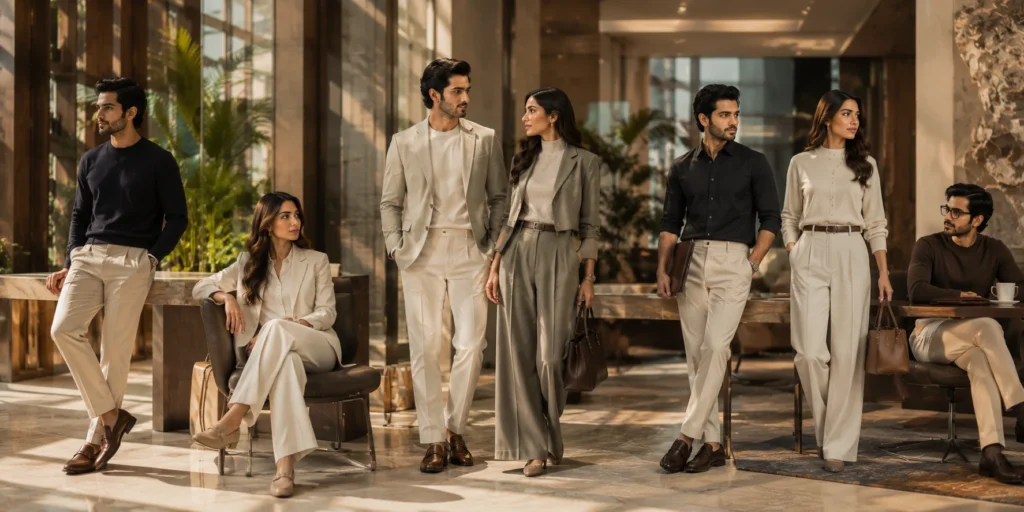
Here are the biggest business casual trends shaping modern workplaces.
1. Relaxed Tailoring
Traditional slim-fitting office wear is giving way to relaxed tailoring. As a result, wide-leg trousers, relaxed blazers, and comfortable silhouettes create a polished appearance while allowing greater freedom of movement.
Moreover, both men and women are embracing structured garments with softer fits that look elegant without feeling restrictive.Both men and women are embracing structured garments with softer fits that look elegant without feeling restrictive.
2. Quiet Luxury
Quiet luxury remains one of the most influential fashion movements in 2026. Instead of large logos or flashy branding, professionals are increasingly investing in timeless, well-made clothing crafted from premium fabrics.
Think:
- Clean lines
- Neutral colours
- Exceptional tailoring
- Minimal branding
- High-quality materials
This understated elegance works perfectly within a business casual wardrobe.
3. Sustainable Fashion
Professionals are increasingly prioritising quality over quantity. As a result, clothing made from organic cotton, linen, TENCEL™, recycled wool, and responsibly sourced fabrics is becoming more common.
Ultimately, a smaller collection of durable garments not only reduces waste but also creates a more cohesive wardrobe.
4. Earth-Tone Colour Palettes
Meanwhile, neutral colours continue to dominate business casual fashion.
For example, popular shades include:
- Sand
- Camel
- Olive
- Stone
- Chocolate Brown
- Sage Green
- Warm Grey
- Ivory
These colours pair effortlessly with classic navy, black, and white.
5. Smart Layering
Layering remains essential in hybrid workplaces where temperatures vary between offices, meeting rooms, and outdoor environments.
Popular combinations include:
- Oxford shirt + lightweight sweater
- Polo + blazer
- Blouse + cardigan
- Dress + trench coat
Layering creates versatility while adding visual interest.
Business Casual for Different Body Types
Above all, great style isn’t about following trends. Instead, it’s about choosing clothing that complements your body shape while ensuring comfort and confidence.
For Women
Petite
For example, petite women often benefit from clothing that creates the illusion of height.
Recommended:
- High-waisted trousers
- Monochromatic outfits
- Cropped blazers
- Pointed-toe shoes
- Vertical patterns
Avoid oversized garments that overwhelm your frame.
Tall
Likewise, tall women can balance their proportions with structured layers and well-tailored separates.
Great choices include:
- Wide-leg trousers
- Longline blazers
- Midi dresses
- Maxi skirts
- Statement coats
Layering also works exceptionally well for taller frames.
Curvy
In addition, curvy body types often look best in clothing that defines the waist while maintaining comfort.
Recommended:
- Wrap dresses
- Tailored blazers
- Straight-leg trousers
- V-neck blouses
- Structured fabrics
Avoid excessively oversized clothing, which can hide shape rather than flatter it.
Athletic
On the other hand, athletic body types can create more dimension by adding texture, layers, and softer silhouettes.
Consider:
- Belted dresses
- Pleated skirts
- Wide-leg trousers
- Layered outfits
- Soft fabrics that add movement
For Men
Slim Build
Slim men can create balanced proportions by choosing:
- Layered outfits
- Structured blazers
- Textured fabrics
- Horizontal patterns
- Slightly relaxed tailoring
Broad Build
Choose garments that fit comfortably across the shoulders without being oversized.
Recommended:
- Straight-fit trousers
- Single-breasted blazers
- Open-collar shirts
- Medium-weight fabrics
Tall Build
Longer proportions work well with:
- Layered outfits
- Cardigans
- Longer jackets
- Relaxed tailoring
Shorter Build
To create a taller appearance:
- Wear monochromatic outfits.
- Keep trouser hems tailored.
- Avoid oversized jackets.
- Choose vertical design details.
The Psychology of Professional Dressing
In fact, clothing influences more than appearance—it can affect confidence, communication, and even workplace performance.. Furthermore, research has shown that clothing can influence confidence, decision-making, and workplace perception. For Example, Harvard Business Review regularly publishes research on leadership, workplace behaviour, professional communication, and career development that supports the importance of presenting yourself professionally.
In other words, researchers often describe this as “enclothed cognition,” the idea that what we wear can influence how we think and behave.
As a result, a polished outfit may help you:
- Feel more confident during presentations.
- Make stronger first impressions.
- Communicate attention to detail.
- Demonstrate professionalism.
- Feel prepared for important meetings.
Ultimately, while clothing alone doesn’t determine success, dressing appropriately can positively influence how others perceive you and how you perceive yourself.
Expert Styling Tips
Fashion stylists often recommend simple habits that make a significant difference.
Build Around Neutral Basics
Neutral clothing creates countless outfit combinations and remains timeless.
Prioritise Fit
Tailoring often has a greater impact than expensive designer labels.
Invest in Shoes
Quality shoes complete every outfit.
Well-maintained leather shoes instantly elevate a professional appearance.
Use Accessories Sparingly
One elegant watch, a leather belt, or subtle jewellery is often enough.
Minimalism creates sophistication.
Refresh Your Wardrobe Seasonally
Review your clothing at the beginning of each season.
Repair, replace, or donate items as needed.
This keeps your wardrobe organised and practical.
Care for Your Clothing
Proper maintenance extends the life of your wardrobe.
Simple habits include:
- Following care labels
- Using quality hangers
- Steaming garments instead of excessive ironing
- Polishing leather shoes
- Storing seasonal clothing correctly
Business Casual Attire Checklist: 20 Essential Rules for Every Professional
Whether you’re dressing for your first office job or refreshing your wardrobe, these simple rules will help you maintain a polished business casual appearance every day.
Clothing Essentials
1. Prioritize Proper Fit
Above all, well-tailored clothing always looks more professional than expensive garments that are too loose or too tight.
2. Build Around Neutral Colors
Choose timeless shades like navy, black, white, grey, beige, olive, and camel. These colors are versatile and easy to mix.
3. Choose Breathable Fabrics
Additionally, natural fabrics such as cotton, linen, merino wool, and TENCEL™ provide comfort throughout long working hours while maintaining a refined appearance.
4. Keep Clothes Wrinkle-Free
Likewise, Wrinkled clothing can undermine an otherwise polished outfit. Steam or iron garments before wearing them.
5. Invest in Quality Basics
A well-made blazer, tailored trousers, classic shirt, and leather shoes form the foundation of a professional wardrobe.
Shoes & Accessories
6. Wear Clean, Well-Maintained Shoes
Similarly, clean and polished shoes complete your outfit and reinforce a professional image.
7. Match Belt and Shoes
For men especially, matching leather accessories creates a coordinated and professional appearance.
8. Keep Accessories Minimal
Instead, choose a few high-quality accessories that complement your outfit without becoming distracting.
9. Carry a Structured Bag
A leather briefcase, tote, or laptop bag completes a business casual outfit far better than a backpack designed for sports.
10. Wear a Professional Watch
A timeless wristwatch adds sophistication without appearing flashy.
Grooming
11. Maintain Good Personal Grooming
Neat hair, trimmed nails, and clean shoes contribute just as much to professionalism as clothing.
12. Wear Subtle Fragrance
Avoid overpowering perfumes or colognes, especially in shared office environments.
13. Pay Attention to Small Details
Loose threads, missing buttons, or stained clothing can distract from an otherwise polished appearance.
Styling
14. Layer Smartly
Blazers, cardigans, and lightweight jackets make it easy to adapt to changing temperatures while maintaining style.
15. Avoid Fast-Changing Trends
Classic clothing remains relevant much longer than seasonal fashion fads.
16. Plan Outfits in Advance
Preparing your outfits the evening before saves time and reduces stress during busy mornings.
17. Rotate Your Wardrobe
Regularly wearing different combinations extends the life of your clothing and keeps your style fresh.
18. Dress for the Workplace
Always consider your company’s culture, client expectations, and meeting schedule when choosing your outfit.
19. Invest in Tailoring
Even affordable clothing can look premium when properly altered to fit your body.
20. Dress with Confidence
The best business casual outfit is one that makes you feel comfortable, confident, and ready to perform at your best.
Business Casual Attire: Key Takeaways
If you remember only a few points from this guide, make them these:
- First, business casual balances professionalism with comfort.
- Second, focus on timeless wardrobe essentials rather than fast fashion.
- Additionally, quality fabrics and proper fit matter more than expensive brands.
- Moreover, build a versatile capsule wardrobe with neutral colors.
- Next, adapt your clothing to your workplace and the season.
- Likewise, keep accessories simple and elegant.
- Furthermore, maintain your clothing through proper care and storage.
- Finally, dress in a way that supports confidence and reflects your professional image.
Business Casual Attire at a Glance
| Feature | Recommendation |
|---|---|
| Best Colours | Navy, Black, Grey, Beige, White, Camel |
| Best Fabrics | Cotton, Linen, Wool, Merino Wool, TENCEL™ |
| Suitable Shoes | Loafers, Oxford Shoes, Ballet Flats, Block Heels |
| Avoid | Ripped Jeans, Flip-Flops, Hoodies, Athletic Wear |
| Best Accessories | Leather Bag, Watch, Minimal Jewellery, Belt |
| Ideal Workplace | Offices, Corporate Meetings, Hybrid Work, Professional Events |
Frequently Asked Questions
What is considered business casual attire?
Business casual attire combines professional clothing with modern comfort. It typically includes tailored trousers, chinos, blouses, button-down shirts, blazers, loafers, and modest dresses while avoiding overly formal suits and ties.
Are jeans considered business casual?
It depends on your workplace.
Dark, well-fitted jeans without rips or fading may be acceptable in creative or relaxed offices. Traditional corporate workplaces usually expect chinos or tailored trousers instead.
Can sneakers be worn with business casual?
Premium minimalist leather sneakers may be appropriate in some modern workplaces, particularly technology companies and creative industries. Athletic running shoes should generally be avoided.
Should I wear a blazer every day?
No.
While blazers instantly elevate an outfit, they are not required every day. A polished blouse, knit sweater, or quality button-down shirt can also create a professional business casual look.
What colours work best for business casual?
Neutral colours remain the safest choice:
- Navy
- Black
- Grey
- White
- Beige
- Camel
- Olive
Accent colours such as burgundy, sage green, or dusty blue can add personality without looking unprofessional.
Can women wear sleeveless tops?
Yes, provided that they are modest and professional. Additionally, in conservative workplaces, pairing a sleeveless top with a blazer or cardigan is a good option
Is business casual the same worldwide?
No. In fact, business casual expectations vary across countries and industries.
1. Can business casual include jeans?
Yes, business casual can include jeans in workplaces with a relaxed dress code. Choose dark-wash or black jeans with a tailored fit and no rips, fading, or distressed details. For example, pair them with a blazer, button-down shirt, or elegant blouse for a polished appearance. However, in conservative industries such as banking or law, tailored trousers or chinos remain the safer choice.
2. What is the difference between business casual and business formal?
Generally, Business casual is less formal than business formal. Business casual typically includes chinos, tailored trousers, blouses, polo shirts, and blazers, while business formal usually requires suits, ties, formal dresses, and polished dress shoes. Ultimately, The appropriate dress code depends on your workplace, industry, and the occasion.
3. Can I wear sneakers with business casual attire?
Minimalist leather sneakers in neutral colours such as white, black, or brown may be acceptable in creative workplaces and technology companies. However, athletic running shoes, brightly coloured sneakers, and sports footwear are generally not considered business casual.
4. What colours are best for a business casual wardrobe?
Neutral colours are the most versatile for business casual attire. Popular choices include navy, black, grey, white, beige, camel, olive green, and cream. These colours are easy to mix and match while maintaining a professional appearance. Accent colours like burgundy, dusty blue, and sage green can add personality without looking overly casual.
5. How many business casual outfits should I own?
Generally, A business casual wardrobe doesn’t need to be large. In fact, around 25–35 versatile clothing pieces can create hundreds of outfit combinations. Instead, Focus on quality wardrobe essentials that can be mixed and matched instead of buying many trend-based items.
6. Is a blazer necessary for business casual?
Although a blazer adds structure and professionalism, it isn’t required every day. Alternatively, well-fitted shirts, elegant blouses, fine-knit sweaters, or smart cardigans can create an appropriate business casual outfit, depending on your workplace.
7. What fabrics are best for business casual clothing?
Generally, Breathable, high-quality fabrics work best for business casual attire. For Example, Cotton, linen, merino wool, wool blends, and TENCEL™ offer comfort, durability, and a polished appearance throughout the year. As a result, Choosing quality fabrics also helps garments last longer.
8. Can business casual attire be fashionable?
Ultimately, the best business casual outfits combine timeless style, comfort, and professionalism.
9. How do I build a business casual wardrobe on a budget?
Start with timeless essentials such as a white shirt, navy blazer, black trousers, and quality leather shoes. Add versatile pieces gradually, shop during seasonal sales, and choose clothing that can be worn in multiple combinations. Investing in fewer, well-made garments often provides better long-term value than buying inexpensive fast-fashion items.
10. Is business casual appropriate for job interviews?
Business casual may be suitable for interviews at startups, creative agencies, and technology companies. However, for corporate, legal, financial, or executive roles, business formal attire is usually the safer option. When in doubt, it’s better to dress slightly more formally than the company’s everyday dress code.
Final Thoughts
Business casual attire is more than a dress code—it is a practical approach to looking professional while staying comfortable and expressing your personal style.
By investing in quality clothing, choosing timeless wardrobe essentials, and understanding your workplace expectations, you can build a versatile collection of outfits that work for meetings, presentations, interviews, and everyday office life.

Whether you prefer classic tailoring, modern minimalism, or a more creative professional look, the key is maintaining a polished appearance that reflects confidence and professionalism.
A thoughtfully planned business casual wardrobe will continue serving you for years, making it one of the smartest fashion investments you can make.
